
Justin Bower
Exclusively represented by G-ALLERY
Works by Justin Bower are available through G-ALLERY by private inquiry.
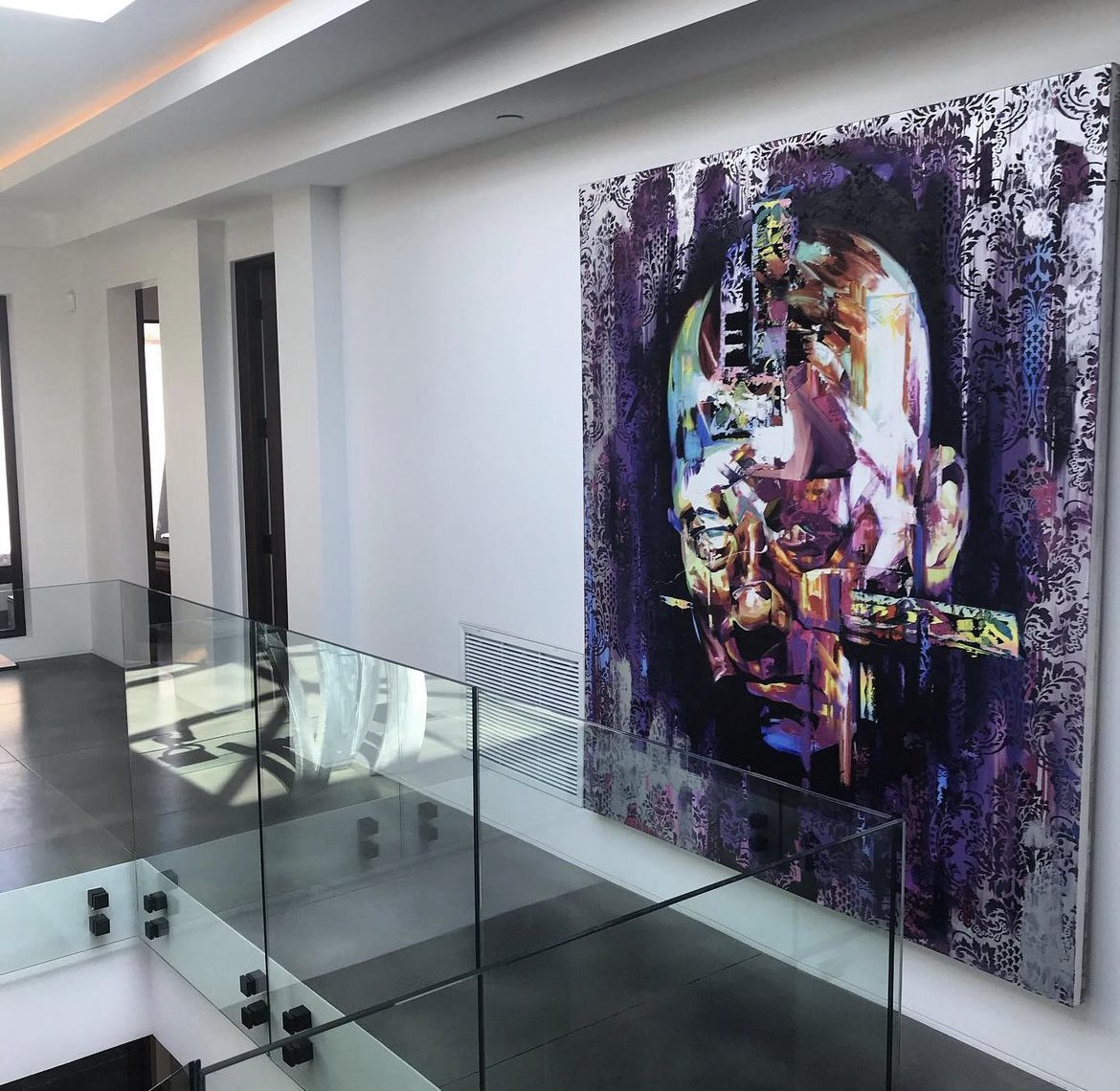
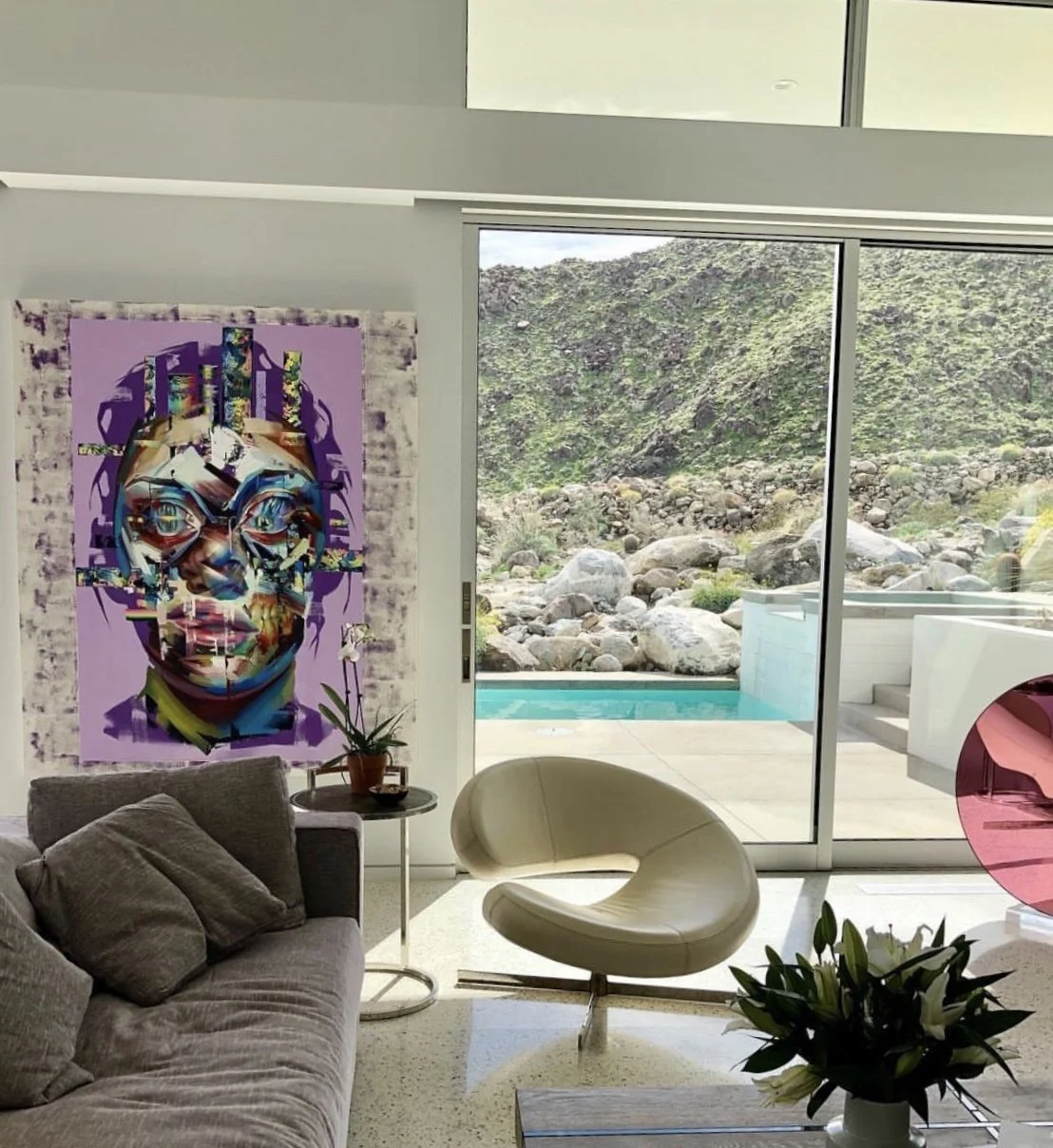
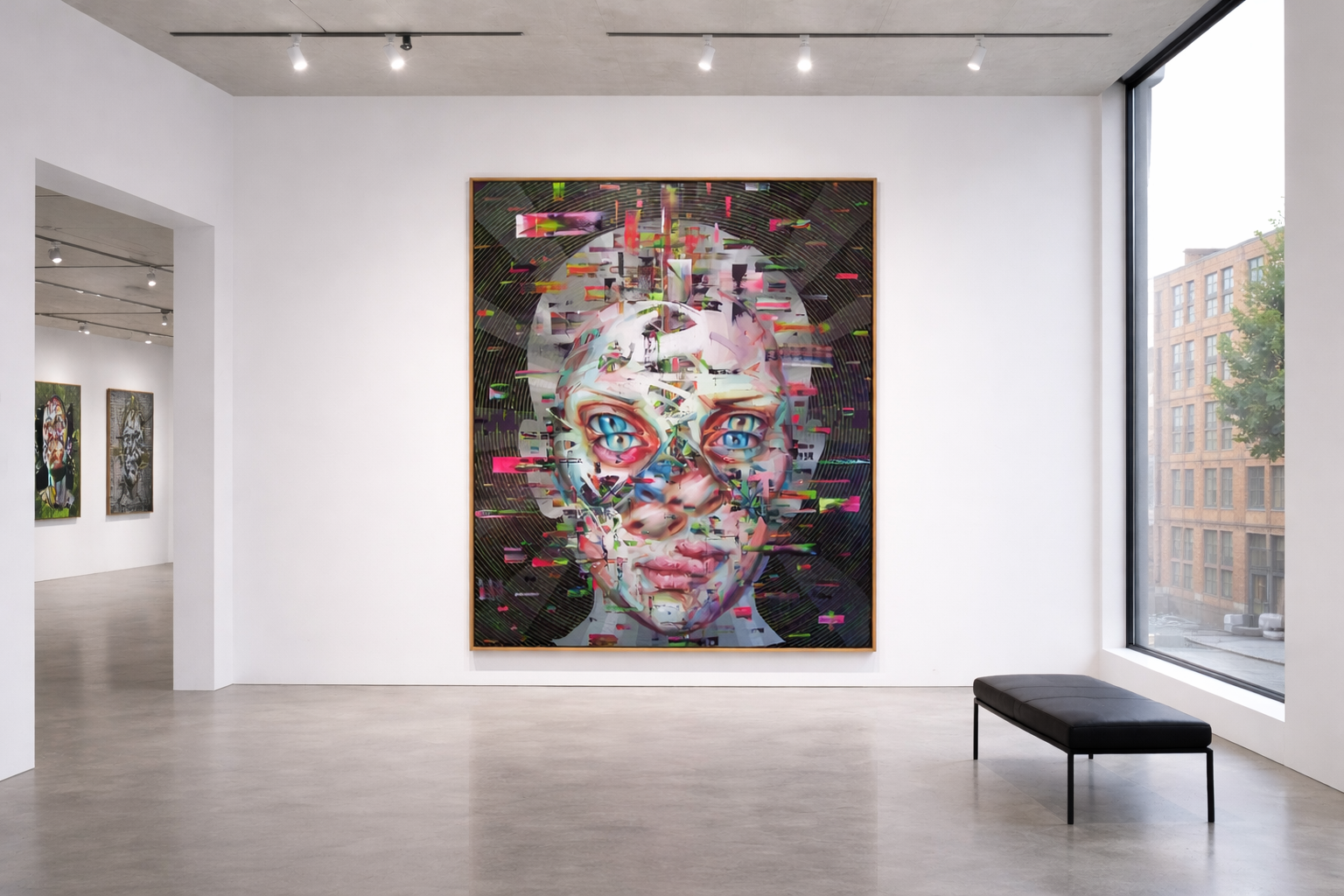
Justin Bower, a Los Angeles–based artist represented by G-ALLERY Berlin, has been presented in numerous solo exhibitions in galleries and museums worldwide. Important public and private collections have already acquired his works, and his practice is often described as Disrupted Realism.
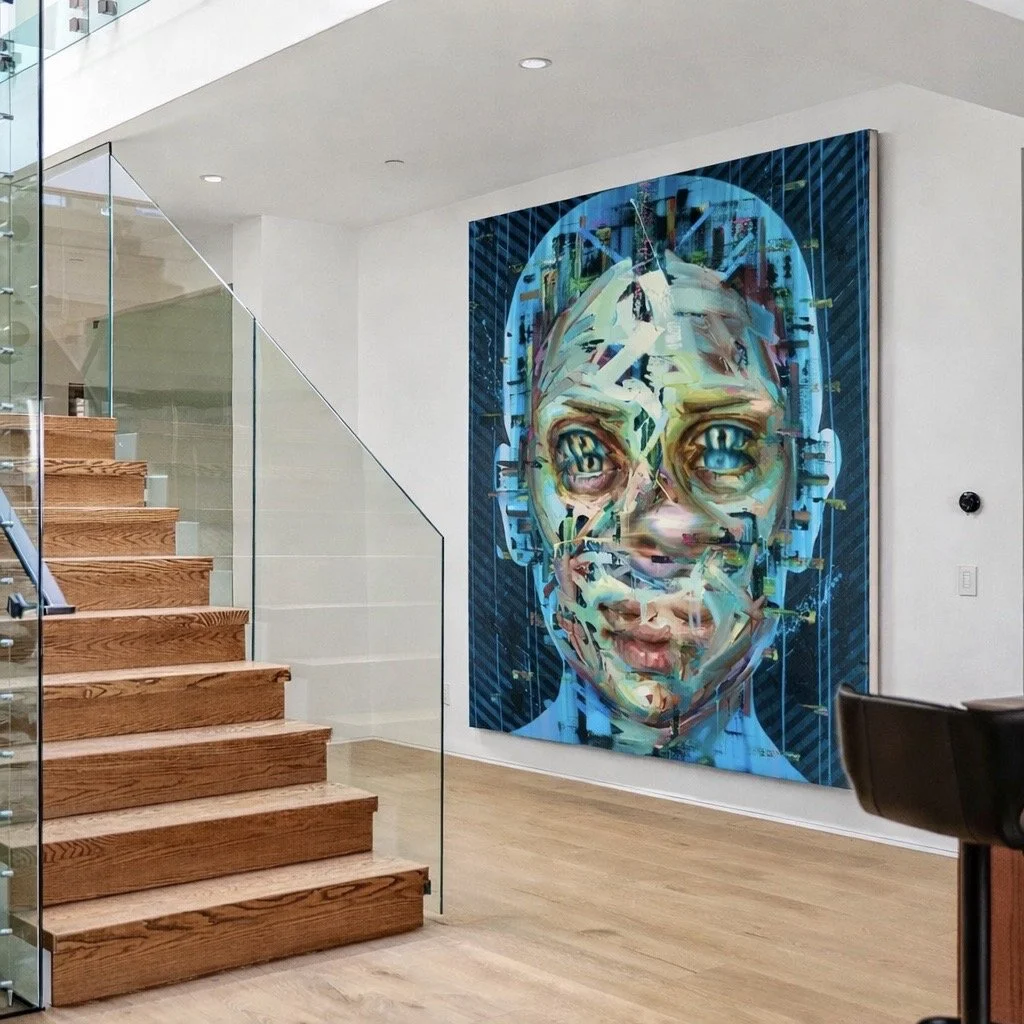
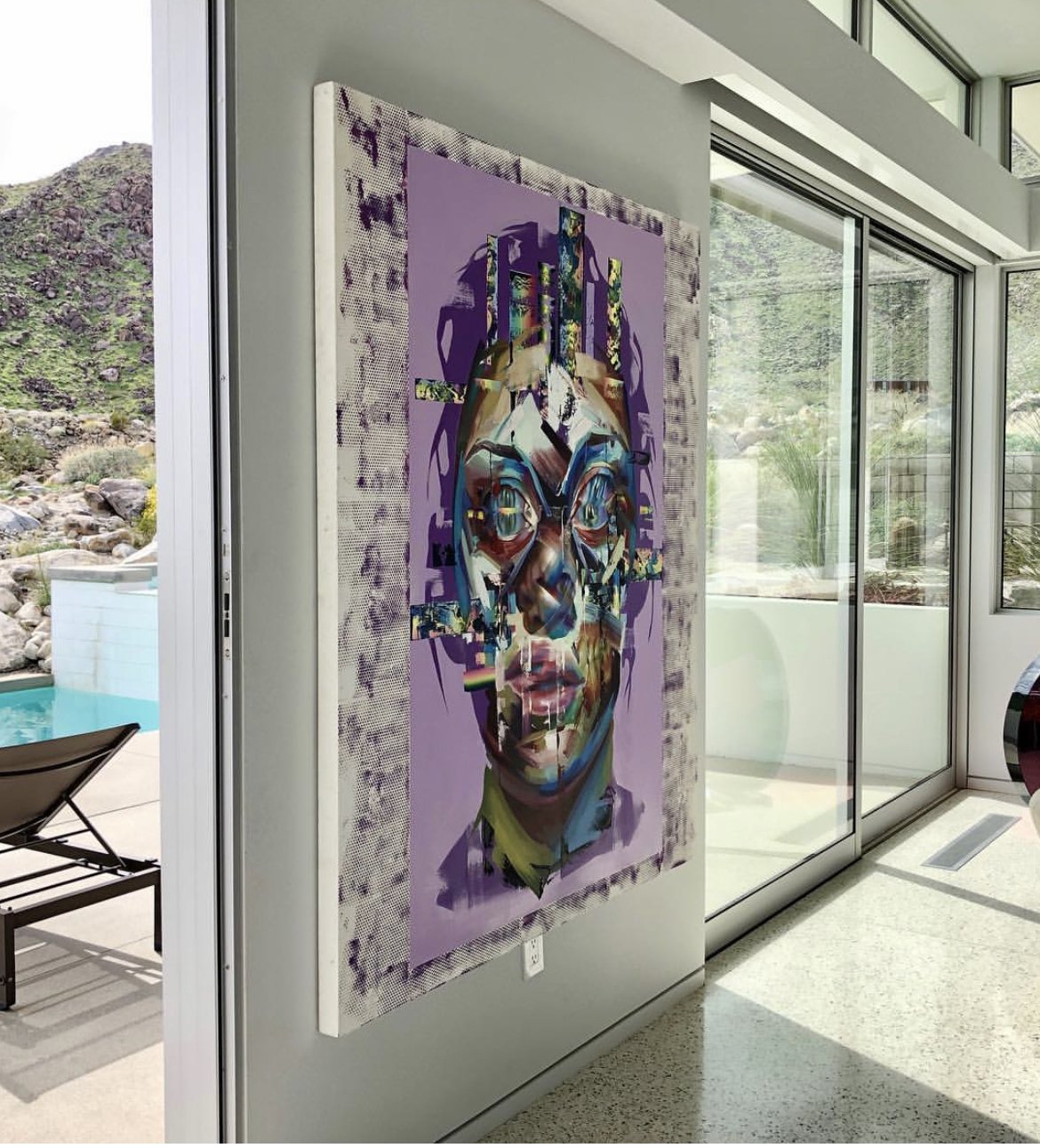
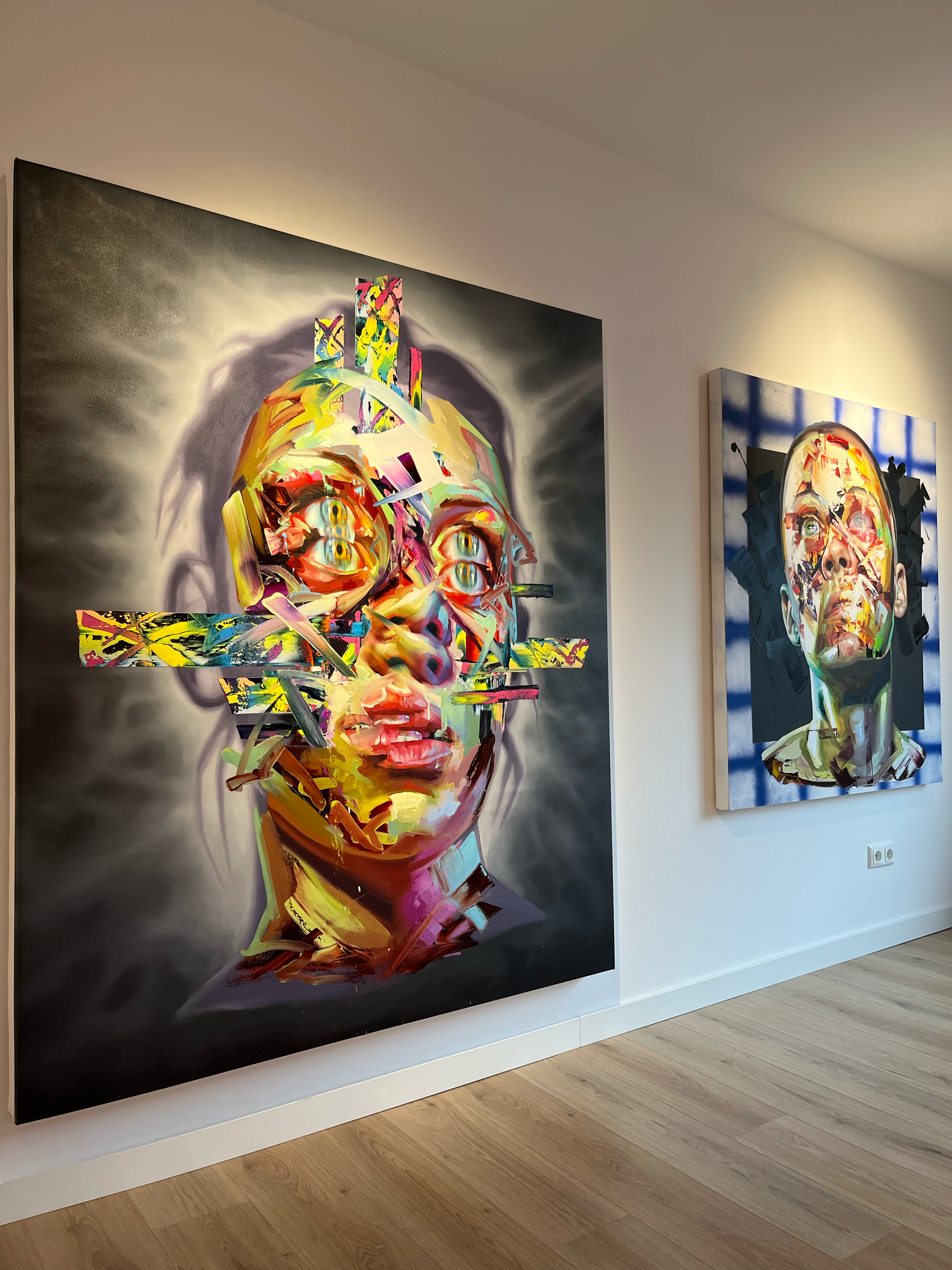
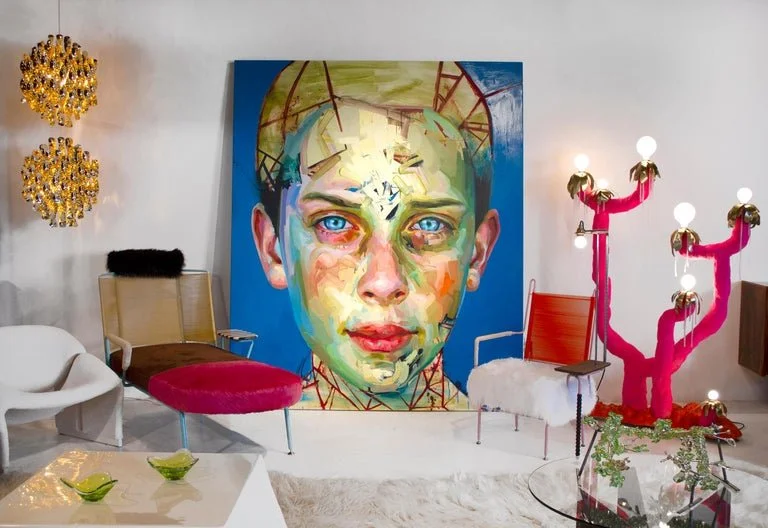
Justin Bower’s paintings are images of our present. Few contemporary artists articulate our relationship to the digital with comparable precision. What is the relationship between our real and our digital identity? Can they be separated at all, or are they inseparably intertwined? Do we split ourselves into multiple modes of self-representation? The figures in Bower’s paintings reveal little about individual identity in a traditional sense. Instead, they are united in multiplicity—making clear that the subject of his work is structural, and affects more than the individual.
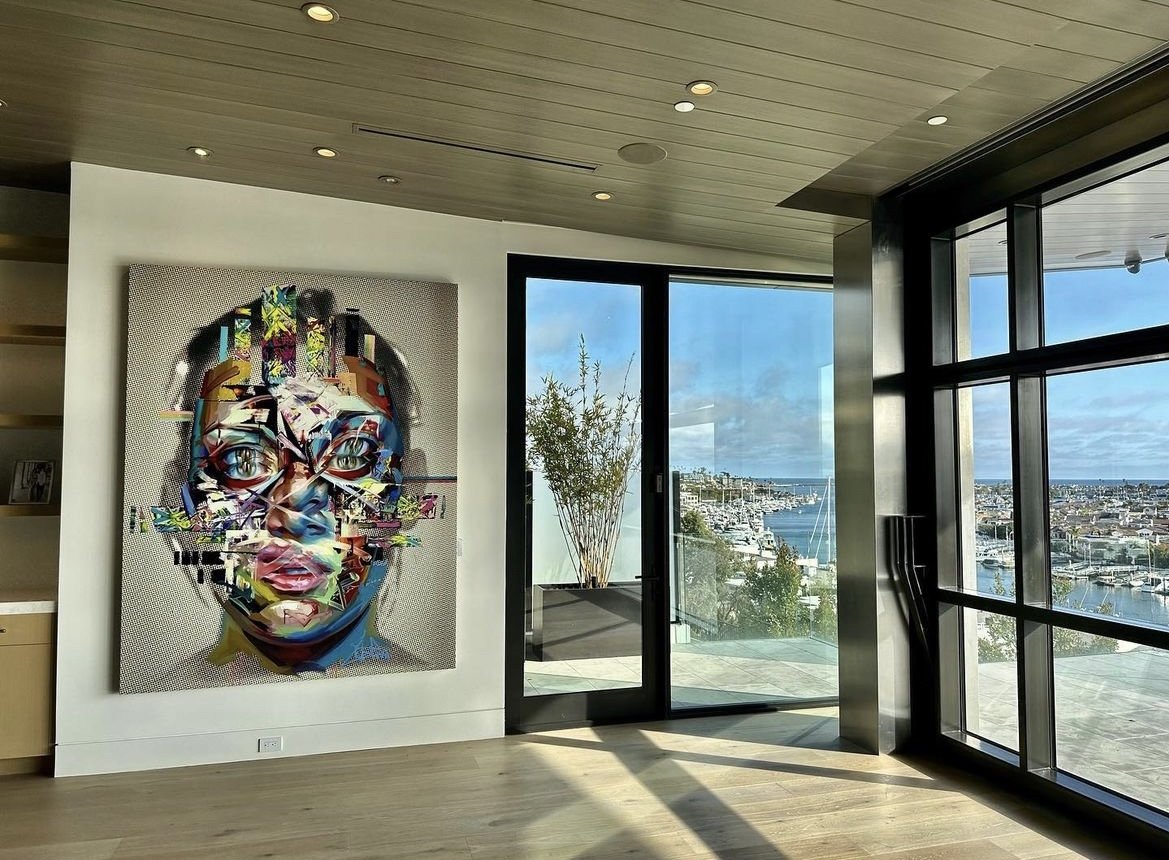
Although fractured, interrupted, and doubled, their gaze appears steady—holding us, confronting us, or searching outward from the pictorial space. They can feel hypnotic, even as they seem to have lost a fixed frame of reference themselves. Bower’s chromatic, incisive commentary on the present resonates strongly within the contemporary art market. Marked by inclusion in Christie’s catalogues, his work has recently achieved results significantly above estimate—most notably with The Magician—positioning him among internationally recognized contemporary artists.
“The painting, as a frame for the gaze, fixes a perspective,” wrote the seminal art theorist Leon Battista Alberti. Yet Bower’s works invite us to reconsider this notion. Here, pictorial space is neither clearly defined nor securely anchored. Instead, through modularity and optical multiplicity, the image seems to fix the viewer. Motifs are reduced and dissolved in a dynamic process toward abstraction. Fleeting graphic modules function as building blocks, evoking the logic of imaging technologies such as biometric facial recognition. These elements operate in tension with painterly, almost lyrical passages of color.
Bower’s practice illustrates a shift in the very concept of the image. Images today are fluid, dynamic, and perpetually in process—much like contemporary forms of identification and the construction of the self. In this sense, his paintings become images about images: non-verbal carriers of knowledge that can also hold social and critical potential. The digital merges with our idea of self and society; it becomes a catalyst for change within functional systems, but also within ethical and emotional frameworks. This is mirrored in the plurality of figures in Bower’s works, which coalesce into unity and enable a collective form of looking.
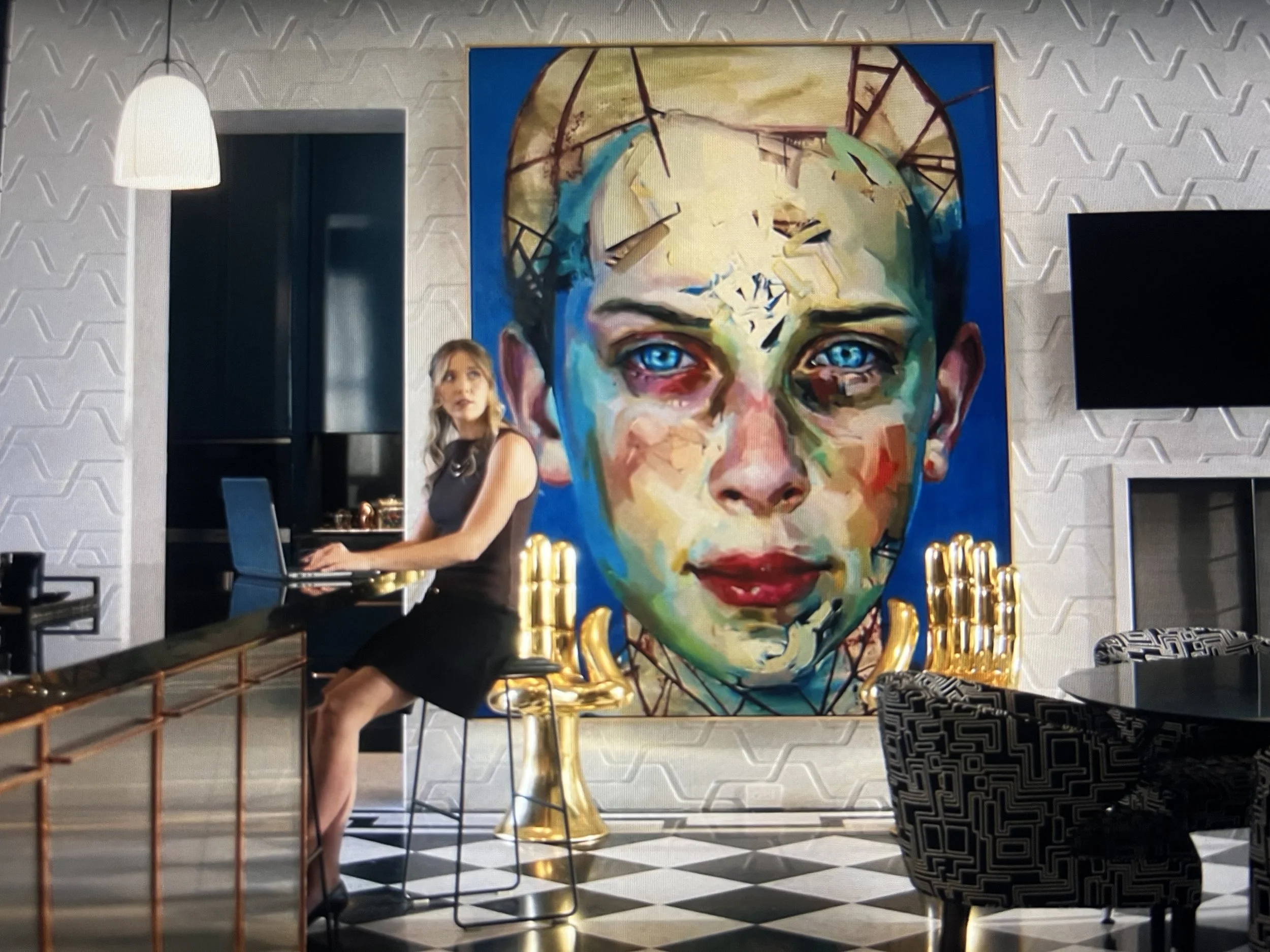
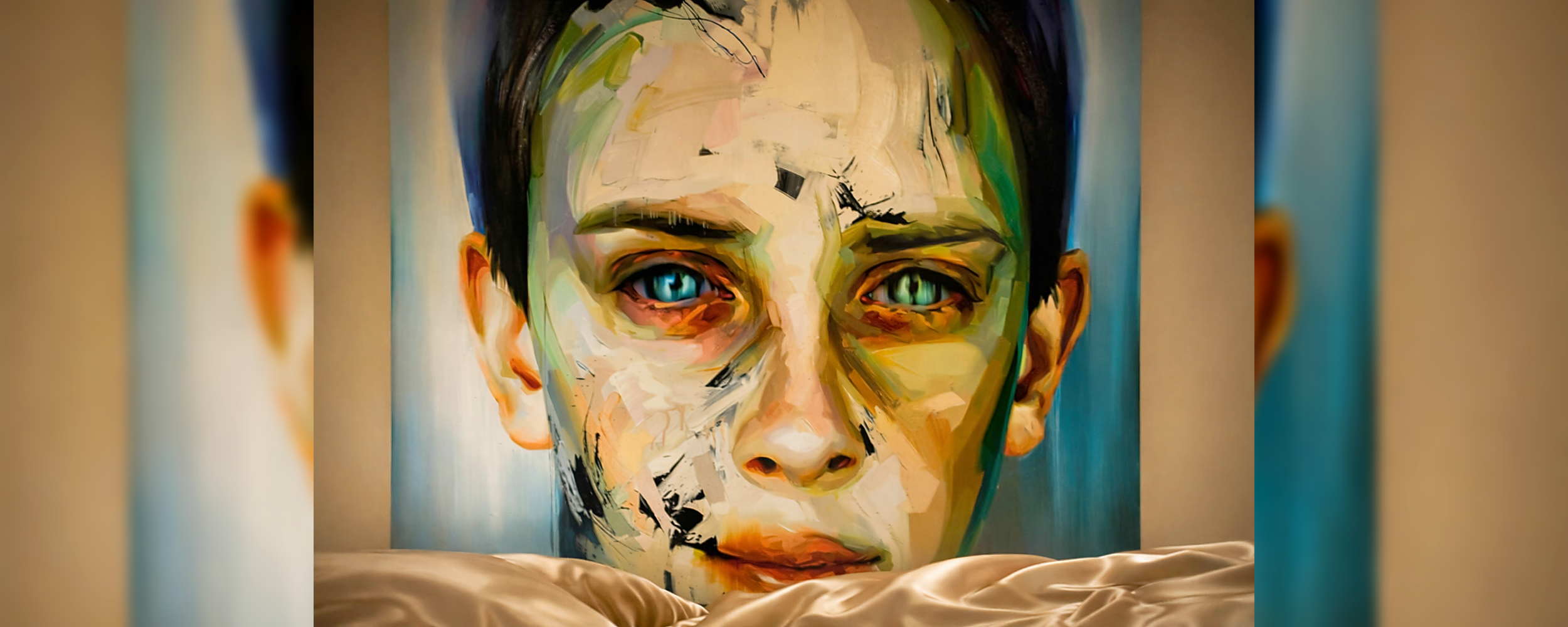
The digitally woven aesthetic can obscure a crucial fact: Bower works with oil on canvas, with an Old Master–like finesse. Only through meticulous command of craft does he achieve the “overcoming” of realism—the splitting and modularization of figures rendered with exacting detail. Here, technique and content stand in deliberate dissonance, creating a productive moment of reflection. Digital images are, by nature, mass images: endlessly reproducible and, just as often, endlessly repetitive. Within this conceptual context, Bower lends weight to his “images of the digital” through labor-intensive handwork and a high degree of individualized depiction—counteracting the banalization of the image.
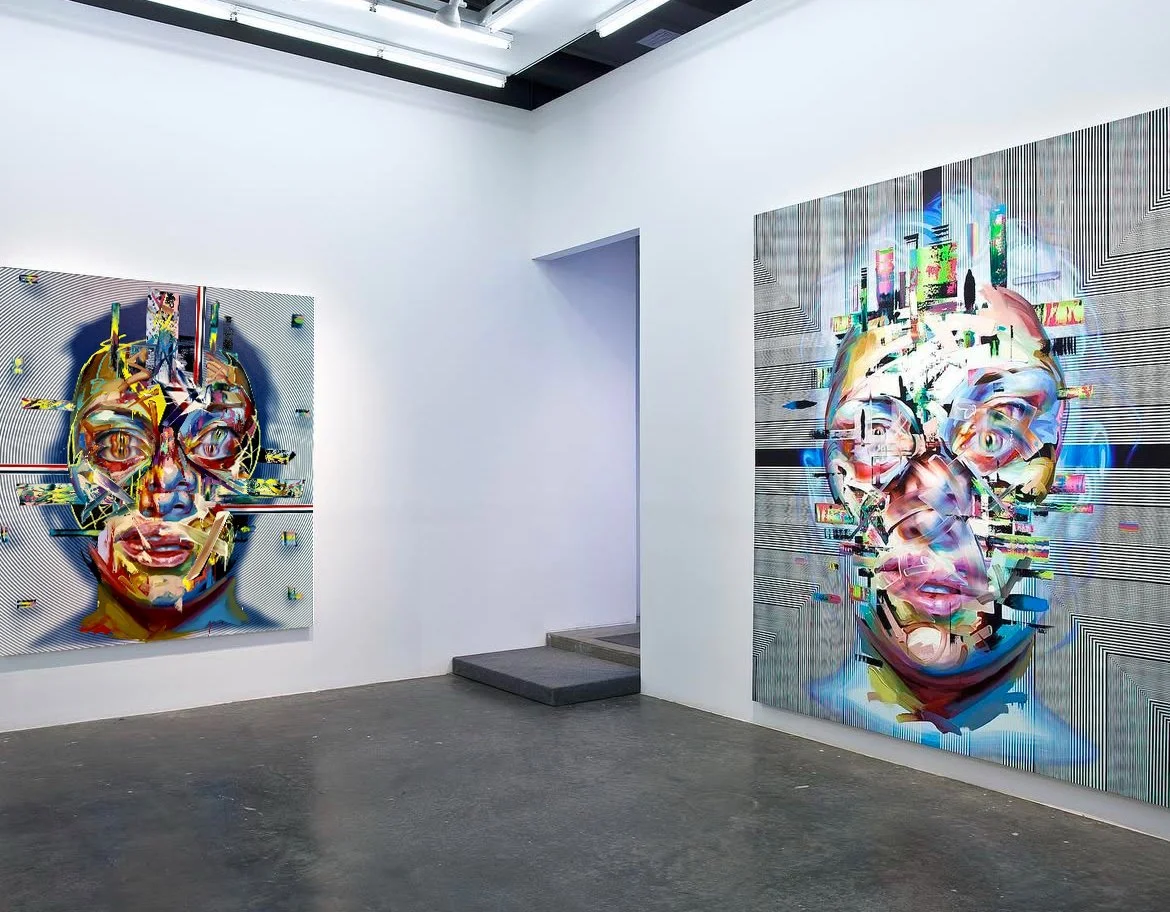
He works in multiple layers, each with its own visual language. A schematic structure often separates the colorful, dynamic surface of the figure from its ground, which recedes into a merely suggestive presence. This division recalls the schematic organization of pictorial space found in the shaped canvases of the American artist Frank Stella (b. 1936) in the late 1950s. The result is a fictive image-space that simultaneously emphasizes and complicates flatness. New York art critic Clement Greenberg described this shift in spatial illusion as follows:
“The illusion created by a Modernist is one into which one can look, can travel through, only with the eye.” (Modernist Painting, 1960).
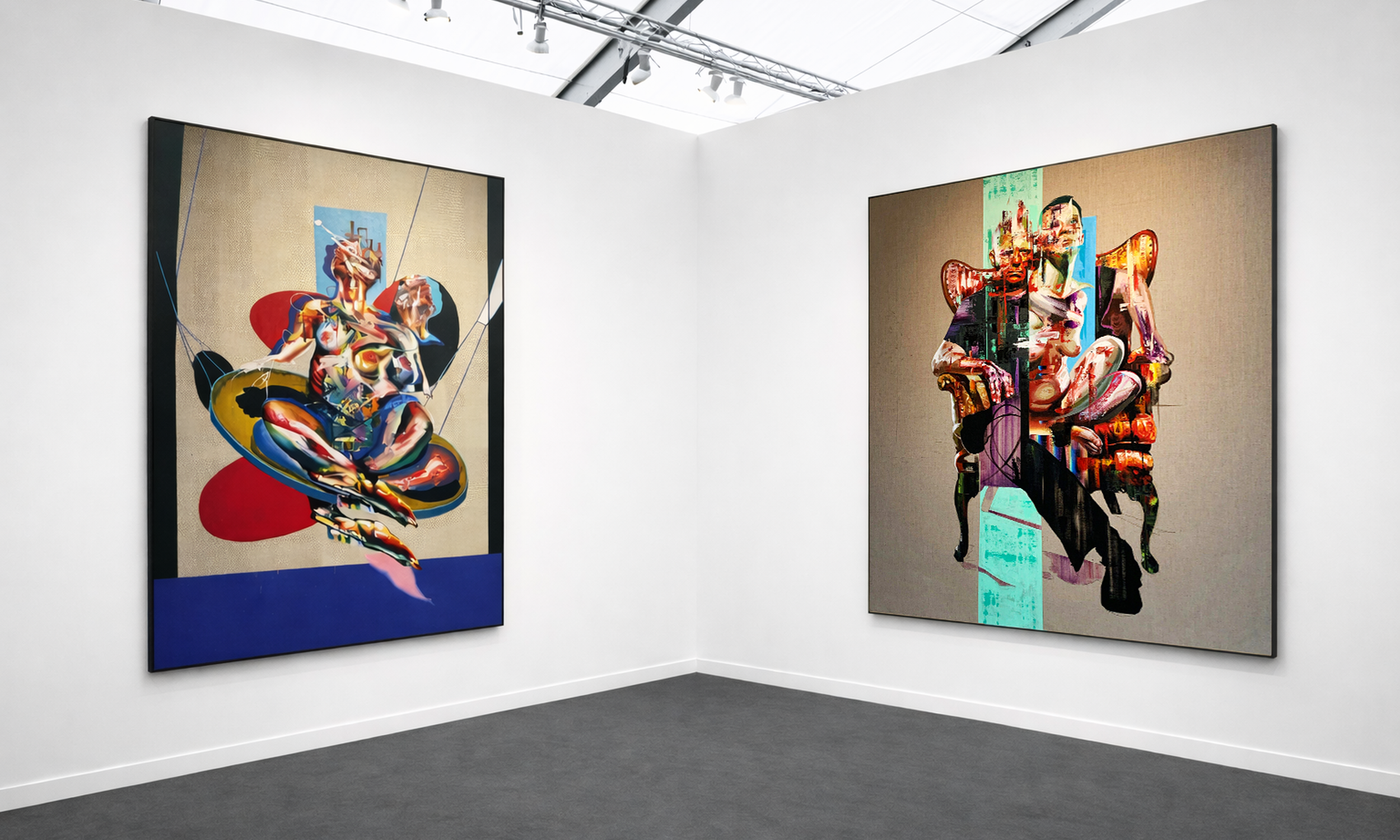
Bower adapts this logic of the shaped canvas as a minimalist system—a measured field, an optical framework—whose “hand” is no longer fully legible within the work. This, in turn, evokes the invisible processes of the digital. The calibrated plane becomes a counterweight to the organic, painterly description of the upper layers. By situating the human figure across multiple pictorial registers, he generates multidimensional effects: the subject appears to hover between construction and dissolution.
A reference to the Irish-British artist Francis Bacon (1909–1992)—whom Bower cites as an influence—emerges almost immediately. In both practices, one senses what is being done to the body: integrity is refused, the figure is deformed. In Bower, this biomorphic language describes a process of transformation and gradual symbiosis between the individual and the digital. The subject is dispersed into vibrating, abstract color. Certain motifs—such as the viewpoint and posture of a seated male figure—can be read as direct citations of Bacon’s configurations from the 1960s onward.
“This was not an ‘empty square’ I exhibited, but rather the sensation of non-objectivity.” —Kazimir Malevich
It is striking how the idea of non-objectivity reappears across modern art history. In 1915, Kazimir Malevich painted Black Square, now an icon of twentieth-century visual culture. As a representative of Suprematism, his ambition was nothing less than the overcoming of the representational—reducing depiction to black and white as a field of sensation and the absence of sensation. Bower’s backgrounds likewise sometimes form black-and-white coded, geometric planes that displace the figure into a non-objective space. These grounds can appear structured by the logic of informational systems—akin to binary coding, where content is reduced to units such as 0 and 1. If Malevich’s Black Square marked a radical departure from the object-world, Bower’s chromatic and formal code similarly opens a view “behind” the image surface—behind the display—recalling the simplifications through which digital systems operate.
Dynamics and acceleration—movement, speed, continual change—are often described as defining conditions of the present. Yet these experiences already permeate early twentieth-century art, when Futurism distorted the figure across dimensions and made the psychological as well as physical effects of technological acceleration a central theme. A century later, inventions continue to reshape how time and space are perceived.
The simultaneity of human modes of being, and the lived experience of constant transformation, find expression in the vibrating colors and forms with which Justin Bower constructs his paintings. This principle is condensed in figures handled with a divisionist-like brushwork—fragmented, optically activated, and deformed. The term Disrupted Realism becomes immediately plausible in this context: Bower reflects the dissolution of the person within the space- and time-altering processes of the digital present.
Justin Bower — Biography and Selected CV
Selected exhibitions, awards, bibliography, collections, and auction results (since 2010).
Exhibitions (since 2010)
Solo exhibitions
- 2025 — Justin Bower: Capturing the Digital Identity, G-ALLERY, Paris, France
- 2023 — Do Androids Dream?, Maddox Gallery, London, UK
- 2022 — Justin Bower (Solo Presentation), G-ALLERY, Berlin, Germany
- 2020 — Exhibition, Maddox Gallery, Los Angeles, CA, USA
- 2020 — Justin Bower, G-ALLERY, Germany
- 2020 — Colossus Id, Patrick Painter Inc., Los Angeles, CA, USA
- 2019 — The Future, Patrick Painter Inc., Los Angeles, CA, USA
- 2018 — The Singularity, Fine Art Complex, Phoenix, AZ, USA
- 2016 — Thresholds, MOAH (Lancaster Museum of Art and History), Lancaster, CA, USA
- 2015 — Efflorescence, UNIX Gallery, New York, NY, USA
- 2015 — The Humiliations, UNIX Gallery, New York, NY, USA
- 2013 — Panic Room, UNIX Gallery, New York, NY, USA
- 2010 — Embedded, Ace Gallery, Beverly Hills, CA, USA
- 2010 — Destabilizer, Peggy Phelps Gallery, Claremont, CA, USA
Selected group exhibitions
- 2023 — Ruhr Objekt 2, Essen, Germany
- 2022 — Winter Contemporary, Maddox Gallery, Gstaad, Switzerland
- 2022 — The Agony and the Ecstasy, Maddox Gallery, Los Angeles, CA, USA
- 2021 — Autumn Contemporary, Maddox Gallery, London, UK
- 2021 — The Unfocused, Gio Marconi, Milan, Italy
- 2020 — Leave It, UNIX Gallery, New York, NY, USA
- 2019 — Enter the Void, Galerie Klose, Essen, Germany
- 2017 — #UNIX, UNIX Gallery, New York, NY, USA
- 2017 — About Face, Kellogg University Art Gallery (Cal Poly Pomona), Pomona, CA, USA
- 2013 — True Believers, Torrance Art Museum, Torrance, CA, USA
- 2012 — Group Exhibition, Ace Gallery, Beverly Hills, CA, USA
- 2011 — Tel-Art-Phone (curated by Mat Gleason), Los Angeles, CA, USA
Biennales & art fairs (selected)
- 2023 — The Wrong Biennale, Spain
- 2022 — The Armory Show (with Maddox Gallery), New York, NY, USA
- 2021 — Art Basel Miami Beach (with UNIX Gallery), Miami Beach, FL, USA
- 2019 — Art Basel Miami Beach (with UNIX Gallery), Miami Beach, FL, USA
- 2018 — Art Basel Miami Beach (with UNIX Gallery), Miami Beach, FL, USA
- 2018 — LA Art Fair (with Patrick Painter Inc.), Los Angeles, CA, USA
- 2017 — NADA Art Fair (with UNIX Gallery), New York, NY, USA
- 2017 — LA Art Fair (with Ace Gallery), Beverly Hills, CA, USA
- 2015 — LA Art Fair (with Ace Gallery), Beverly Hills, CA, USA
- 2013 — Art Southampton, New York, NY, USA
- 2013 — Art Los Angeles Contemporary Art Fair, Los Angeles, CA, USA
Awards
- 2010 — Feitelson Fellowship Grant; Joan Mitchell Award Nominee
- 2009 — Four Outstanding Fine Art Painting Fellowships, Claremont Graduate University, CA
Selected bibliography & interviews
- 2025 — Interview, COUTEUR
- 2020 — “In Conversation with Justin Bower,” Maddox Gallery
- 2015 — Justin Bower “Thresholds”, Museum of Art & History, Lancaster, CA
- 2015 — American Art Collector, “In Flux,” by John O’Hern
- 2013 — KCET, “Beneath the Skin: The Paintings of Justin Bower,” by Carolina Miranda
- 2013 — Studio Visit Magazine, Front Cover
- 2011 — LA Times, “Art Review: Justin Bower at Ace Gallery,” by Christopher Knight
- 2010 — Artillery Magazine, “Embedded,” by James Scarborough
- 2010 — New American Paintings, Front Cover
Selected collections
- Frederick R. Weisman Art Foundation, Los Angeles
- University of Arizona Museum of Art
- Eugenio López Alonso Collection, Mexico
- Rutan & Tucker LLP
- Tim Redman (UK); Stuart Holt (UK); Greg Conn (UK)
- Ben Bourgeois (Los Angeles); Paula Goodman (Los Angeles); Nick Reed (Los Angeles)
- Paula Thomas, CEO Thomas Wylde Design Labs
Auction results
- Christie’s — First Open | Post-War and Contemporary Art | Online, 20–30 September 2016: Lot 85 (Justin Bower, The Magician).