Vladinsky
Represented by G-ALLERY
Works by Vladinsky are available through G-ALLERY by private inquiry.
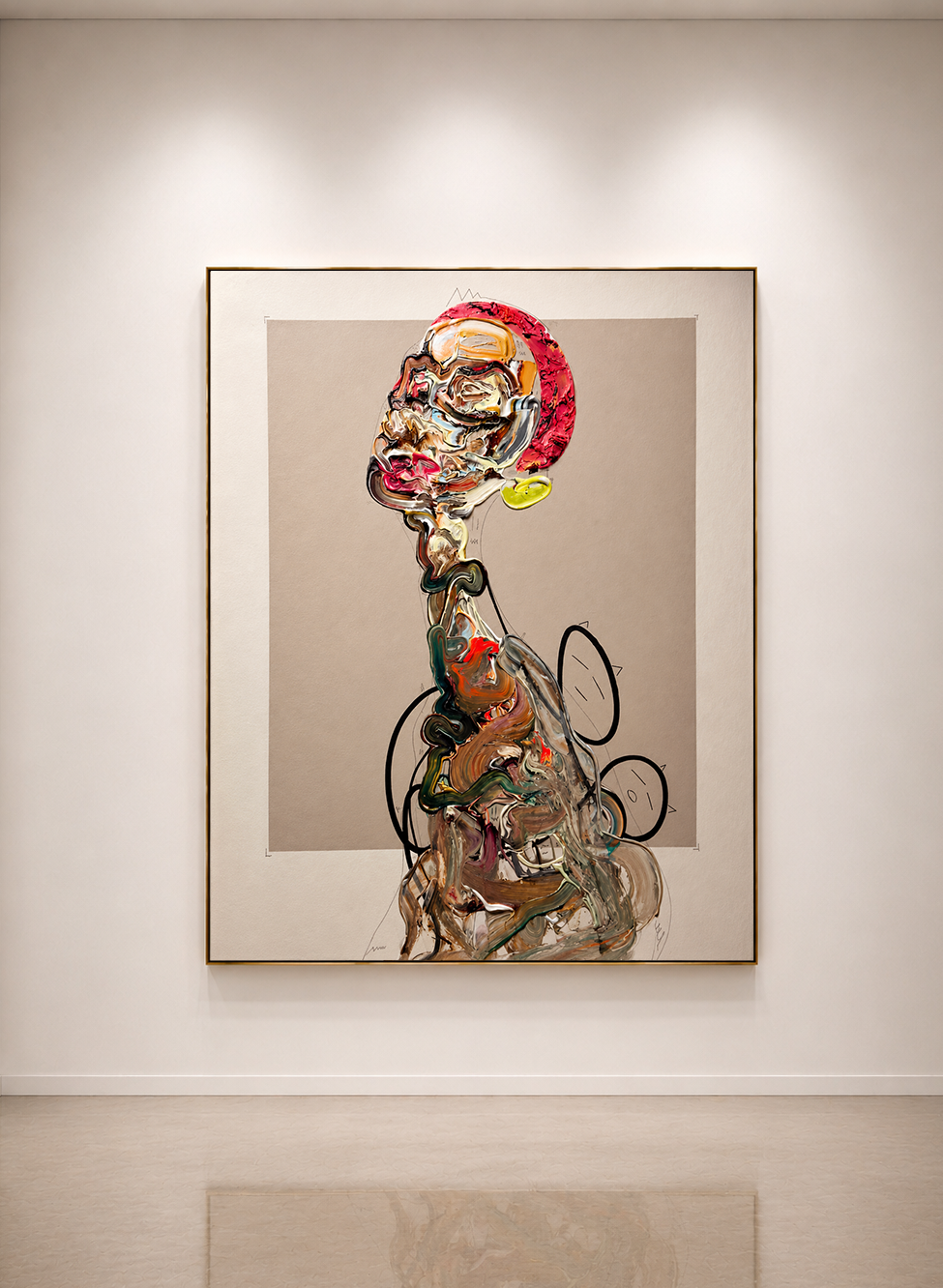
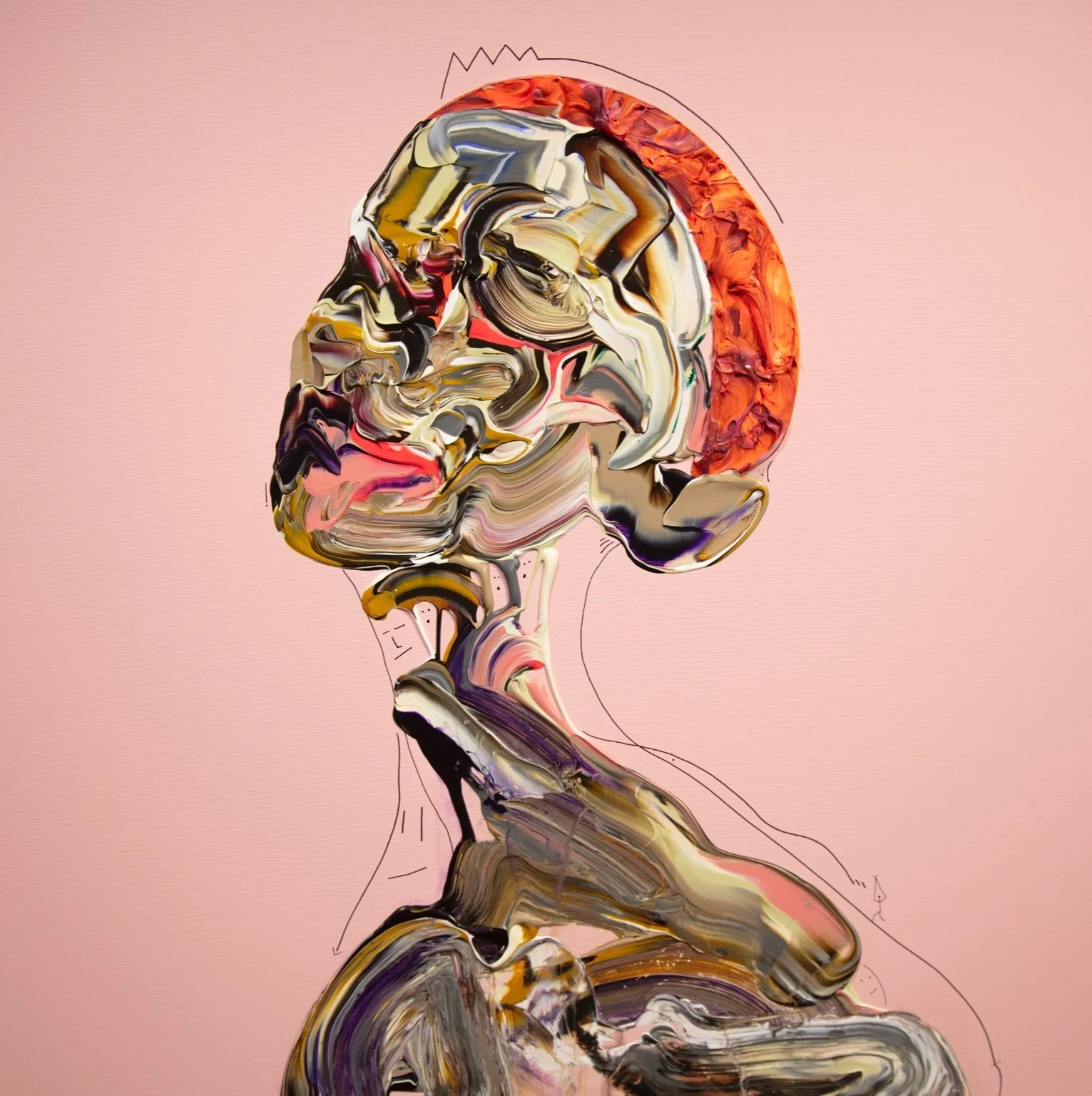
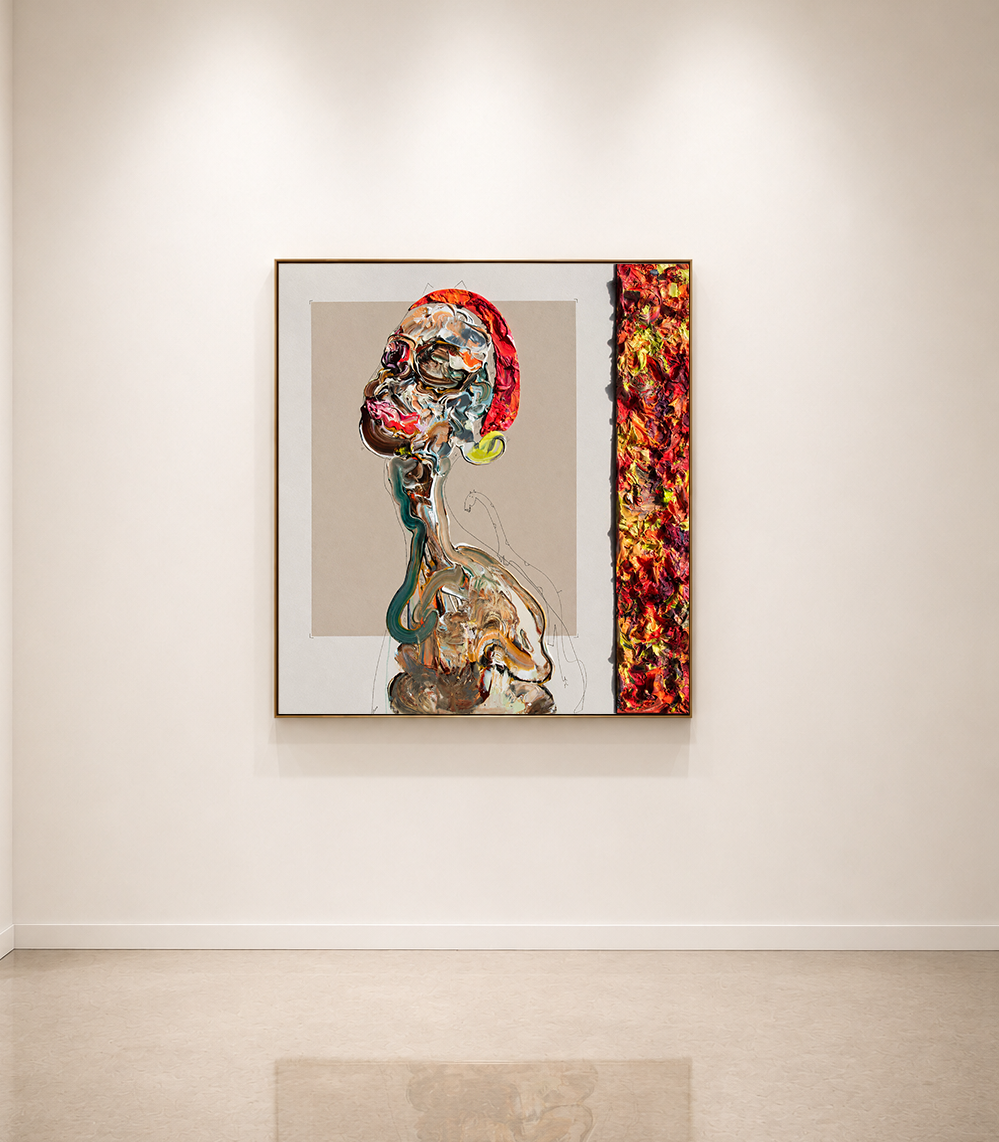
Vladinsky (1988, Onești, Romania) is among the most distinctive contemporary voices in European portrait painting and represents a new, introspective generation of figurative artists. His work—most notably the ongoing Observer series—is not concerned with depicting an individual, but with the act of seeing itself: the condition of observation, presence, and self-awareness. The faces in his paintings are not portraits in the classical sense; they function as visual interfaces between inner reality and the external gaze, condensed through an expressive, tactile application of paint that turns the canvas surface into a psychological field of experience.
From an art-historical perspective, Vladinsky can be situated within the lineage of existential figuration and brought into dialogue with artists such as Francis Bacon and Egon Schiele—painters who understood the face as an emotional event. While Bacon’s portraits probe dissolution and the raw deformation of the subject, and Schiele exposes the self through nervous, linear revelation, Vladinsky follows a different path: he fragments form not out of pain or uncertainty, but out of analytical contemplation.
His painting is intense, yet not expressive in an eruptive sense—rather, it is deliberate, concentrated, and meditative. The surfaces of his works operate as repositories of perception: dense layers of color, palette-knife passages, vibrating edges—never illustrative, always searching, feeling, observing. Vladinsky works without a model; physiognomy becomes universal, archetypal, emotionally legible, yet not tied to any single individual. This is where his particular strength lies: Vladinsky does not paint identities—he paints the consciousness of looking.
His visual language breaks decisively with the post-communist motif traditions of Eastern Europe, long shaped by still lifes, folklore, and narrative objecthood, replacing them with a radically contemporary iconography that reads as globally intelligible. As a result, his paintings extend beyond geographical frames and have found resonance in international collections across Europe, the United States, and the Middle East.
Conceptually, his works engage questions central to current artistic discourse: subjective perception, media overstimulation, identity construction, and presence in the digital age. Formally, they unite the legacy of classical oil painting with a haptic, almost sculptural handling of pigment that draws the viewer physically into the image. In this way, Vladinsky offers a contemporary response to the tradition of psychological portraiture—without becoming narrative and without allowing fixed iconographic attribution. His paintings do not demand; they encounter. They observe the observer.
In an era defined by relentless image saturation, Vladinsky positions painting as a conscious counterpoint: as an act of seeing, an experiment in stillness, an invitation to reflection. His work does not present the face of a person, but the face of perception itself—and precisely through this, it makes tangible what contemporary art can achieve today: to move without explaining, and to make visible without naming.