
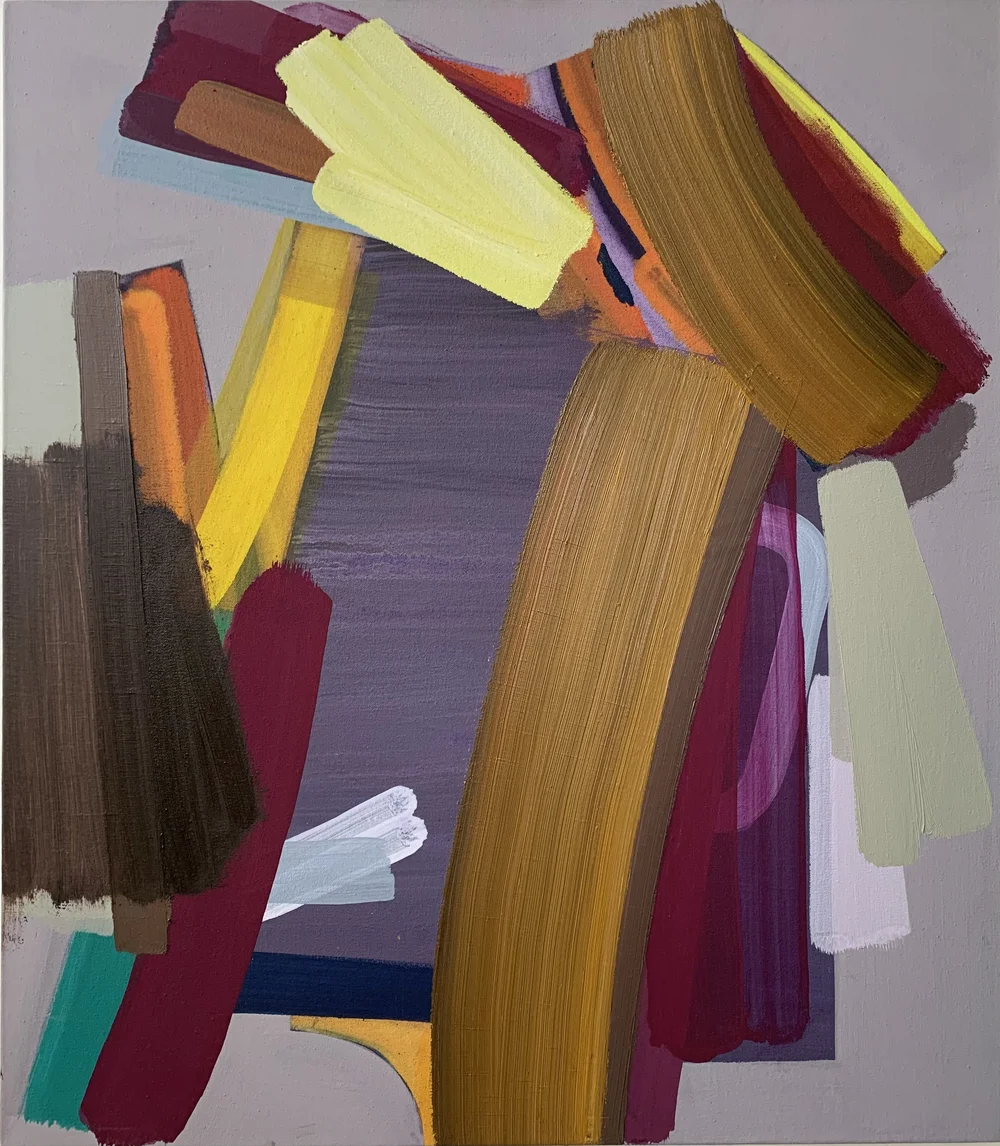
72 × 63 cm / 28.3 × 24.8 in
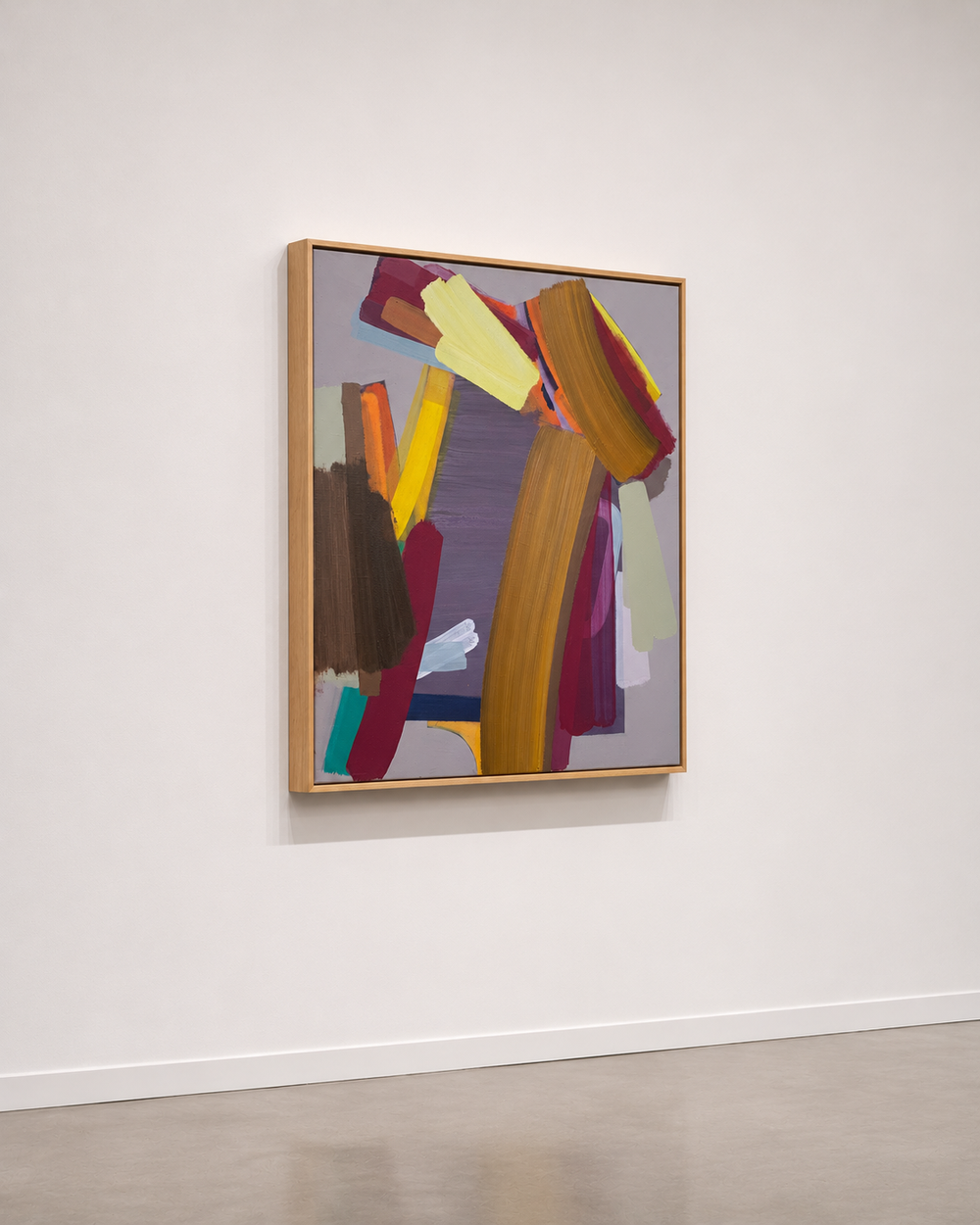
72 × 63 cm / 28.3 × 24.8 in
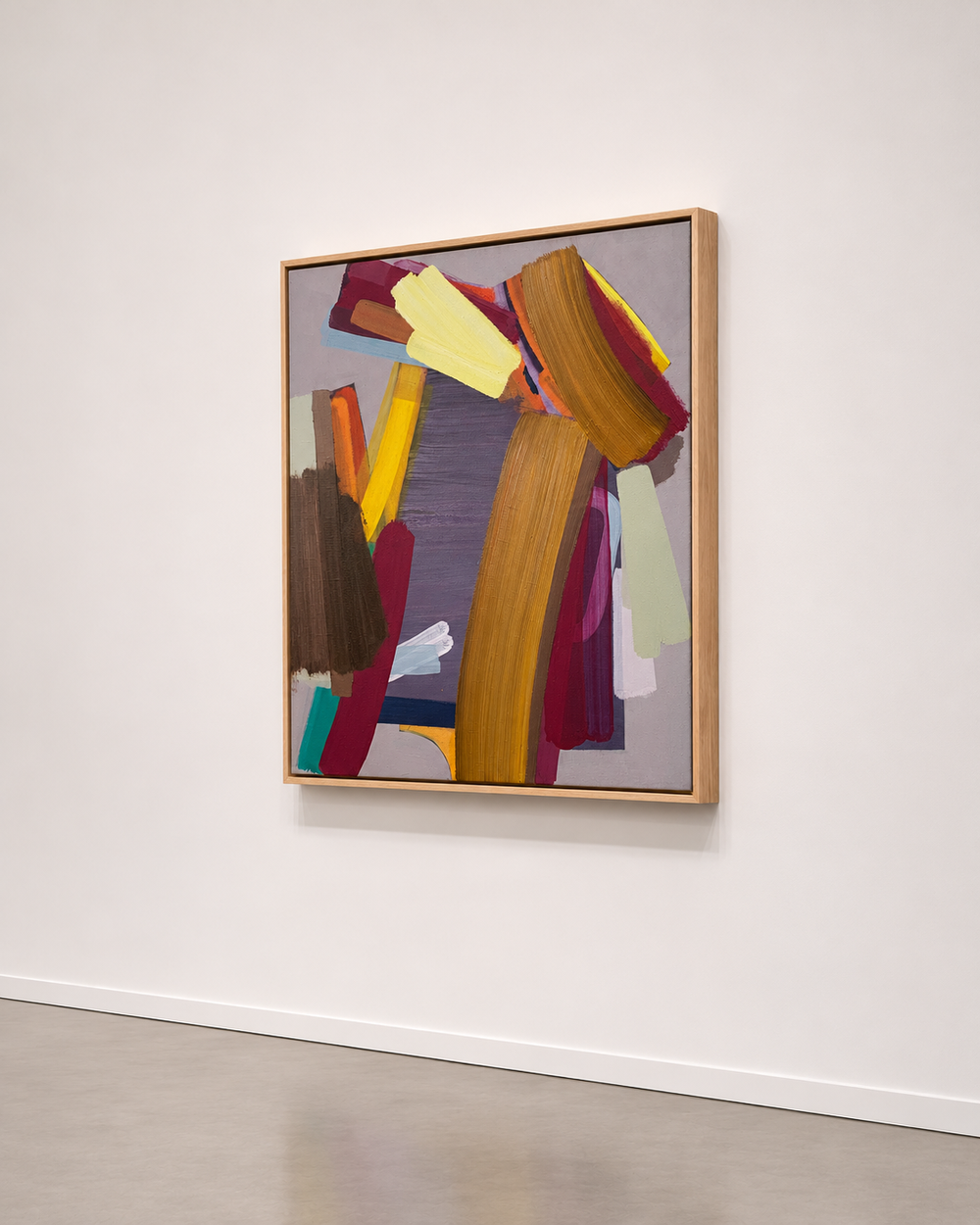
72 × 63 cm / 28.3 × 24.8 in
An individual painting / John Millei
John MilleiHead 28
The title gives us a head. The feeling that it belongs to someone is ours to account for. In Head 28, John Millei draws those two events far enough apart for us to experience the passage from one to the other.
- Medium
- Oil on canvas
- Dimensions
- 72 × 63 cm / 28.3 × 24.8 in
Height × width
01 / A curatorial reading by G-ALLERY
Before a likeness
One of the pleasures of a portrait is being able to recognise someone we have never met. We learn a face from a painting, carry it away, and know it the next time we see it. Head 28 makes an exacting use of that capacity. The work can become deeply familiar while the identity of its subject remains an open question. What, then, have we learned to recognise?
Millei’s choice of the word head matters. A head occupies space, has weight, can turn away. A face belongs to the social world. We turn to it for signs of attention, consent, distraction, even for evidence that what we have just said has been understood. The title commits the painter only to the first of these terms. It is the viewer who crosses over into the second. That crossing is particularly vivid whenever an inclination registers, for an instant, as an attitude. A relation within the painting has acquired the character of a gesture someone might make.
Try giving that gesture a motive. A word such as reserve may come readily to mind, yet the longer one stays with it, the harder it is to say to whom the reserve belongs. The word records something real about the experience of looking. It also records how swiftly we furnish a stranger with an inner life. Millei leaves just enough room between these possibilities for either reading to be reconsidered.
02 / The head in series
What survives repetition
There is a precedent for this question in Millei’s Procession Paintings. In a 2007 conversation with Mitchell Kane for X-TRA, he traced their beginnings to two visits in Italy. In Padua he saw Giotto’s procession in the Arena Chapel. In Bologna he studied Morandi’s still lifes. Back in Los Angeles, he approached the figures in a reproduction of Giotto as if they were objects in a still life. A slight change of inclination, he found, could imply a relationship between figures and bring a narrative back into play.
That account offers a way into Head 28. Here there is no procession to supply a relationship, no second figure from whom a tilt or turn might take its meaning. The person standing before the canvas occupies the missing position. To see the head as withdrawn, for example, is already to have imagined a direction in which it might have turned, and a place from which one might have been acknowledged. A small drama of address can arise entirely on the viewer’s side of the painting.
The number 28 makes this particular head one among others. For a painter, taking up the same subject again means discovering which decisions have hardened into habits. For a viewer, the consequences are different. Compare this canvas with Millei’s Head II, then try to call each to mind in its absence. The word head will retrieve either. Remembering this one requires something more precise, closer to recalling the bearing of a person one once knew than to listing the features by which that person could be identified.
03 / Scale & space
The distance of conversation
At 72 × 63 centimetres, Head 28 can be seen whole from a distance at which one might ordinarily speak to another person. That bodily measure distinguishes it from the 182-centimetre-high Head II. Before the larger canvas, one must move away to gather the image together. Here the entire head remains within a single glance even as the hand that made it becomes legible. The scale holds two kinds of intimacy in balance. We feel the imagined nearness of another person and the actual nearness of someone’s work.
They unfold at different speeds. We can register a human presence almost at once. Following a painter’s decision takes longer, since each decision draws its sense from what came before it and from what it made possible next. Looking back across the canvas, a passage that seemed indispensable to the head can recover its independence as paint. Then recognition returns. By the second or third return we have some memory of having supplied it ourselves. Familiarity with the painting brings enough freedom to let the head go, confident of finding it again.
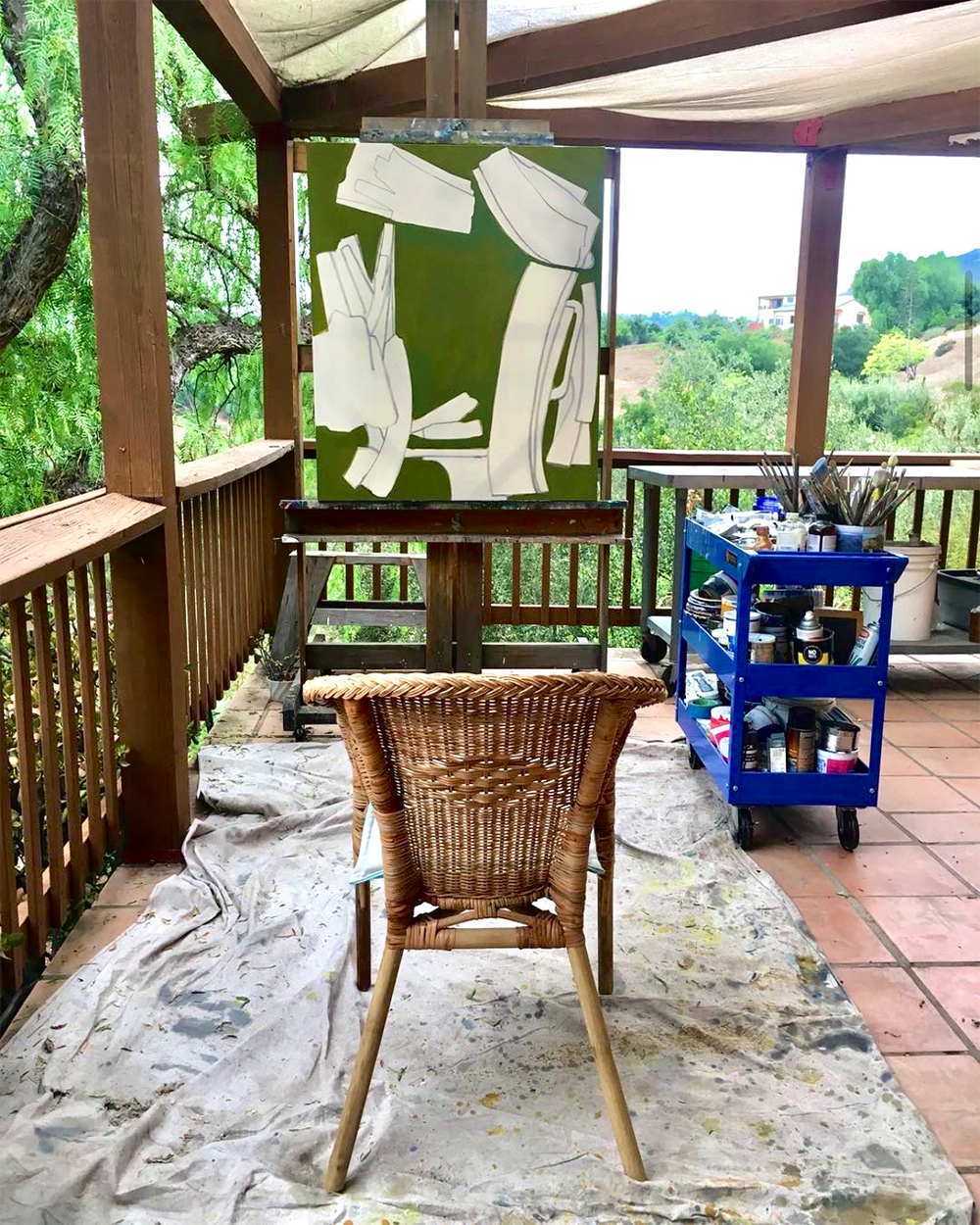
04 / Studio view
Returning to the easel
The photograph brings a second head into the discussion. Seen here on the easel, it allows us to consider what the individual work owes to the practice of beginning again. Imagine returning to the studio with yesterday’s head still fresh in mind. The difficult thing would be to discover, in a subject already so familiar, a decision one had never had occasion to make.
Placed beside Head 28, the studio view gives the number in its title a more personal resonance. It marks a return to a question the painter has learned to keep open. For the viewer, too, there is a difference between coming back to a picture to confirm a memory and coming back to see what that memory left out.
05 / Collecting this work
Inquire about Head 28
Contact G-ALLERY for pricing, a condition report or further photographs. Private video viewings can be arranged when the painting is accessible.
Inquire about this work →Acquisition & shippingCan I see the surface more closely?
G-ALLERY can provide detail photographs and confirm whether a private video viewing can be arranged.
What dimensions should I use for installation?
The listed measurements refer to the canvas, height first. For a particular wall, request the framed dimensions and depth. A photograph and measurements of the intended setting will help the gallery discuss placement with you.
What can the gallery provide before acquisition?
G-ALLERY can confirm current availability, pricing and the provenance and condition documentation available for Head 28. Collectors in the United States may request a quotation in USD and an estimate for insured delivery.