John Millei
Imaginary Girl
188 × 142 cm / 74.0 × 55.9 in (height × width)
oil on canvas
188 × 142 cm / 74.0 × 55.9 in
An individual painting / John Millei
John MilleiImaginary Girl
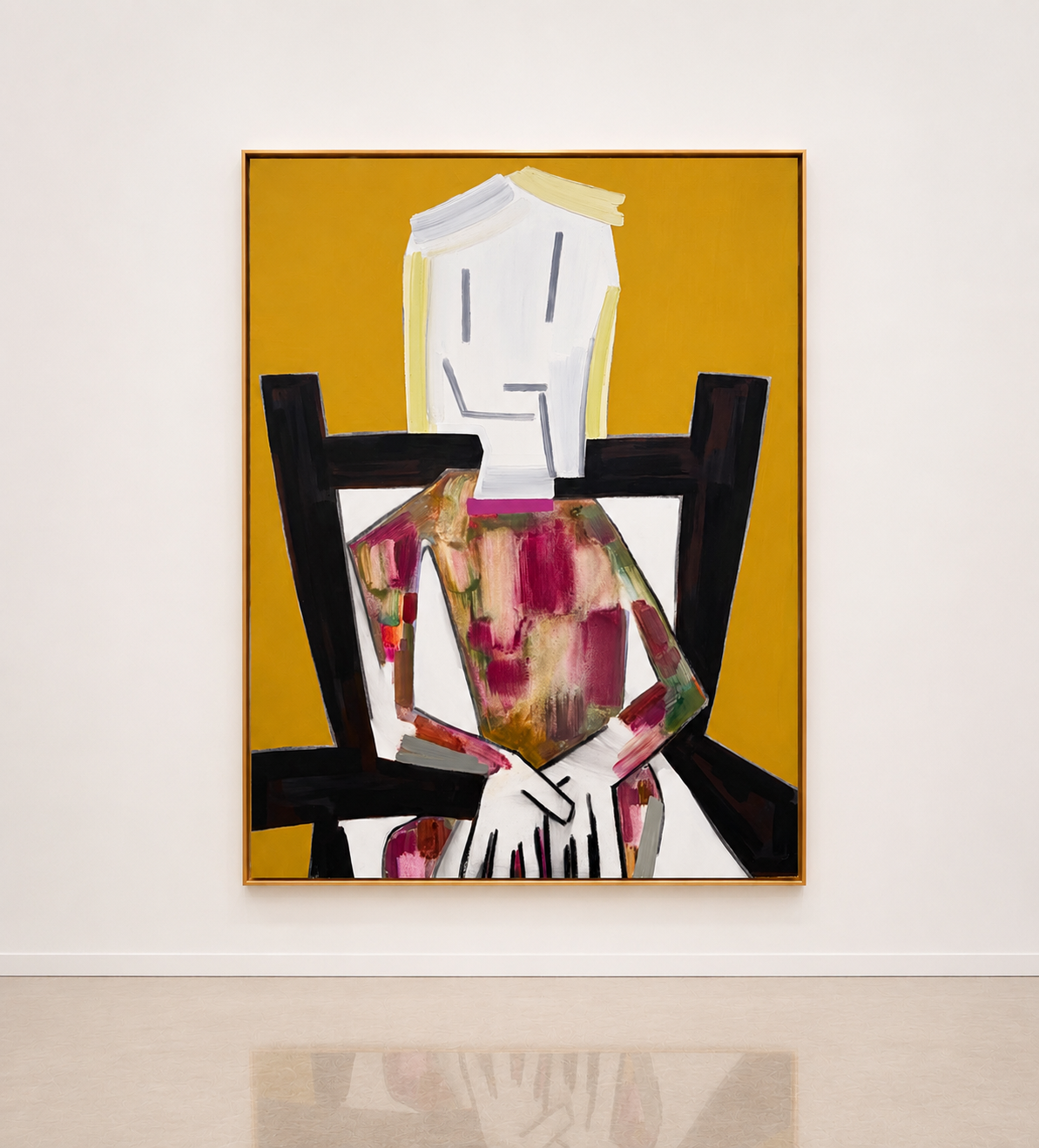
An imagined sitter takes shape through contrasts: a luminous white head, a richly worked body and pale hands gathered against the dark structure of a chair.
- Medium
- Oil on canvas
- Dimensions
- 188 × 142 cm
74.0 × 55.9 in · Height × width - Enquiries
- Price and current availability on request
Request pricing, provenance and condition information.
Explore the painting01 / An invented sitter
A character
without a biography.
A curatorial reading by G-ALLERY
Imaginary Girl gives the conventions of a seated portrait an unfamiliar task. The title offers no named sitter whose history might explain the image. Instead, it directs attention towards the means by which a character can be invented: the inclination of a head, the disposition of limbs, the distribution of colour. The painting asks how little information is needed for a figure to acquire a convincing presence.
The white head is markedly spare. Grey strokes establish the features without describing their volume, while overlapping pale bands at its upper edge suggest a crown of hair. Its irregular perimeter introduces a slight instability into an otherwise frontal encounter. The face seems available to recognition, yet gives little away about what the figure might be thinking.
The eloquence of the hands
Lower down, the hands provide a different kind of description. Their elongated fingers are separated by decisive dark lines, and their meeting draws the bent arms into a compact arrangement across the lap. This is a specific bodily gesture within a deliberately economical image. It may suggest composure, restraint or a moment of waiting; the painting leaves the occasion unstated.
Between face and hands, the torso carries an accumulation of red, green, cream and earthy passages. The eye moves from the openness of the head to this more densely worked surface, then back to the clarity of the fingers. Character emerges through these uneven degrees of articulation. The figure never becomes equally legible in all its parts.
Fiction and the person we imagine
In a visual culture populated by fictional personas and carefully composed public identities, the title makes a timely distinction: an image can elicit a sense of personhood without supplying a biography. Here that effect depends on neither photographic credibility nor narrative detail. It grows from the viewer’s response to a posture and a handful of marks.
The painting allows us to notice our own part in this exchange. We may begin to assign a temperament to the sitter, only to find that a shift of attention changes the impression. The imagined person remains inseparable from the painted decisions that make her appear. That unresolved relationship gives the work its particular intimacy.
02 / Colour & construction
Ochre holds
the space.
The ochre ground surrounds the head and extends down either side of the chair. With little indication of a room, this warm field becomes the principal measure of the figure’s silhouette. Its relative continuity gives the broken colour of the torso greater force.
The chair supplies a second framework. Heavy black uprights lean away from one another, while crossbars interrupt the space behind the body. These strokes anchor the sitter, but their skewed geometry also presses against a stable sense of depth. Furniture becomes an active part of the composition.
Against this dark structure, white appears in several roles: as head, as hands and as openings around the body. The same lightness can belong to the figure or to the space beside it. Following these passages makes the boundary between a person and her surroundings less straightforward than the familiar seated pose first suggests.
03 / The drawn figure
A posture
carried by drawing.
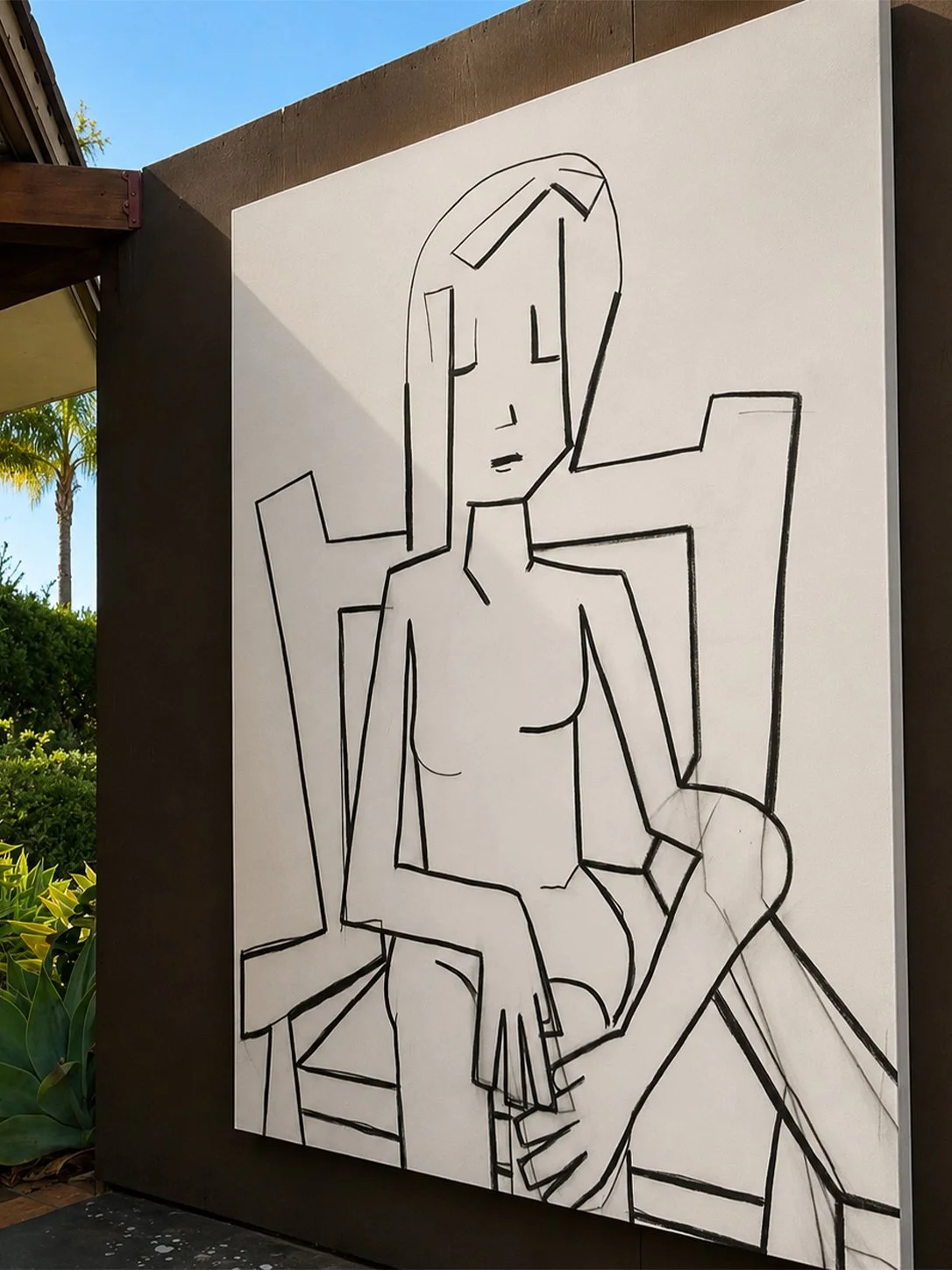
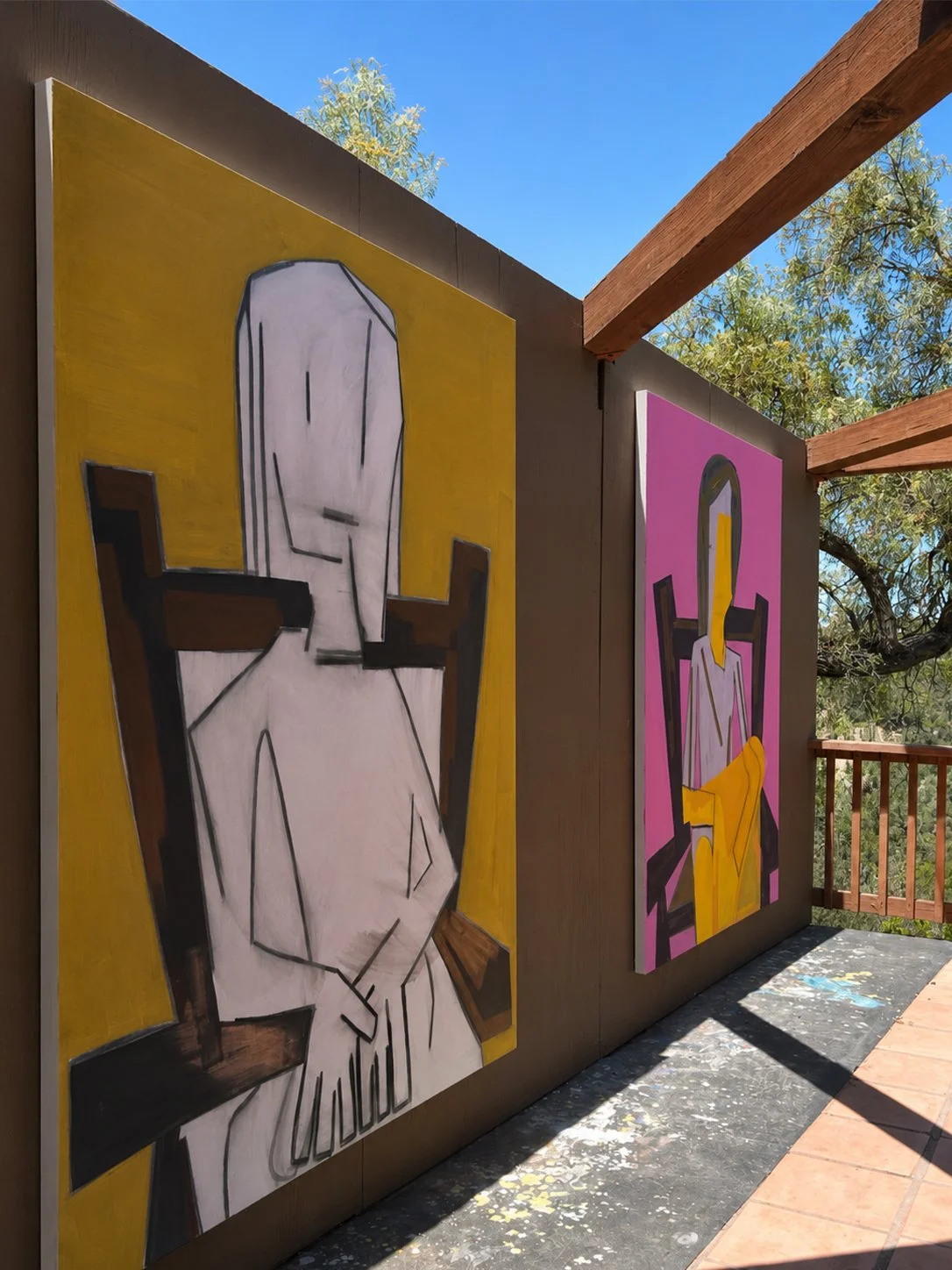
The angular chair, bent elbows and gathered hands form a recognisable structure even where colour is sparse. Their connections give the figure a bodily coherence that does not depend on anatomical modelling.
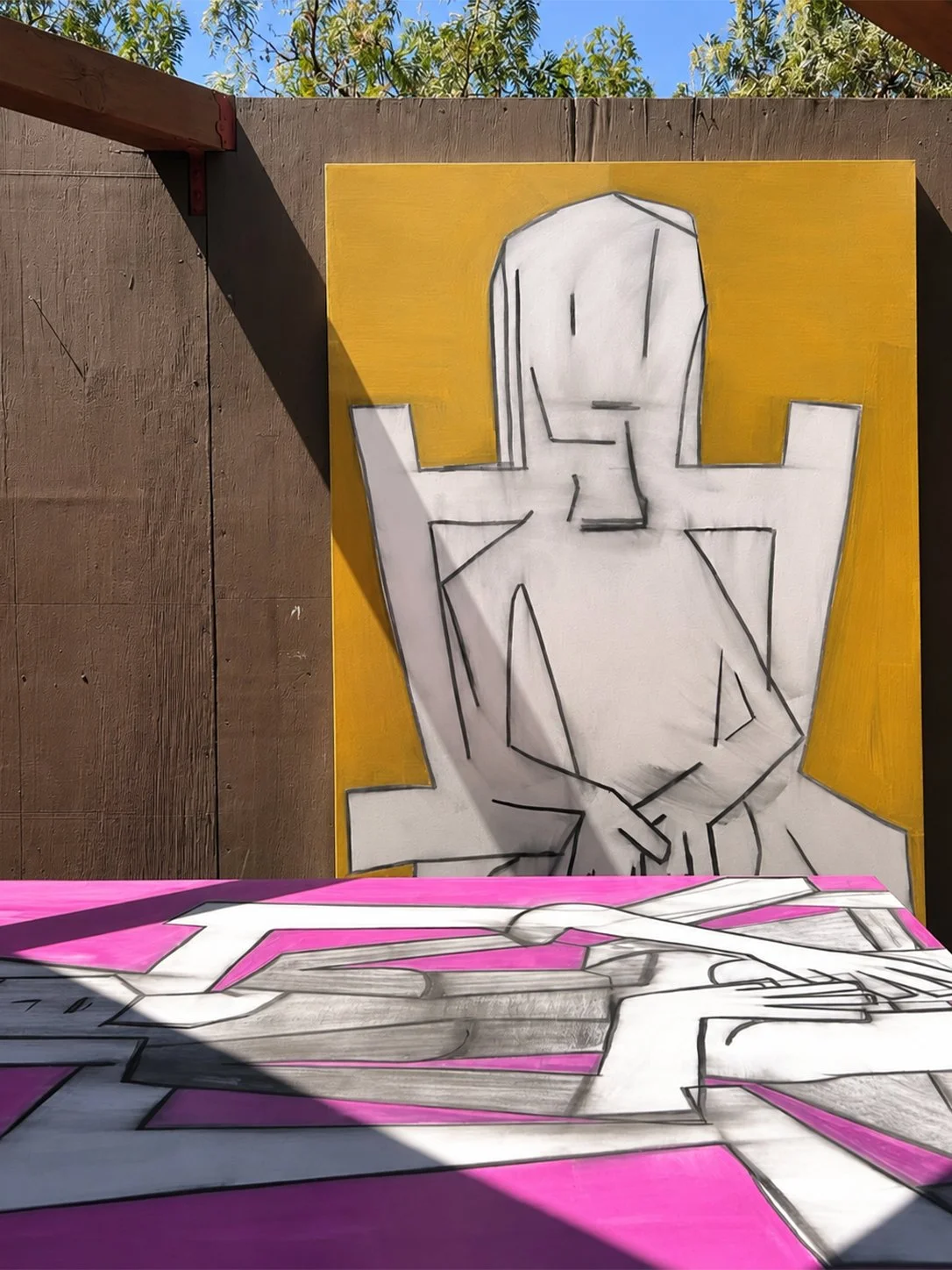
Seen beside another canvas, the composition also reveals the importance of its enclosure. The chair’s broad strokes repeat the rectangle’s insistence on an edge, while the head rises above its upper crossbar. This relationship between the body, its support and the boundary of the canvas sustains the painting’s architecture.
04 / Collecting this work
Enquire about
Imaginary Girl.
Contact G-ALLERY for the price, current availability and documentation for this original oil painting by John Millei.
Enquire about this paintingart@g-allery.com
What are the medium and dimensions?
Imaginary Girl is an oil painting on canvas measuring 188 × 142 cm (74.0 × 55.9 in), height × width.
What information is available before acquisition?
Ask the gallery for the current price, available provenance and condition documentation, and further photography of the work.
Can I arrange a viewing?
Contact us with the title Imaginary Girl. We will confirm viewing options and discuss delivery to your destination.
The artist / Further context
John Millei’s practice.
Discover the wider body of work, biography and selected exhibitions.
Explore the artistContinue looking / Available paintings
Woman with Flowers.
A floral motif extends the figure into the space around it.
Explore Woman with FlowersAll available paintings