
John Millei’s Painting Language: Why His Paintings Reward Repeated Looking
John Millei’s paintings rarely resolve themselves at first glance. A figure may appear and dissolve again; a line can function as drawing, structure or interruption; a familiar art-historical motif may remain visible while being transformed almost beyond recognition. What initially seems spontaneous is often the result of repeated decisions, revisions and shifts in direction.
This openness is central to Millei’s practice. Rather than developing a fixed visual formula, the American painter has spent more than four decades exploring what painting can become when gesture, memory, personal experience and art history are allowed to remain in active tension. His work moves between abstraction and figuration without settling comfortably within either category.
The result is a body of work that does not simply ask to be recognised. It asks to be reconsidered.
A Painter Formed in Los Angeles
Born in Los Angeles in 1958, John Millei began painting in the late 1970s. During this formative period, he worked as a studio assistant to Richard Diebenkorn, placing him in direct proximity to one of the defining painters of postwar American art. Millei later taught painting and fine art at institutions including Claremont Graduate University, ArtCenter College of Design and the Southern California Institute of Architecture.
This background situates Millei within the history of painting on the American West Coast, yet his work cannot be reduced to a continuation of California abstraction. His artistic development took place in Los Angeles at a moment when painters were reconsidering the polished visual language associated with Light and Space and turning toward approaches that were more physical, psychologically charged and open to cultural reference.
Millei emerged within this wider environment while maintaining an independent position. His paintings absorbed lessons from Abstract Expressionism, modernist composition, popular imagery and the particular visual culture of Southern California. However, these influences became material to be reworked rather than stylistic models to be followed.
Painting as a Process of Revision
At the centre of John Millei’s practice is the understanding that a painting is not the execution of a predetermined image. It is a process through which the image gradually discovers its own conditions.
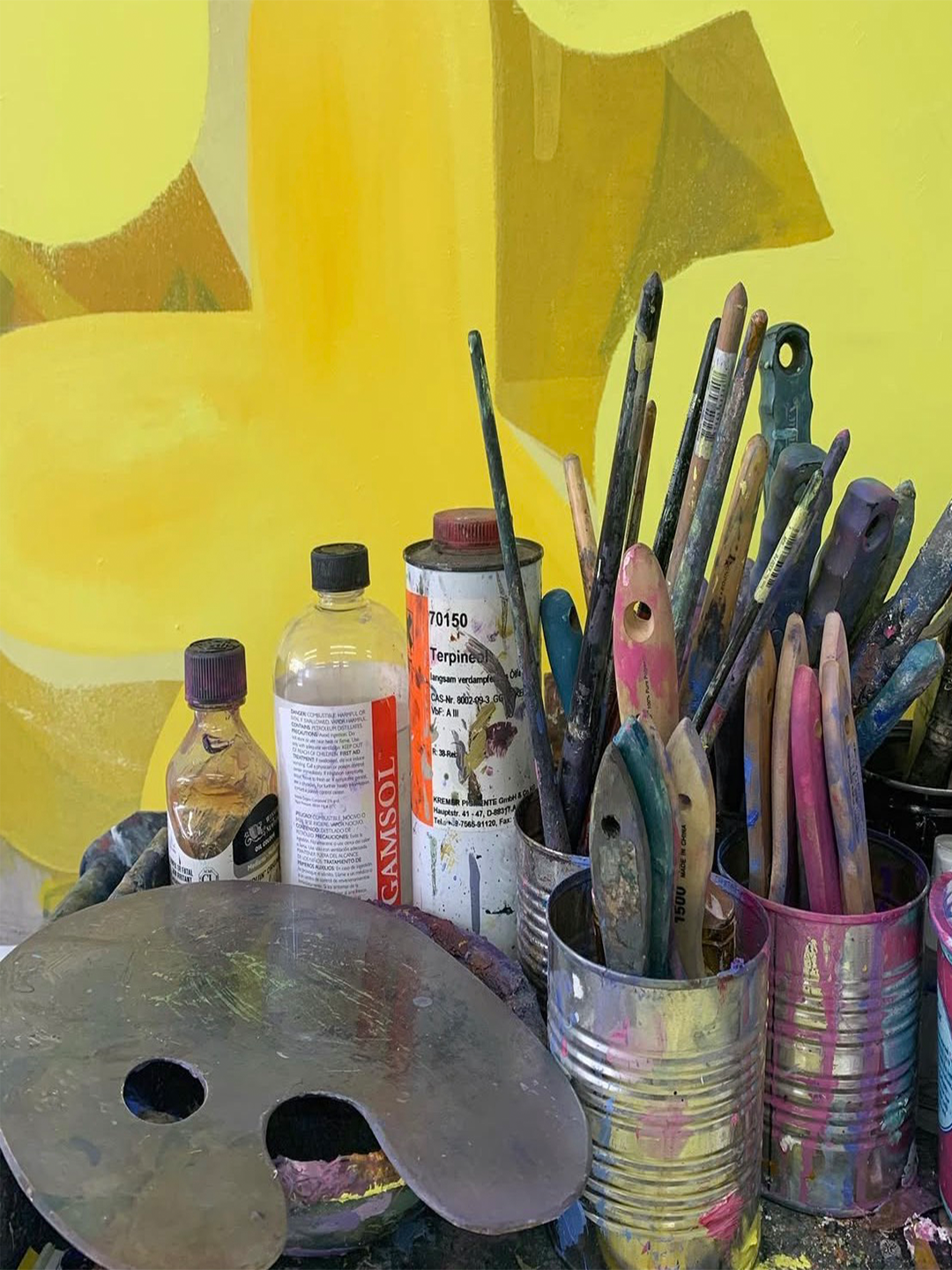
Forms are introduced, disrupted and reconstructed. Gestures may be covered by later passages but remain active beneath the surface. Areas of apparent immediacy can coexist with sections that reveal sustained deliberation. The finished work carries evidence of multiple possibilities, including those the artist ultimately rejected.
This process gives Millei’s paintings their particular sense of movement. A composition may appear stable from a distance, yet become increasingly unsettled as the viewer approaches it. Lines change roles. Shapes resist clear classification. A representational element may briefly emerge before being absorbed into a wider field of colour and gesture.
Revision, in this context, is not simply correction. It is a method of thought.
Millei has described two broad modes within his practice. In one, a recognisable subject—such as a figure, flower or seascape—provides the initial structure. The painting then develops through modifications that may preserve, distort or nearly erase that subject. In the other, the act of painting itself becomes the primary generator of the image, allowing movement, material and decision-making to determine the composition. The Surfers Journal
These approaches are not opposites. They frequently overlap. A painting that begins with an identifiable motif may become predominantly abstract, while a painting built through nonrepresentational gestures may gradually suggest a face, body or landscape.
Between Abstraction and Figuration
The boundary between abstraction and figuration is one of the most persistent territories in Millei’s work.
His paintings often contain enough visual information to suggest a subject, but not enough to define it conclusively. A curved line may indicate a shoulder or simply divide the canvas. A cluster of shapes may resemble a face, although the image remains unstable. Colour can describe form while simultaneously undermining it.
This ambiguity is not a refusal to communicate. It is an invitation to participate.
Rather than presenting a closed image, Millei allows perception to remain active. The viewer is required to move between recognition and uncertainty, testing different interpretations without arriving at a single final reading. This gives the paintings a temporal quality: they unfold through looking rather than revealing themselves all at once.
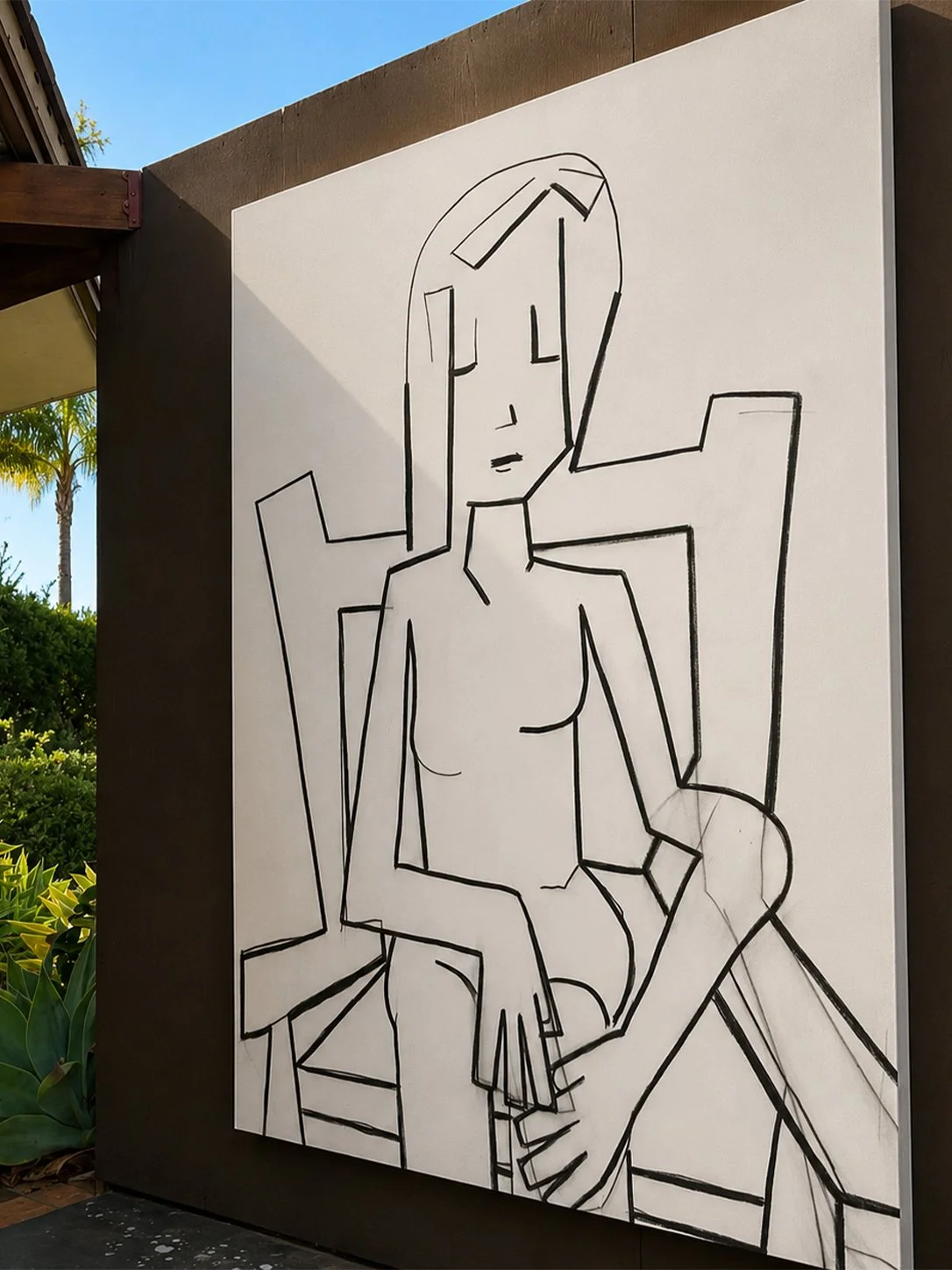
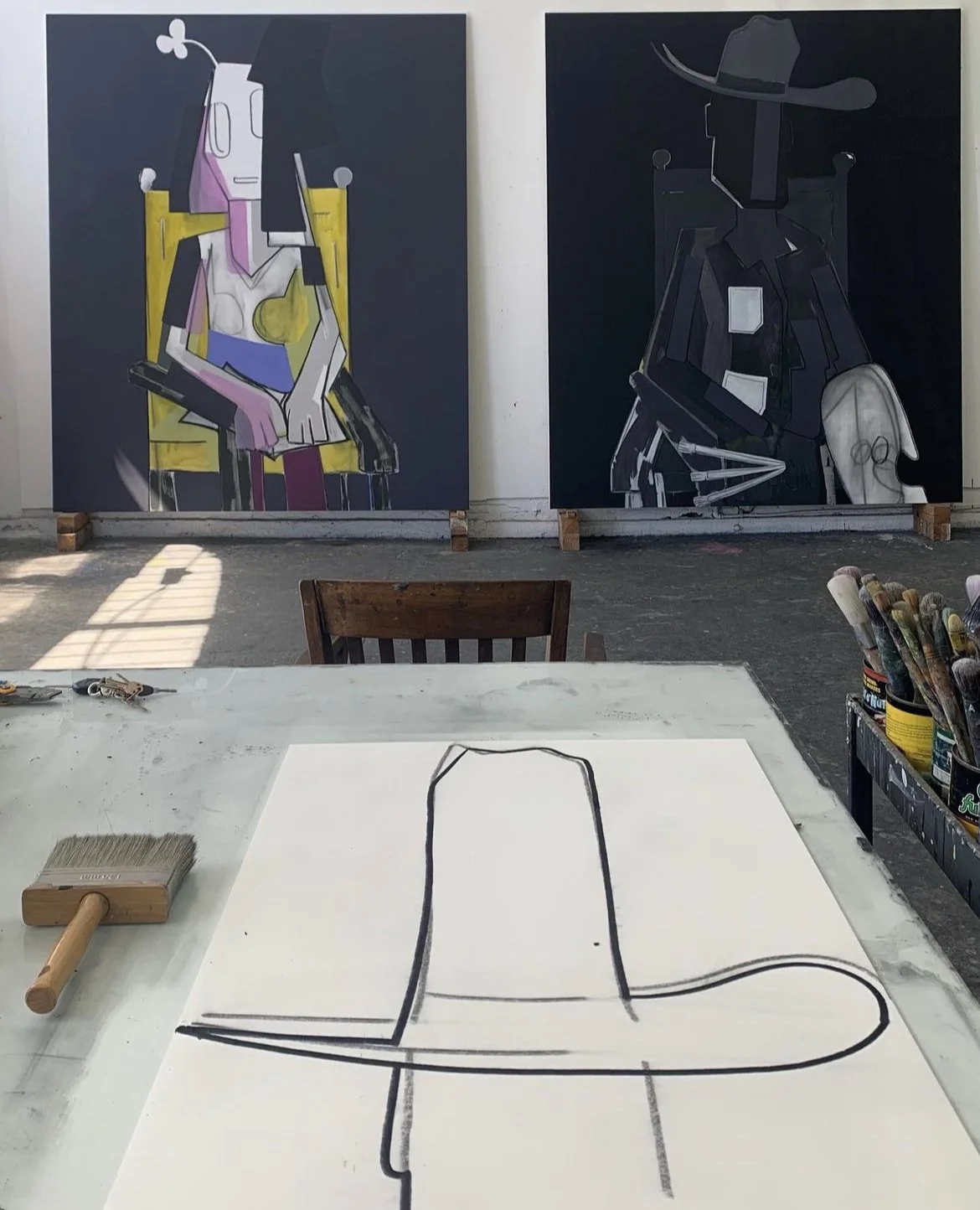
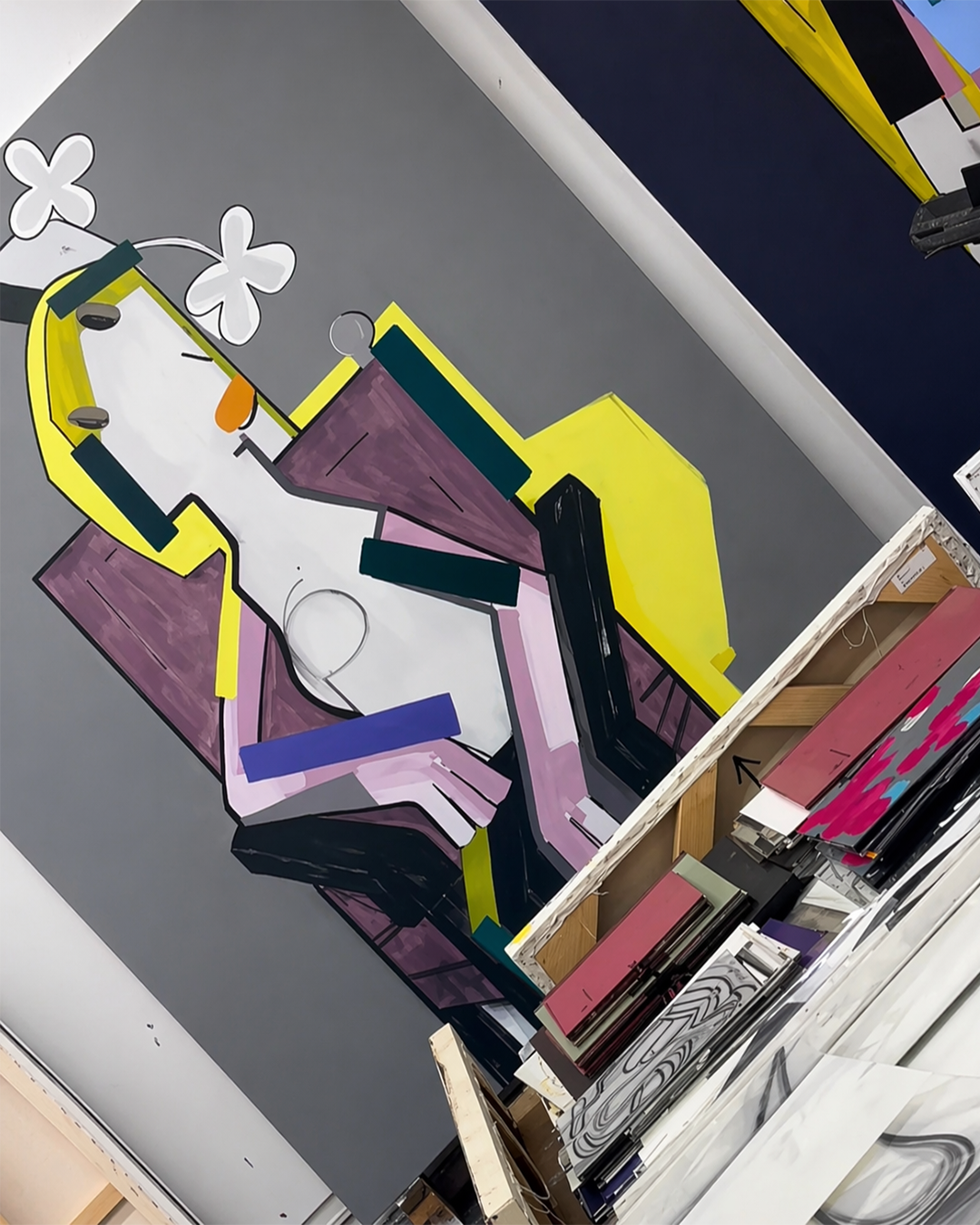
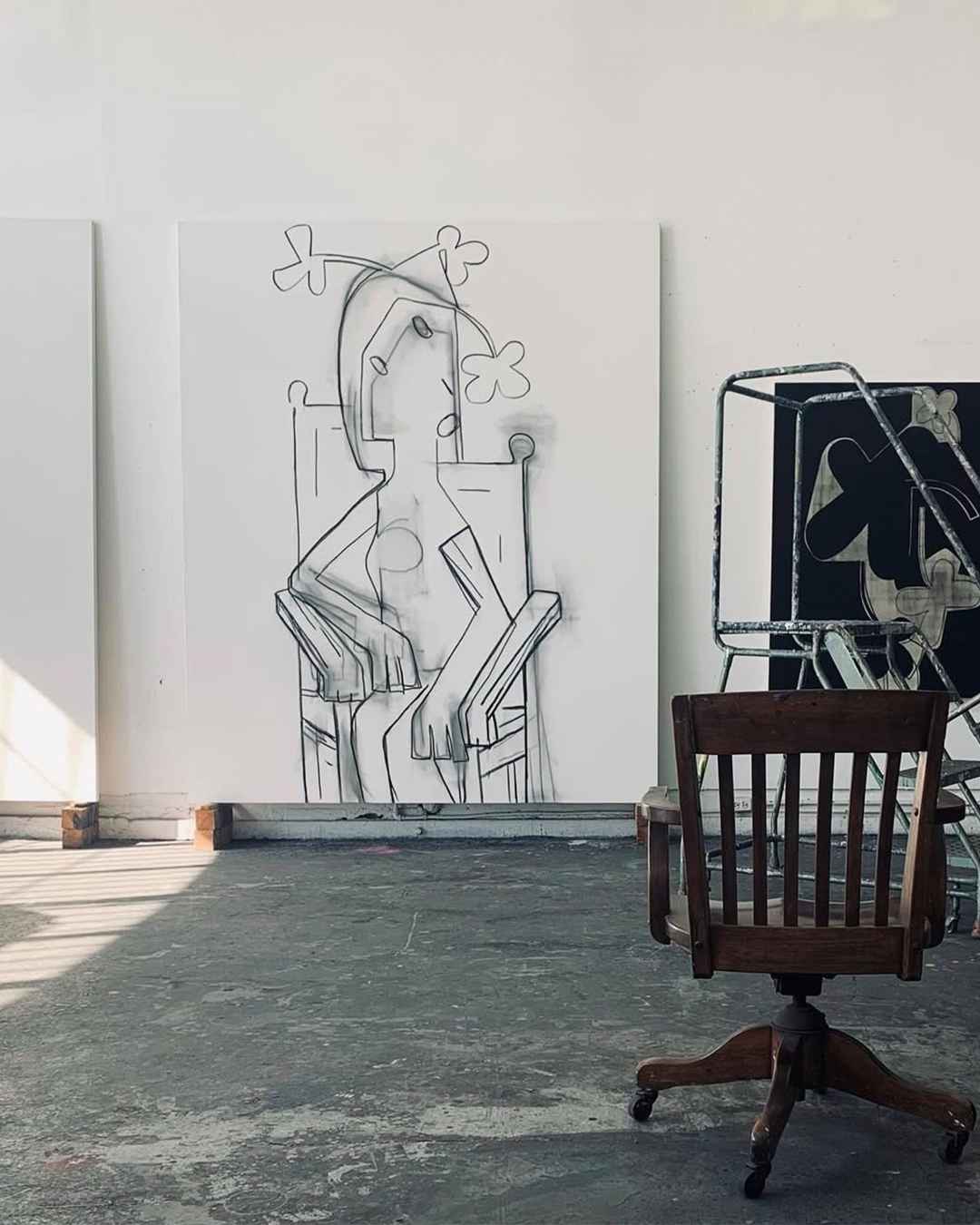
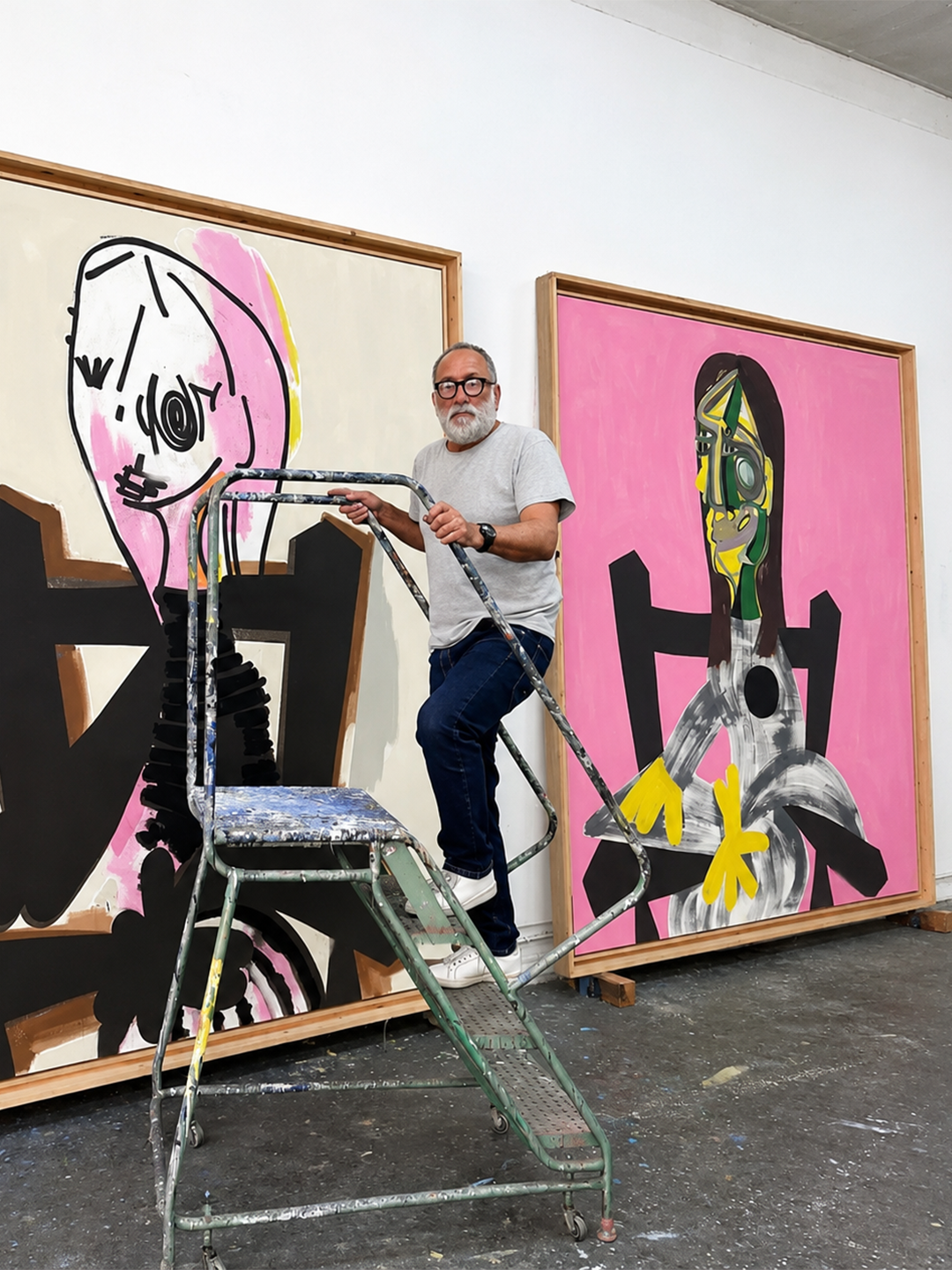
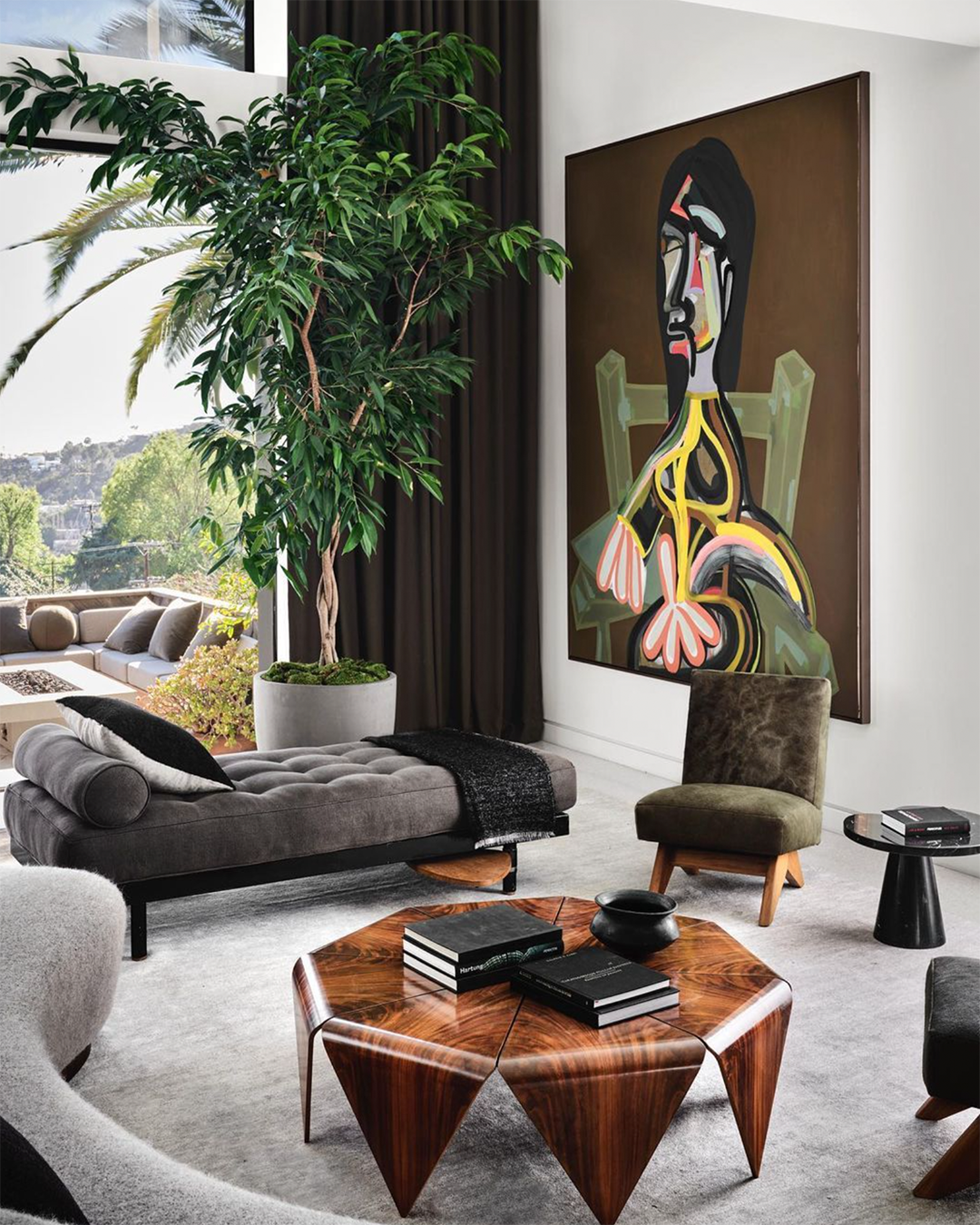
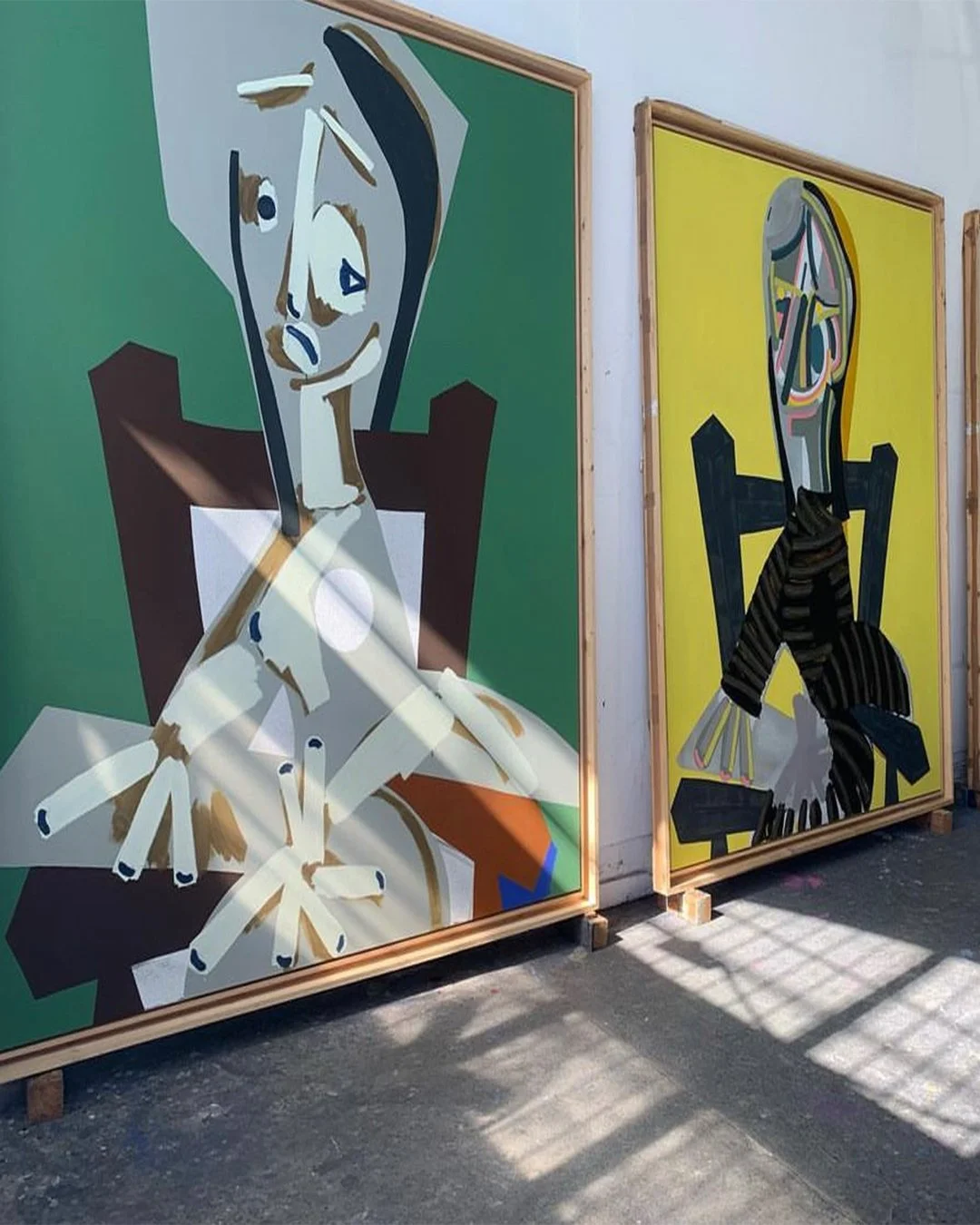
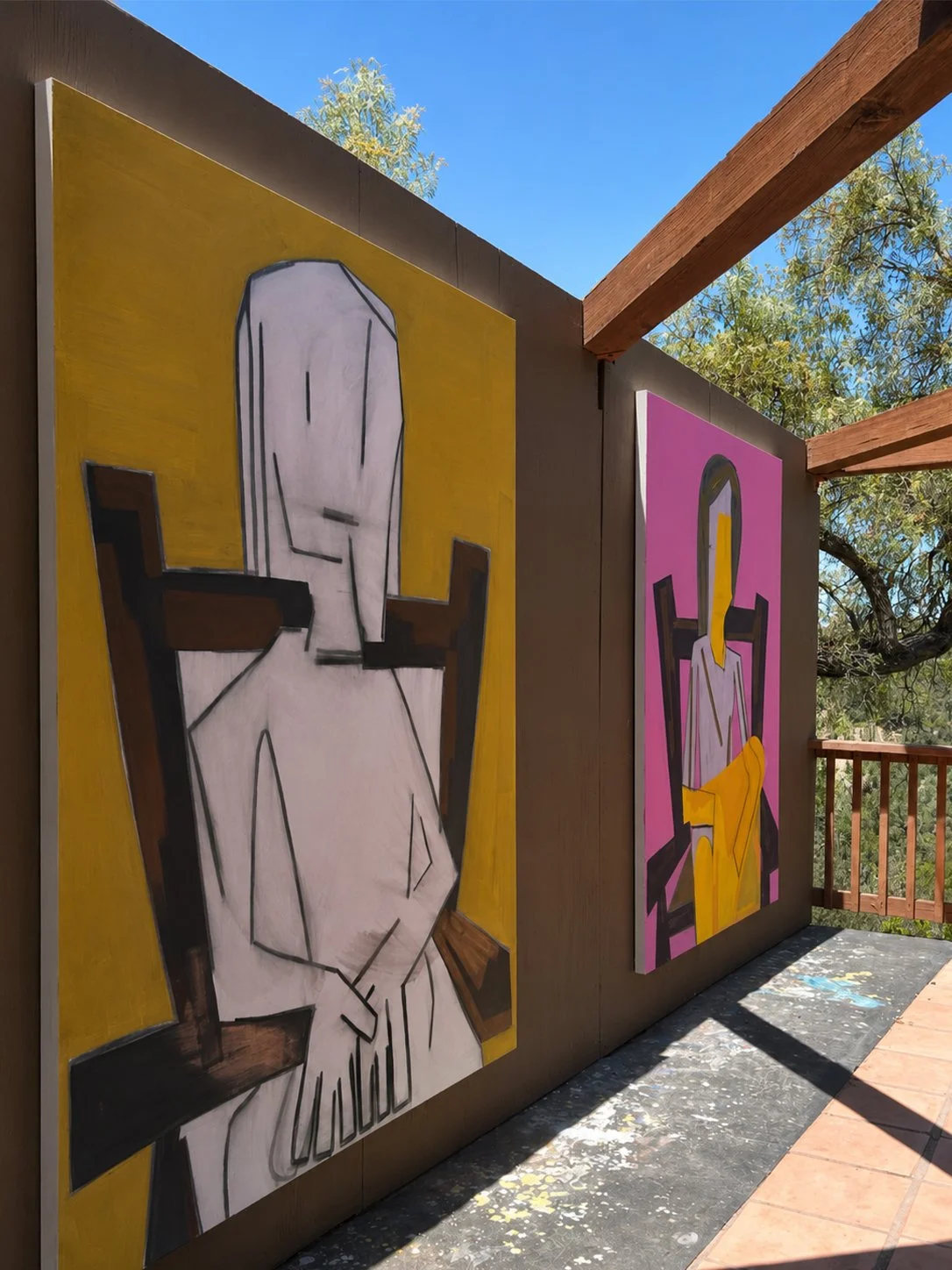
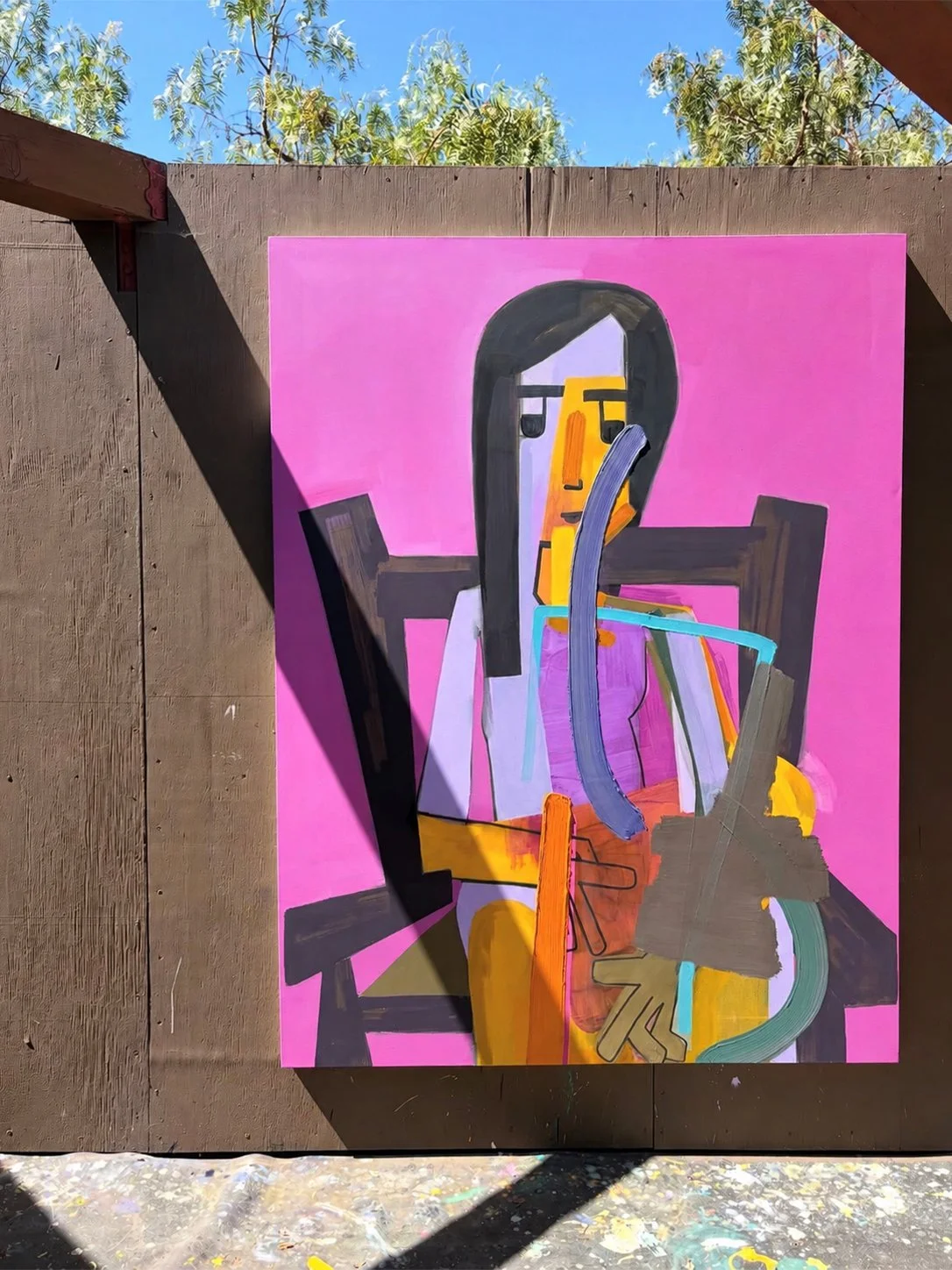
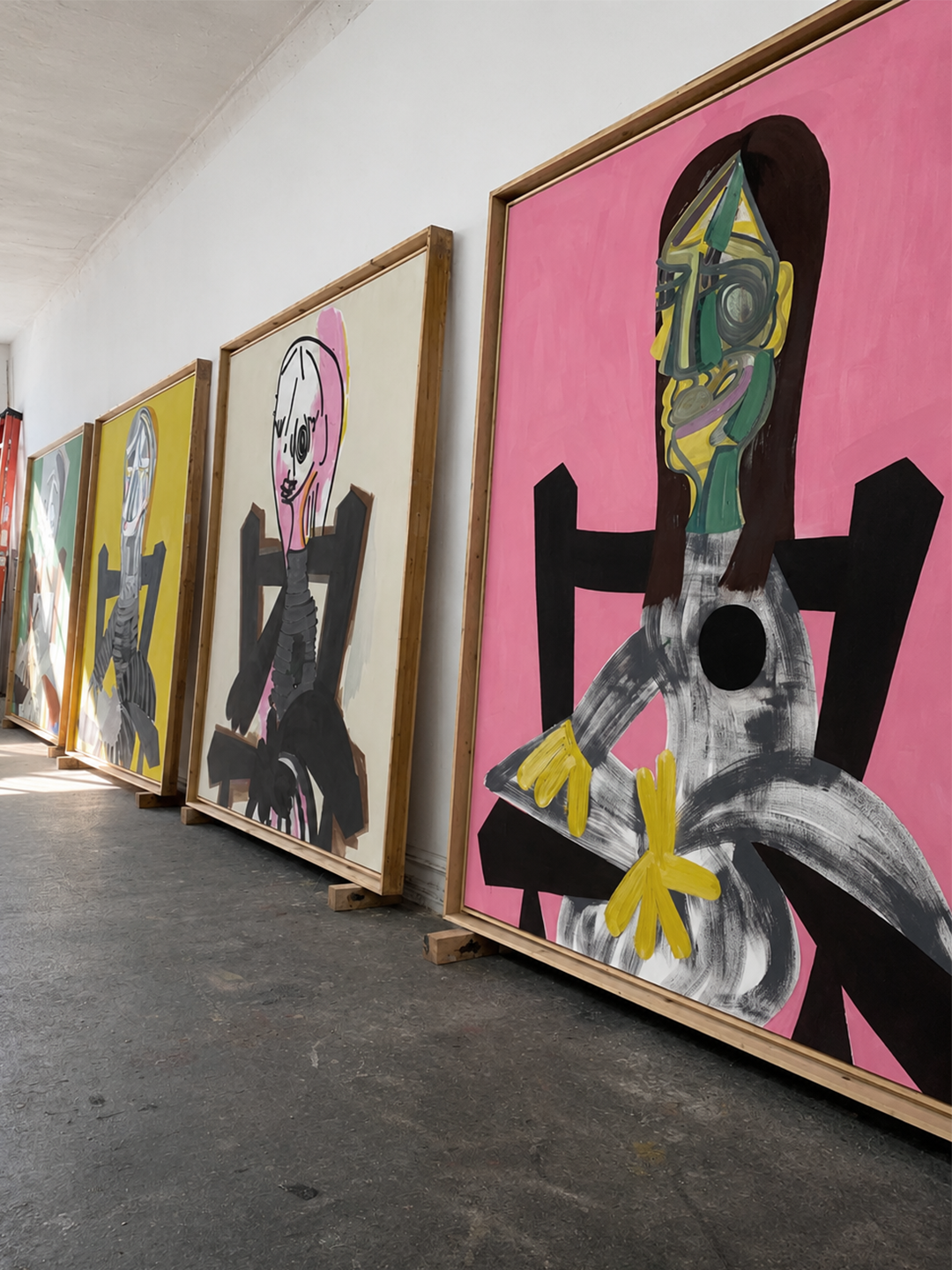
The human figure has played an important role in this investigation. Millei’s Procession paintings, developed between 1997 and 2006, approached the figure through highly abstract structures. His later Woman in a Chair works began from the recognisable format of a seated figure while using that structure as a basis for continued formal experimentation.
In these works, figuration does not function as conventional portraiture. The figure becomes an organising device: a framework through which scale, colour, line and painterly movement can be tested.
Art History as Living Material
Millei’s dialogue with art history is fundamental to his practice, but it is neither nostalgic nor reverential. Historical images enter his paintings as active material—forms that can be stretched, fragmented, exaggerated and redirected.
Among his early influences were Jasper Johns’s 0 through 9 works and the psychologically charged paintings of Los Angeles artist John Altoon. Throughout his career, Millei has also engaged with established pictorial subjects including the flower, the seascape, Cézanne’s bathers and Picasso’s portraits of Dora Maar.
These references are rarely treated as quotations. Instead, they provide structures that Millei can place under pressure.
His Woman in a Chair series, for example, takes Picasso’s seated portrait of Dora Maar as a point of departure. Yet the paintings are not primarily about Picasso or Dora Maar. The historical composition becomes a flexible armature that allows Millei to explore shifting relationships between figure and ground, line and colour, control and disruption.
What matters is not the preservation of the source image, but its capacity to generate another painting in the present.
This approach reflects a broader understanding of artistic influence. For Millei, the history of painting is not a sequence of completed styles. It is an open field of unresolved possibilities. Images from the past remain relevant precisely because they can be questioned, altered and experienced differently from one generation to the next.
Figures, Flowers and the Sea
Across Millei’s work, certain motifs repeatedly return. Figures, flowers and bodies of water form a visual vocabulary through which personal experience and shared cultural memory can intersect.
His flower paintings transform one of art history’s most familiar subjects into something enlarged, unstable and occasionally absurd. The flower can appear decorative, bodily, mechanical or nearly abstract. Its cultural associations—from painting and popular design to the visual language of 1970s California—remain present without controlling the image.
A monumental example, If Flowers Could Dream/Porn Star #8 from 2001, is held in the collection of the Los Angeles County Museum of Art. Executed in oil and acrylic on canvas, the painting demonstrates Millei’s interest in expanding a familiar motif through scale and exaggeration. LACMA Collections
Water has provided another important point of departure. In the For Surfing and Maritime paintings, the sea is not represented as a distant landscape organised around a horizon. It becomes an enveloping and physically charged space.
Millei’s experience as a surfer informs these works, but they are not illustrations of surfing. They translate bodily knowledge—balance, force, immersion and instability—into the language of painting. The viewer does not simply look at the water; the compressed compositions create the sensation of being placed within it.
Through these recurring subjects, Millei demonstrates how a motif can remain productive over decades. Repetition does not produce sameness. Each return creates new possibilities for colour, scale, gesture and structure.
Gesture as Thought
Gesture is often associated with spontaneity, but in Millei’s paintings it also functions as a form of reasoning.
A brushstroke records physical movement, yet it is simultaneously a decision about direction, weight, speed and spatial relationship. The body and the mind are not separated within this process. Thinking occurs through the movement of paint.
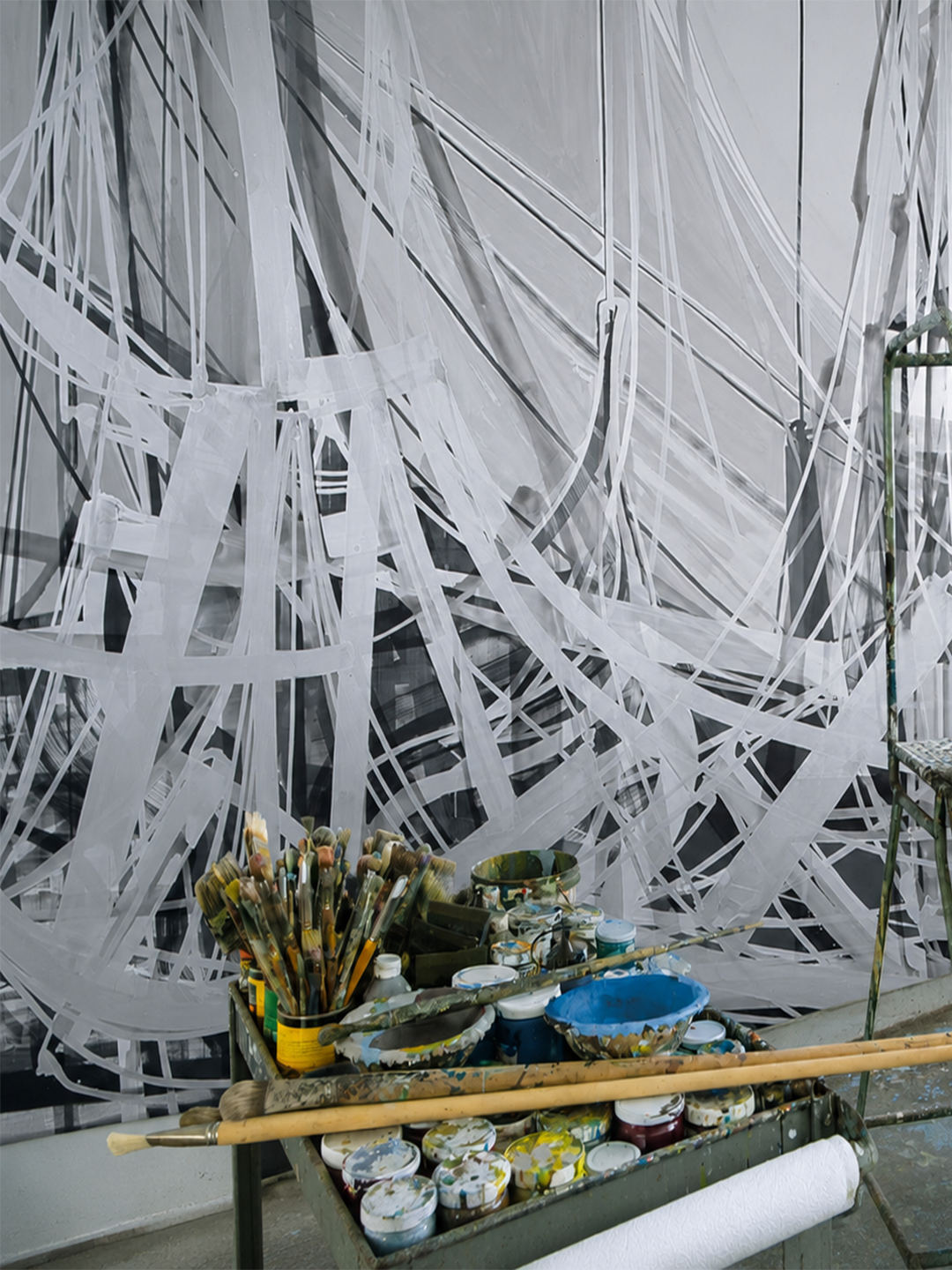
This is particularly apparent in Millei’s larger canvases. Their scale requires the artist to move across the surface rather than work from a single fixed position. A line may be generated by the reach of an arm or the movement of the entire body. The dimensions of the painting become inseparable from the physical conditions of its making.
Yet physicality alone does not explain the work. Millei’s gestures are held within compositions that continually negotiate balance and disruption. Marks that initially appear intuitive may establish complex relationships across the canvas. Areas of density are offset by openness; forceful movements are interrupted by quieter passages.
The paintings retain the energy of their production without becoming records of gesture alone.
Why Repeated Looking Matters
John Millei’s paintings reward repeated looking because they do not depend on a single dominant effect.
From a distance, the viewer may first register the overall composition: the balance of colour, the scale of a figure or the force of a central form. At closer range, the painting reveals different information. Edges become uncertain. Earlier layers remain visible. Lines appear to change direction or purpose. Seemingly spontaneous areas disclose a more complex sequence of decisions.
Over time, the relationship between these elements can shift. A form initially perceived as abstract may begin to resemble part of a body. A recognisable figure may gradually lose its stability and become a structure of independent marks. The painting remains the same, but the experience of it changes.
This capacity for change is essential to the work’s longevity. Millei does not attempt to control every interpretation or deliver a single message. Instead, he constructs paintings capable of sustaining uncertainty.
They remain open without becoming arbitrary.
John Millei and Contemporary American Painting
Millei’s career connects several generations of contemporary American painting. His early experience in Diebenkorn’s studio placed him close to the development of postwar West Coast abstraction, while his later teaching brought him into dialogue with younger artists working in a rapidly changing Los Angeles art scene.
His exhibitions have taken place internationally, and his work is represented in collections including the Los Angeles County Museum of Art, Centre Pompidou, Berkeley Art Museum and Pacific Film Archive, Colección Jumex, the Achenbach Foundation for Graphic Arts and DIB Bangkok Museum.
Institutional recognition, however, represents only one part of his significance. More fundamental is the consistency with which Millei has continued to treat painting as an unresolved medium.
Across different bodies of work, he returns to enduring questions: How can an image contain both recognition and uncertainty? How can historical material be used without becoming nostalgic? How can gesture remain immediate while also carrying intellectual weight? And how can a painting continue to change after the artist has stopped working on it?
Millei’s answer is never presented as a theory imposed upon the canvas. It remains visible within the paintings themselves—in their revisions, contradictions and refusal to settle into a single stable language.
His work demonstrates that abstraction and figuration are not fixed categories, but shifting positions within the act of painting. It is within this space—between the familiar and the unknown, the historical and the personal, intention and discovery—that John Millei’s paintings continue to unfold.