
Justin Bower’s Blue Boy
in Landman Series
Since the launch of Season 2 of the Paramount+ series “Landman,” a work of contemporary painting has repeatedly stood out on screen: Justin Bower’s “Blue Boy.”
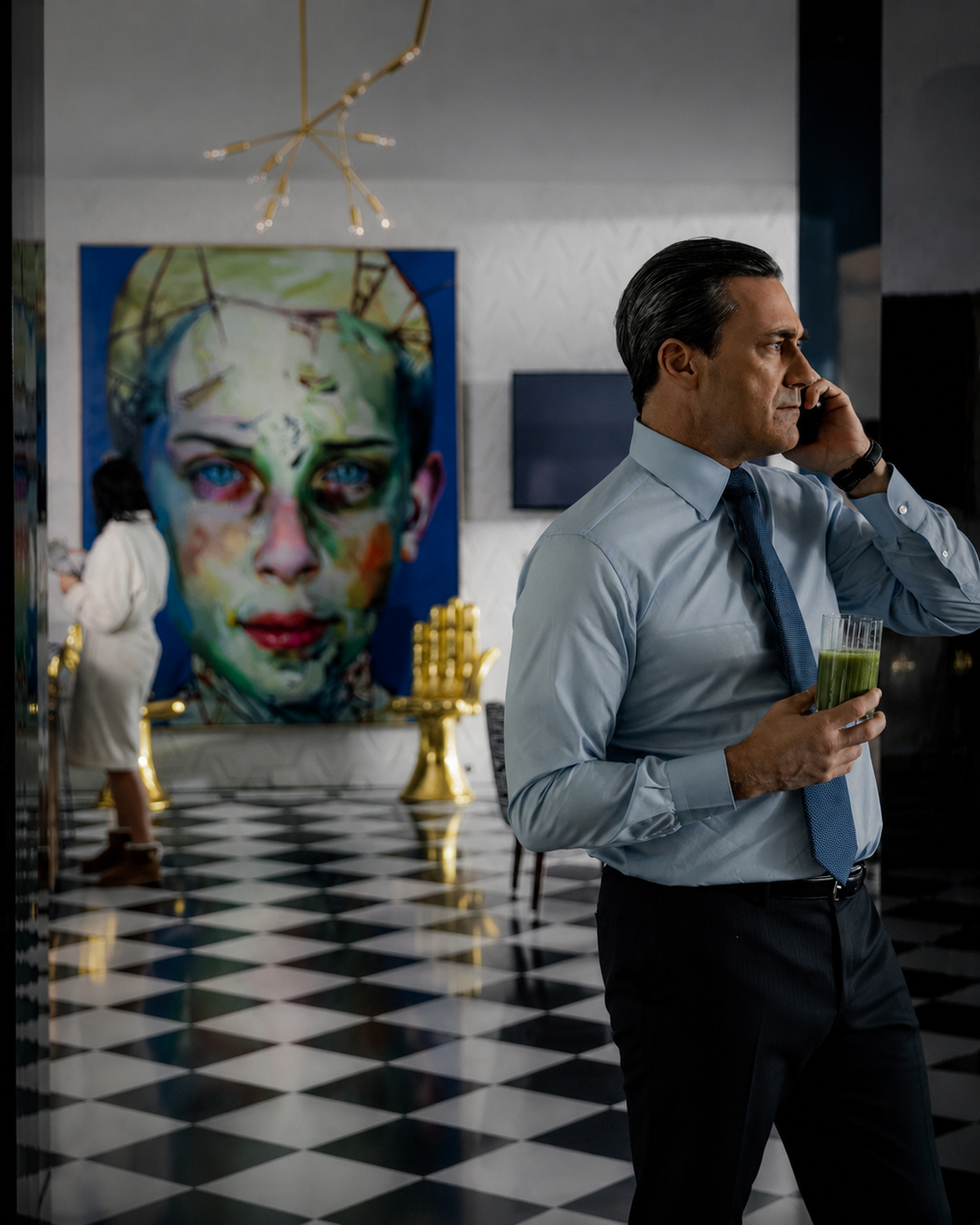
Blue Boy on screen
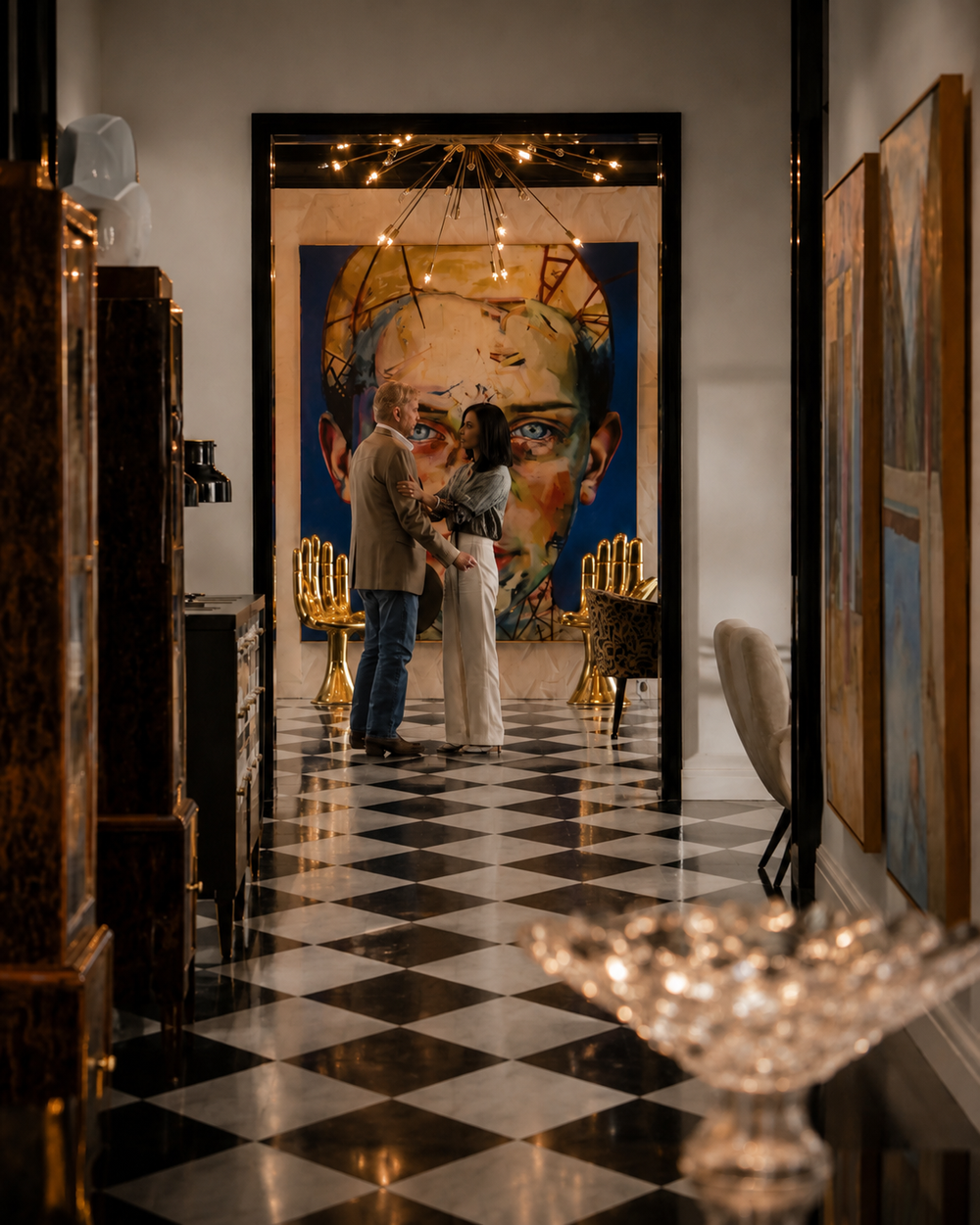
In Landman, the placement of Blue Boy recalls the role of a family portrait in a grand interior. Seen through the doorway, Bower’s painted face presides over the people gathered beneath it. Its scale suggests the authority of a likeness hung to commemorate someone. Yet the closer one looks, the less certain that impression becomes. Along the brow and cheeks, angular passages of green and ocher interrupt the modeling of the face. Across the room, the blue eyes still meet ours.
Within the series’ interiors, “Blue Boy” registers as a quiet presence: a portrait that concentrates the viewer’s gaze, holds tension, and subtly intensifies a scene—cool, precise, and yet emotionally charged.
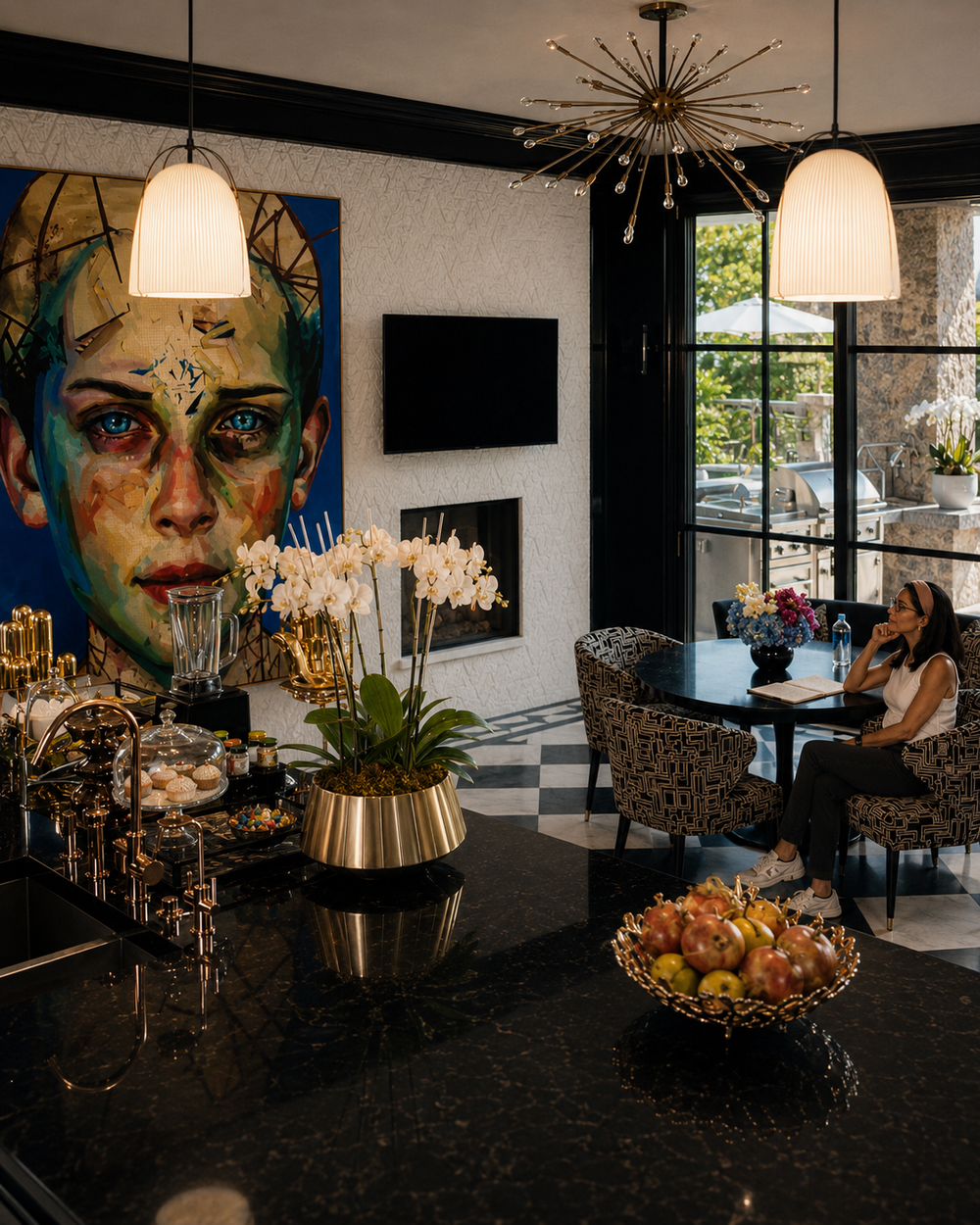
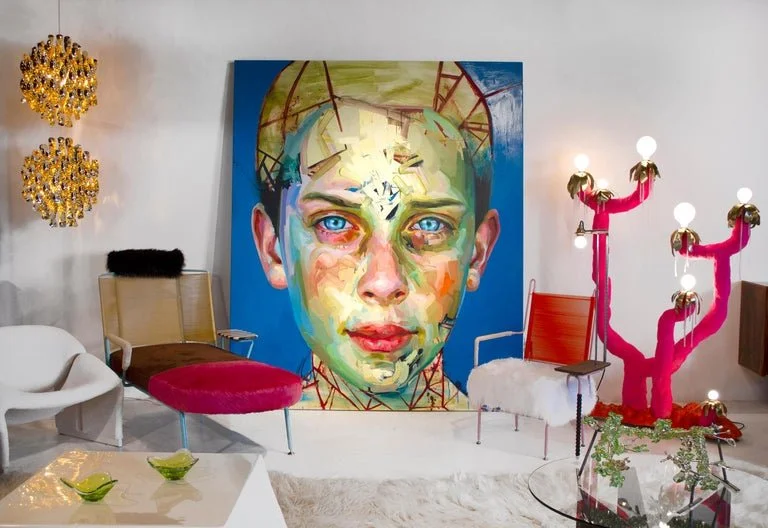
Looking at Blue Boy
From an art-historical perspective, this effect is legible within the tradition of portraiture. Portraits were never simply likenesses; they have always been media of presence, projection, and power—forms in which a culture’s sense of time and self-understanding is reflected. Justin Bower carries this genre decisively into the present by refusing to neutralize it; instead, he keeps it under pressure.
His painting combines exacting representation with deliberate ruptures, overlays, and shifts—as if identity were not fixed within the image, but revealed in layers: between corporeality and picture, between intimacy and distance, between human physiognomy and an identity that feels almost digital. This is precisely where the distinctive pull of “Blue Boy” arises. The work is immediately present, yet never fully resolved. You recognize—and you remain suspended.
“Blue Boy” returning throughout “Landman” Season 2 amplifies this effect. A recurring visual motif becomes an anchor: it defines spaces, colours scenes, and sets a tone—without a single word. In that sense, “Blue Boy” demonstrates why contemporary art can be so effective in major series productions today: it does not explain; it condenses. It offers no plot, but an atmosphere—and therein lies its narrative power.
Interested in collecting Justin Bower?
If you are interested in “Blue Boy” or other works by Justin Bower: works by Justin Bower can be acquired internationally exclusively through G-ALLERY. Upon request, we are happy to share further information, additional images, and details regarding availability and acquisition options.
View available paintings by Justin BowerRequest Available Justin Bower Paintings