It’s Time: Reclaiming the Intellectual Gaze.
We live in a time in which everything is visible—and yet less and less truly lands. Information circulates in a state of permanent overdose, while genuine affectedness contracts into a fleeting reaction. The eye scrolls on before consciousness has a chance to catch up. The result is a paradoxical modernity: maximally informed, minimally shaken. And it is precisely here that an aesthetic tipping point emerges. When society organizes itself around constant alert, art becomes either sedation or counterforce. The widespread longing for “lighter,” naïve visual language is, in this sense, less a trend than a symptom: a form of visual calming, a softly drawn escape from overwhelm. Yet the more this aesthetic of relief dominates, the clearer its cost becomes: it stabilizes our looking away instead of interrupting it.
We seem to inhabit a paradoxical present: maximally informed, minimally shaken. The daily news cycle produces a peculiar form of numbness—not because events are less grave, but because the mind has learned to regulate overload by scrolling through it. Scandals that once would have triggered immediate moral urgency are now consumed as brief “attention spikes,” until the next, louder shock replaces the last. This dynamic creates a culture of short affect: high stimulus, low consequence. In that climate, an art that appears to unburden us could become especially popular—a naïve, decorative, “friendly” visual language that soothes the nervous system rather than interrogating it. That is not inherently wrong; it is symptomatic. It is aesthetic self-medication.
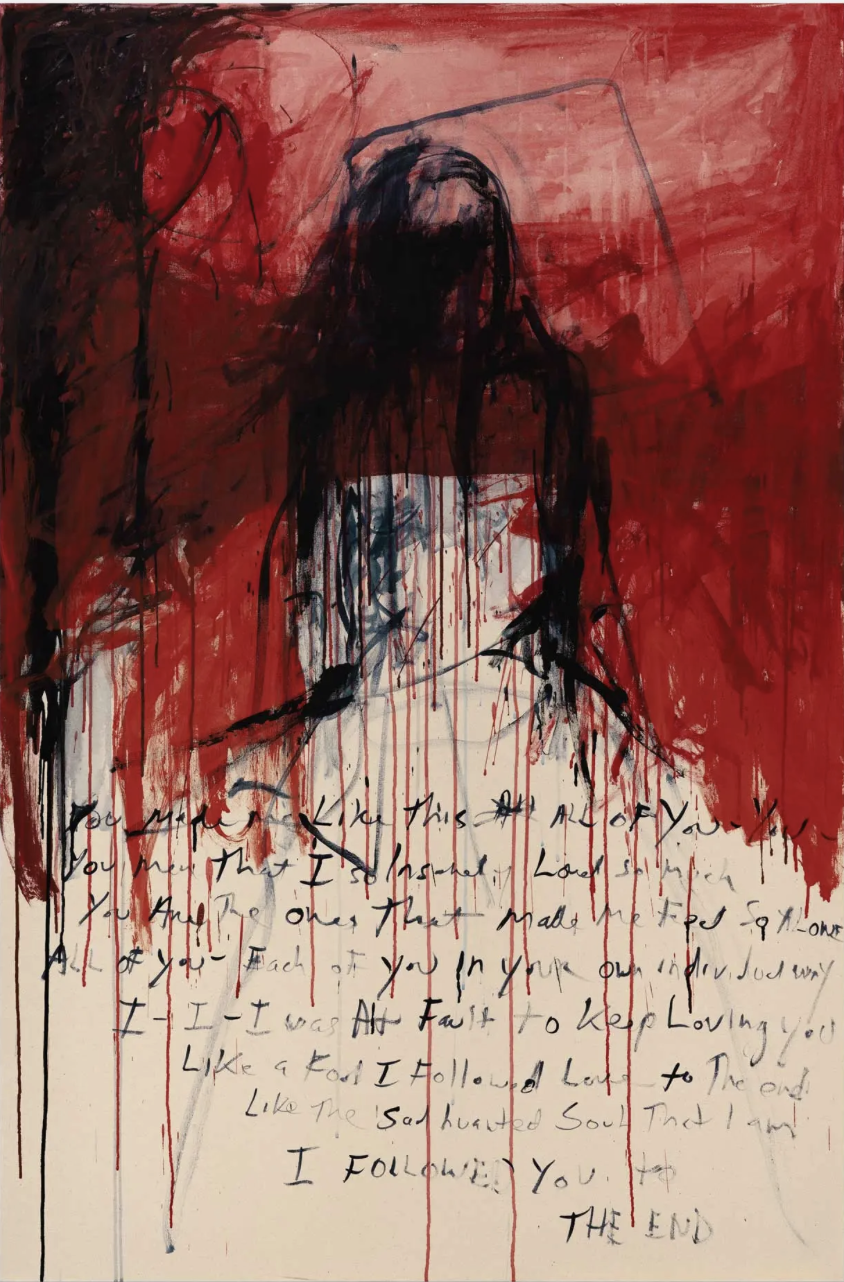
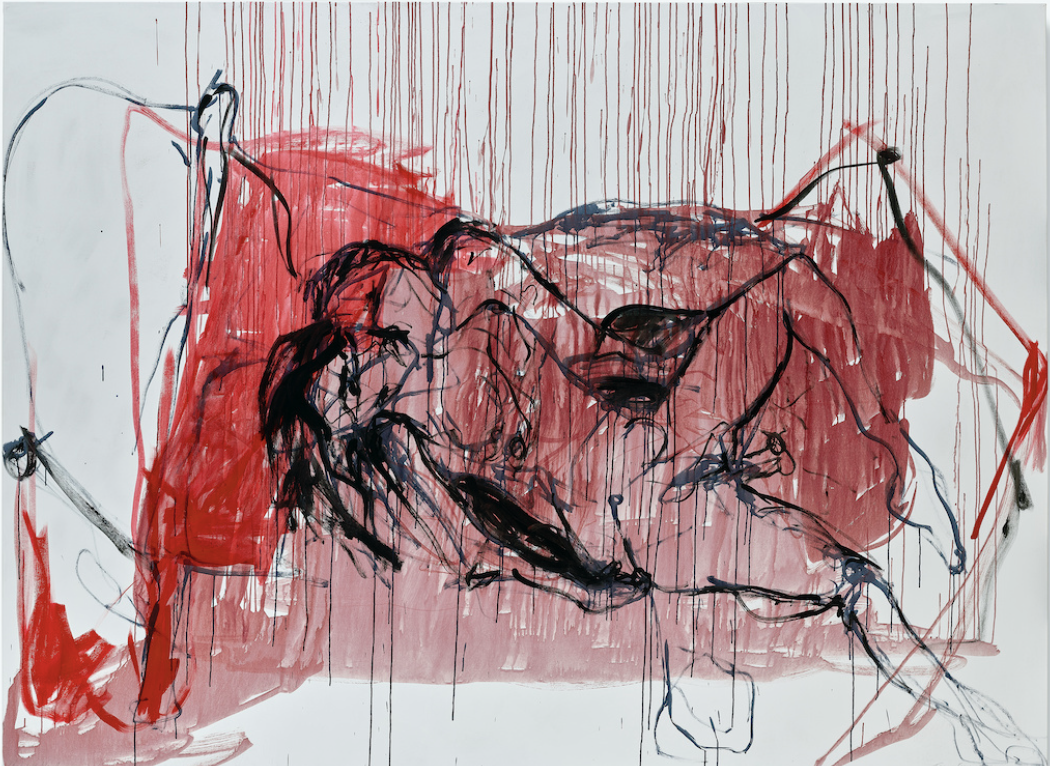
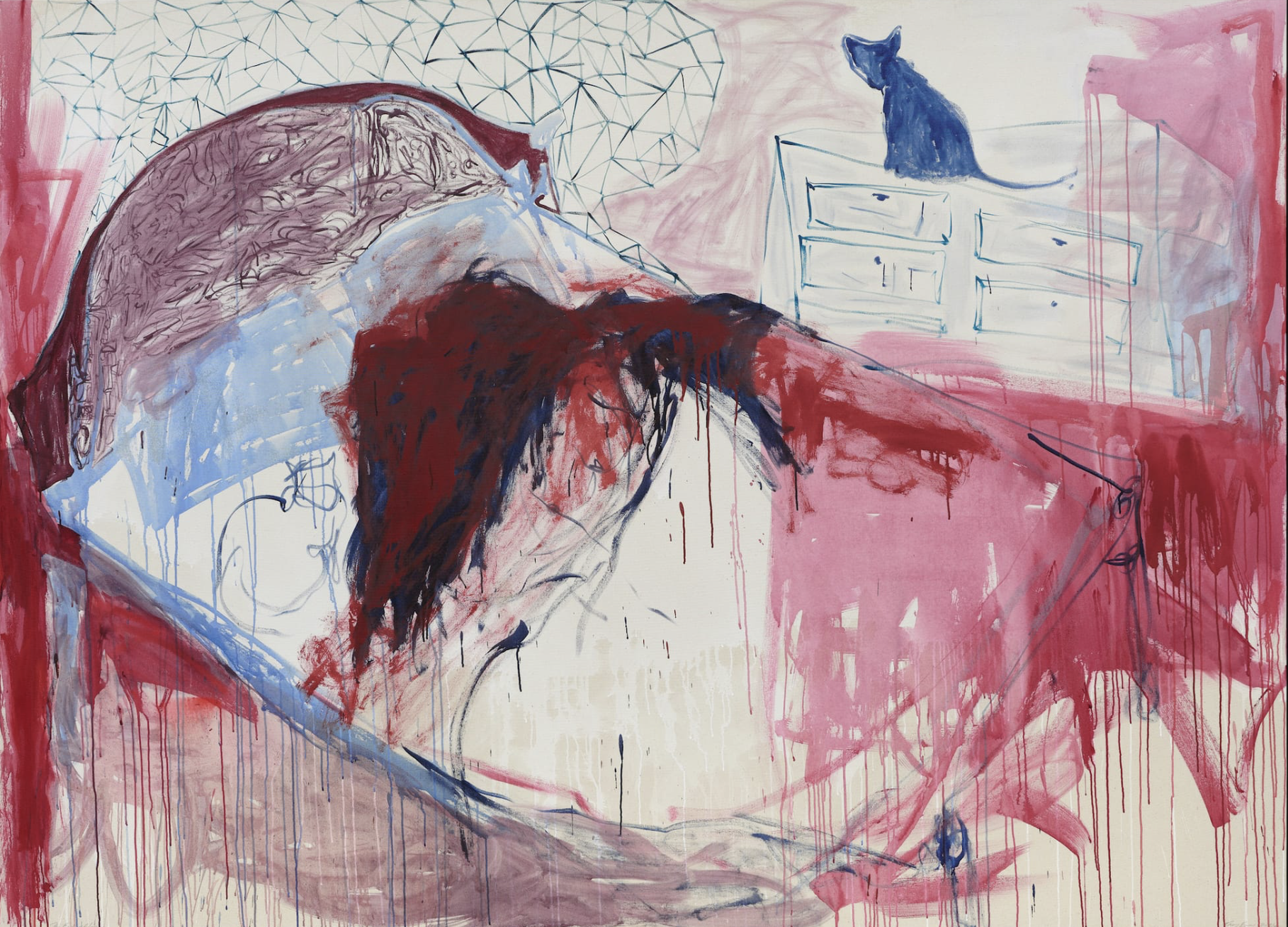
And yet a counter-movement is taking shape: a return to artistic positions that do not merely please, but demand; that do not deliver “content,” but insist on responsibility within the image. That artists such as Tracey Emin, Jenny Saville, and Justin Bower are widely perceived as strikingly contemporary has less to do with a fashionable cycle than with a shift in need—from sedation to friction, from surface to insistence. What is notable is that these positions—however different their formal languages—stand within a lineage that can, usefully if briefly, be described as confrontational figuration: Francis Bacon and Lucian Freud as reference axes, not as stylistic templates, but as attitudes. Both defended the figure as a site of psychic truth—against the temptation to neutralize reality through beauty.
So what happens when “insignificance” becomes the norm? Then the art that matters is the art that makes the ordinary uncomfortable again. Not through scandal for scandal’s sake, but through precision: the way a gaze is painted can generate more unrest than any loud slogan.
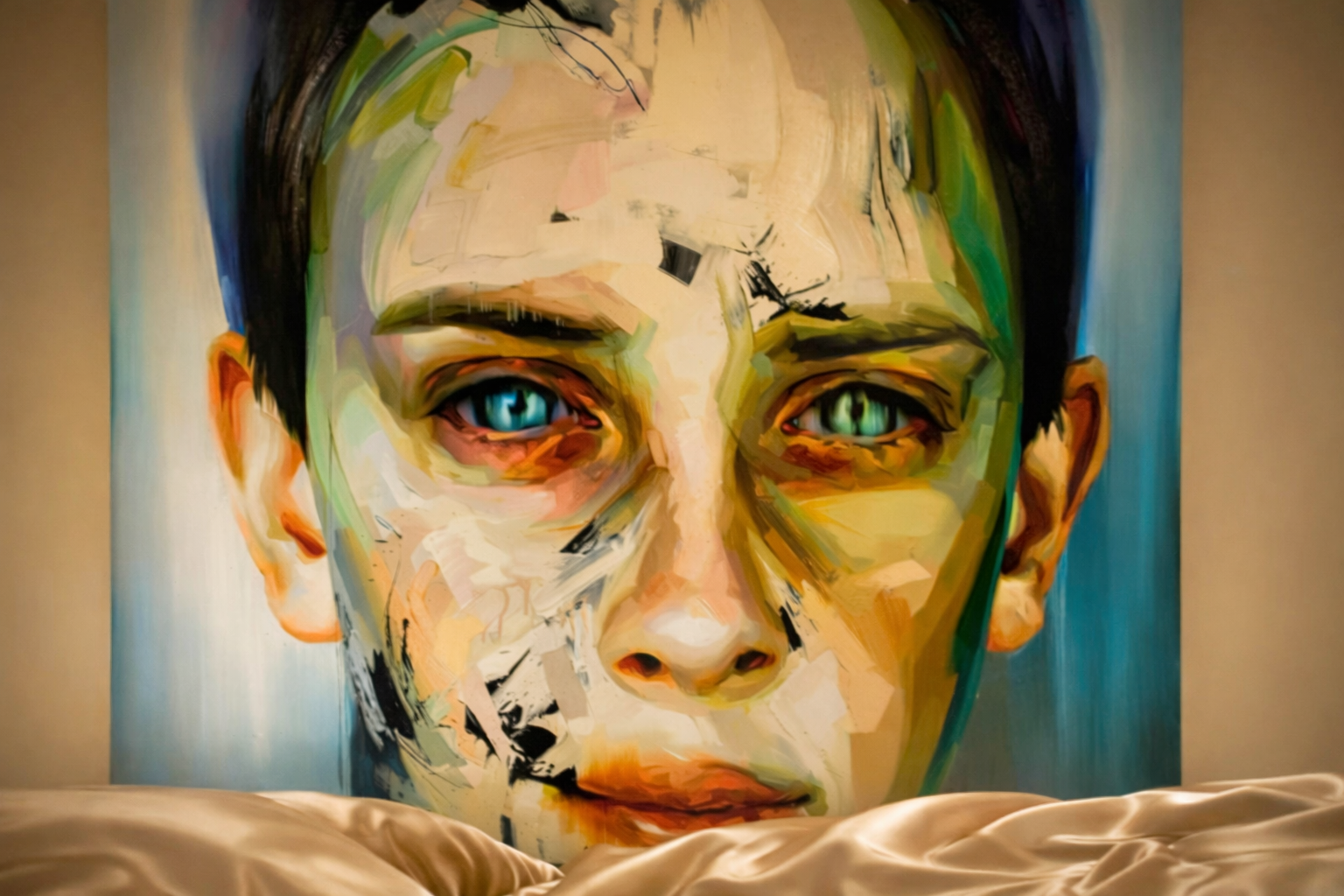
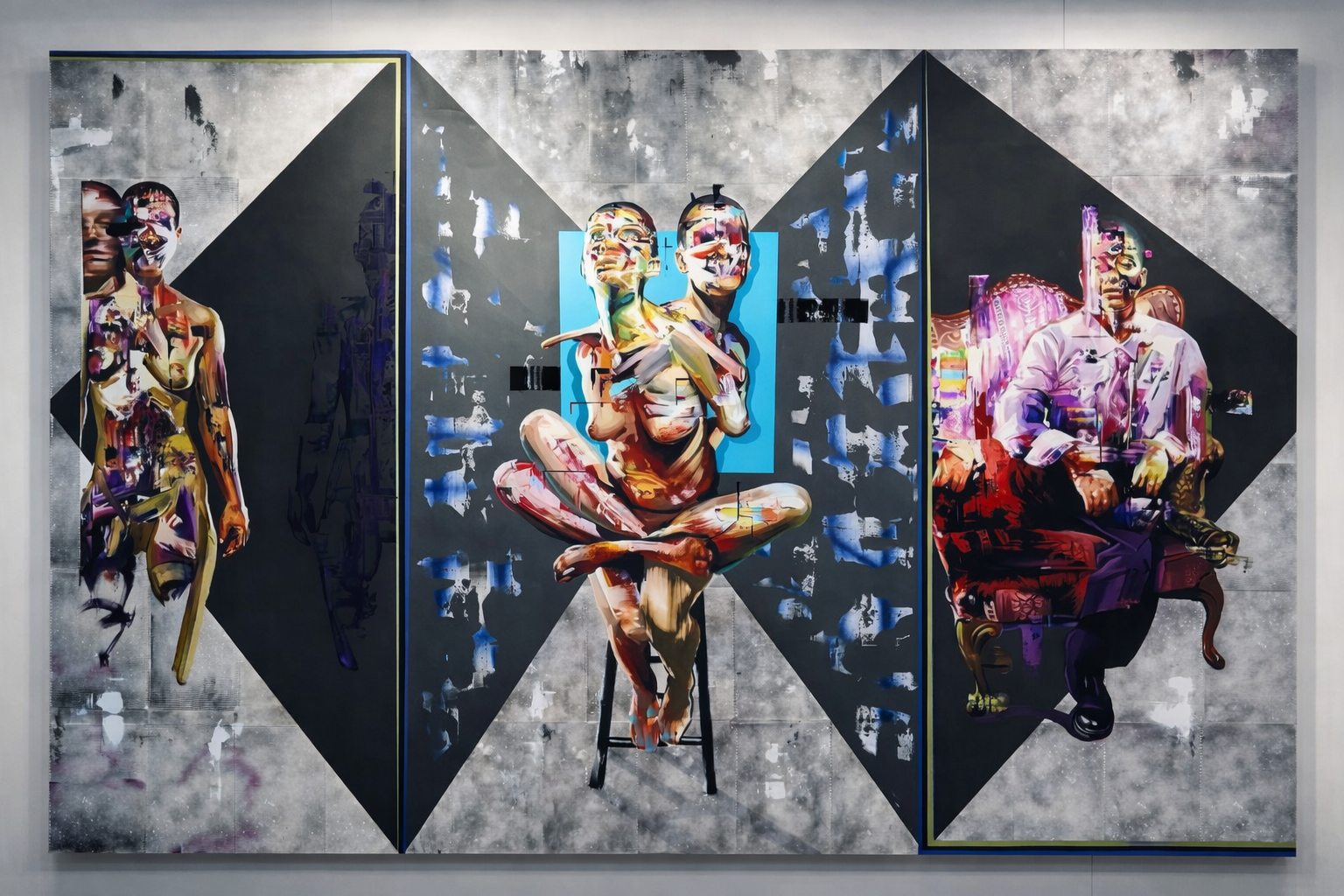
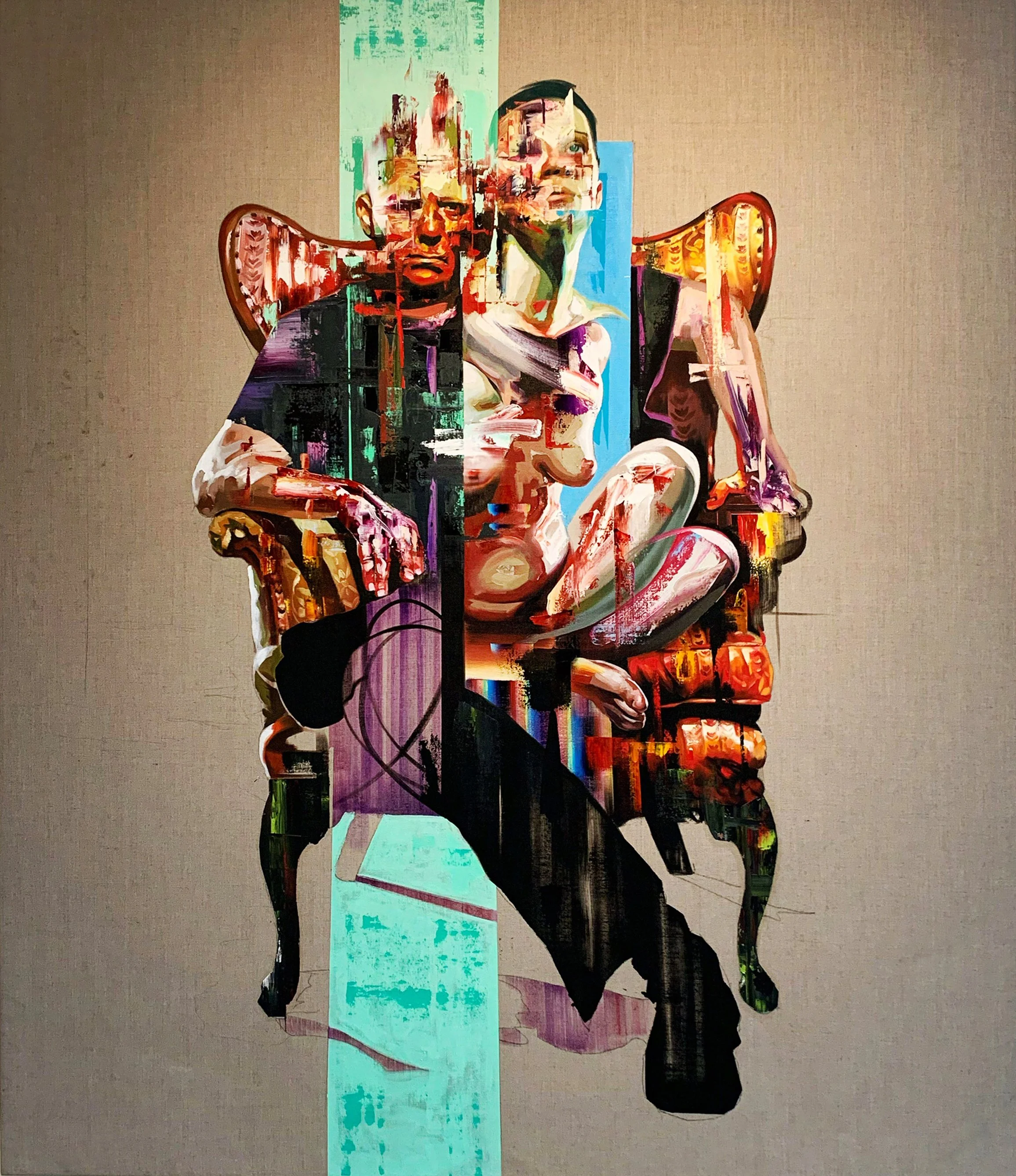
With Justin Bower, the face becomes a projection surface for an inner state—never smoothly modeled, but constructed from color fields, overpainting, and deliberate fractures. His figures are simultaneously present and disassembled, as if they only cohere—out of painting, fragment, and digital skin—in the moment of looking. The blue of the eyes is not a mere detail, but an anchor: a point of maximum sharpness within a physiognomy that feels both assembled and undone. The result is not decorative harmony, but a quieter, more durable confrontation: the viewer is drawn into a duel of looking because something looks back—not kindly, but insistently.
Yet this confrontation does not remain confined to the individual psyche; it expands into a kind of system-image. Bower’s pictorial world suggests that identity is often experienced today as montage—persona, avatar, social role, body as interface. Geometries, hard planes, and incisions operate like a visual grammar of the present, in which the subject appears not as essence but as a continually re-rendered surface. At the same time, the figure condenses collage-like into an overpressure of body, space, and time: too many layers, too many narratives, too many signals that refuse to settle. This is where the work aligns with the larger Bacon/Freud line—not through formal resemblance, but through stance: reinstating the figure as a site of existential demand, a testing ground of psychic truth that cannot be “pleasantly looked at” without pulling us in.
If Emin, Saville, and Bower feel “more current than ever,” it is also because they offer three distinct answers to the same question: how does one show truth in a culture that tends to consume truth rather than endure it?
Tracey Emin works with biographical material—but not as therapy-illustration. She distills shame, desire, loss, and trauma into aesthetic concentration. Central to this is the non-negotiability of the private: Emin rescues intimacy from kitsch by refusing to package it as “story,” rendering it instead as state. In this way, she becomes an important counter-figure to naïve art-as-relief: she offers no escape, but a form of truth that hurts—and therefore produces resonance again.
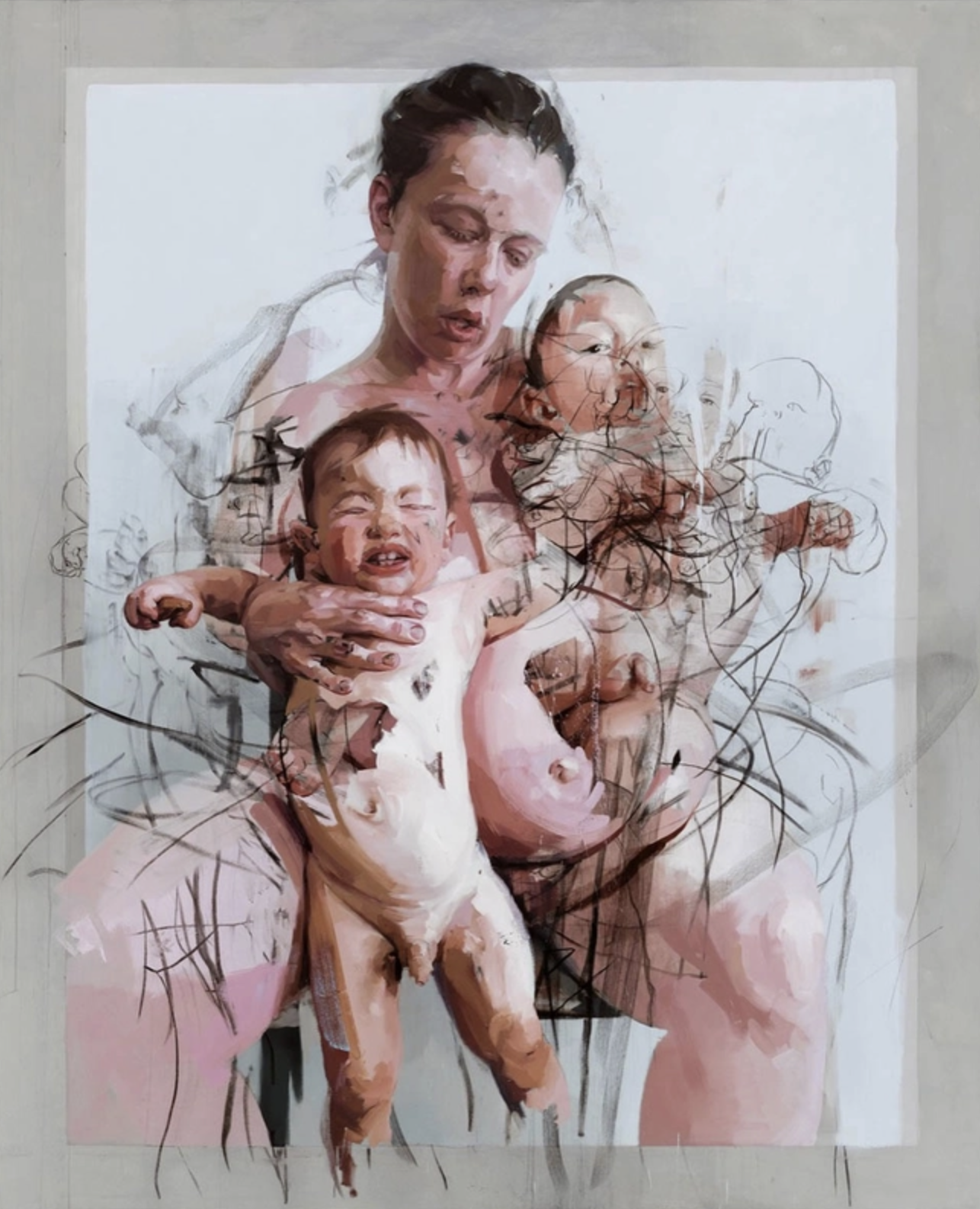
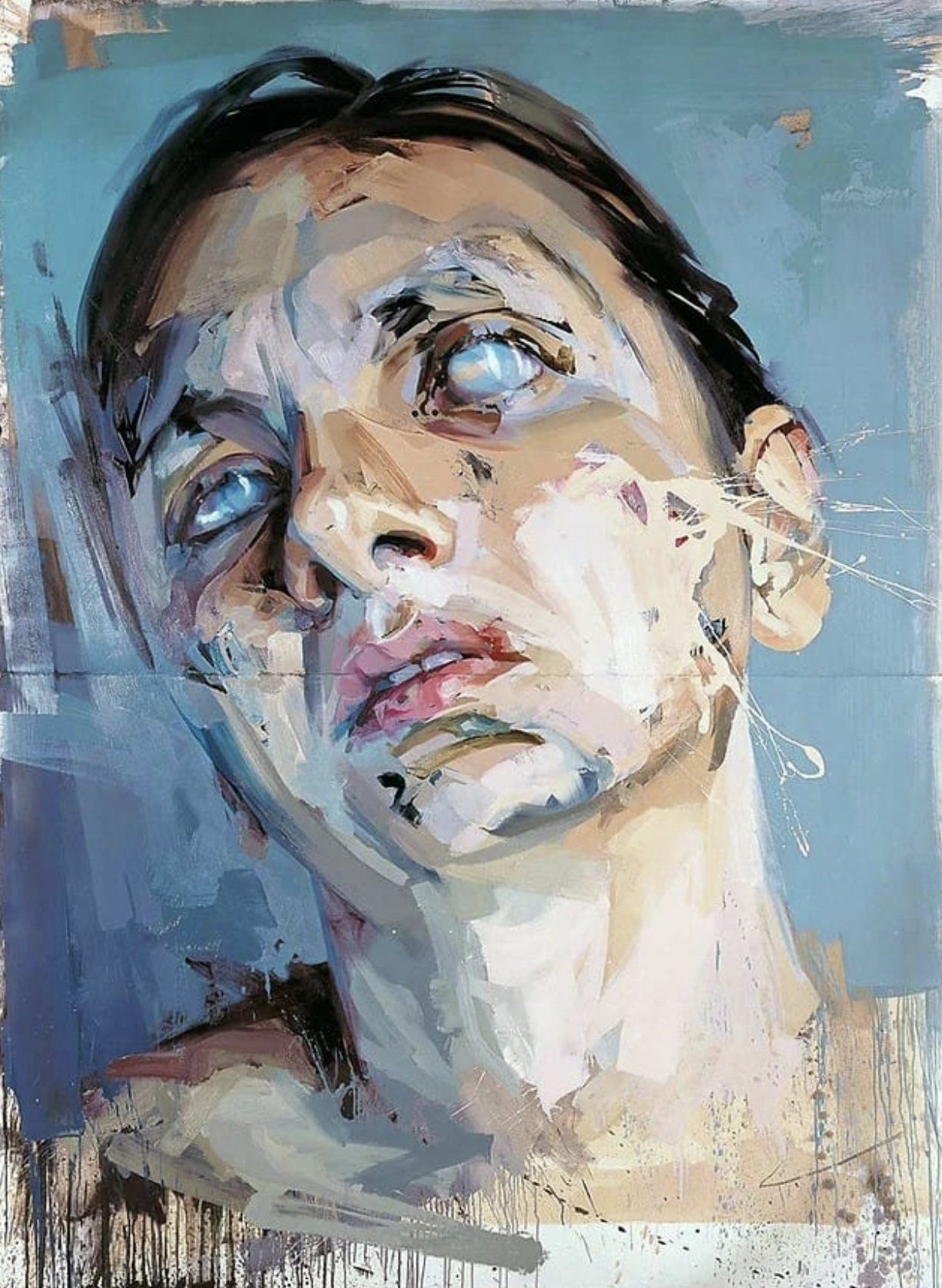
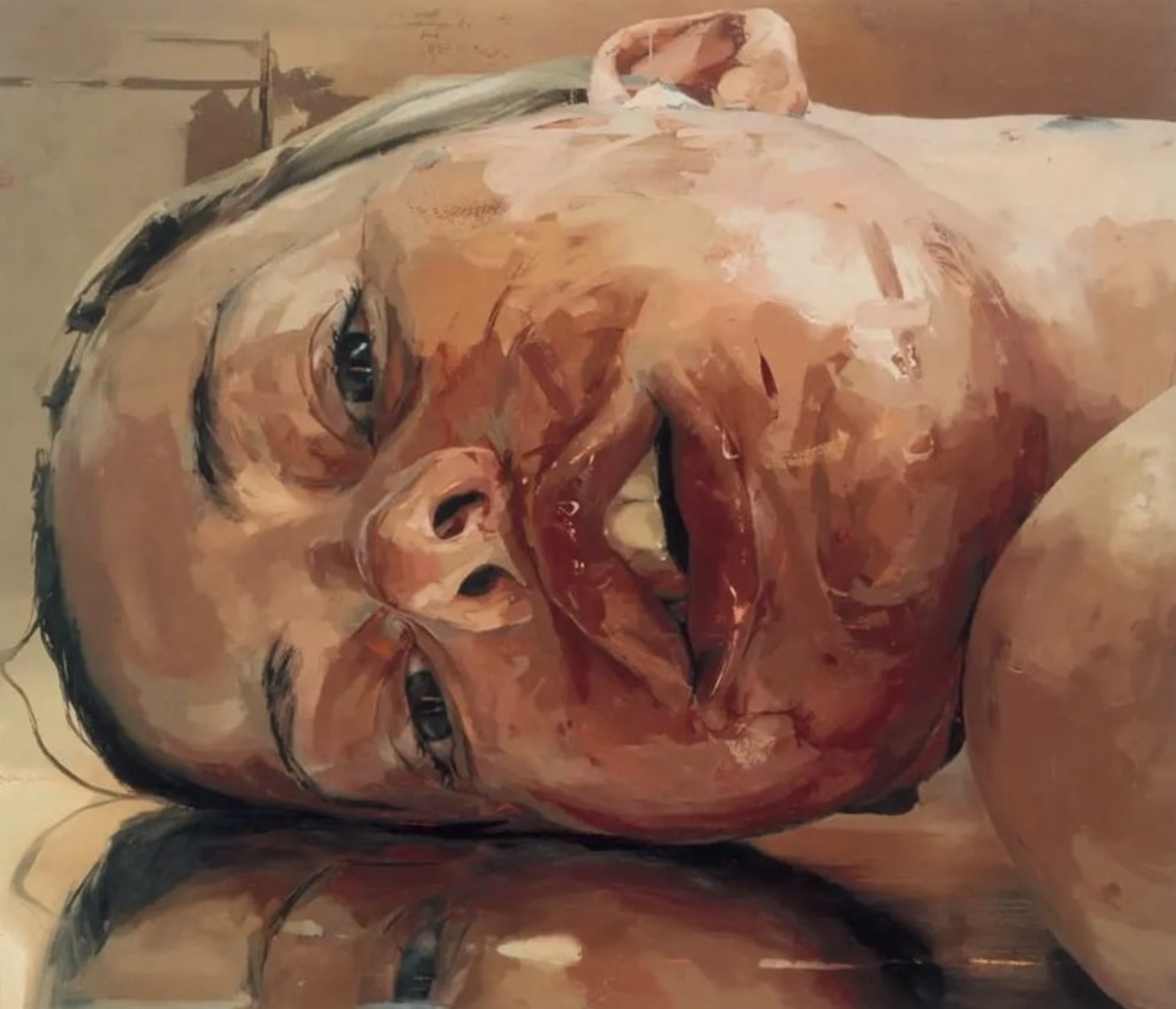
Jenny Saville operates differently: less diaristic, more bodily-epistemic. Her painting does not display the body; it investigates it—as mass, as flesh, as social inscription, as a site of violence and projection. Critical reception repeatedly emphasizes how Saville fuses figuration and abstraction: flesh becomes, simultaneously, image and painting, matter and meaning. As concrete examples that correspond stylistically with Bower—through intensity, corporeality, and painterly aggression—Saville’s Propped (1992) stands as an early manifesto of confrontation, forcing the gaze onto weight, text, and self-assertion; and Reverse (2002–03) brings the head so close that portrait and material study collapse into one another. Both function much like Bower: proximity is not an offer of intimacy, but a test.
We are entering a new era in which intellect and ambition become central again. Put more soberly: the market and the public are reacting to an exhaustion with arbitrariness. Naïve or purely decorative image-worlds may soothe in the short term, but they rarely deliver the kind of meaning that endures. When social reality is experienced as ongoing crisis—political, technological, psychological—the desire grows for art that refuses to pretend everything is easy. Ambition is no longer read as elitist, but as necessary.
Emin, Saville, and Bower embody three modes of that necessity. First: the return of risk. This art is not optimized for quick approval; it risks rejection, misunderstanding, discomfort—and that is precisely its strength in an age of optimization. Second: the return of the body as a medium of truth. In a culture that is increasingly virtual, filterable, editable, the uneditable gains authority: flesh, fatigue, desire, vulnerability, aging, shame. Saville paints the body as terrain of social power; Emin as a site of autobiographical truth; Bower as an interface under digital pressure. Third: the return of “slow” image-intelligence. These works cannot be “finished” in a single glance. They require time: the probing of layers, the reading of fractures, the endurance of ambivalence. That is exactly their counterforce to the attention economy.
If we are truly moving into a new era, it will not begin with more images, but with a different way of seeing: less consumption, more confrontation. Confrontational art is not a luxury, nor a nostalgic return to “great painting,” but a cultural necessity. It restores the question before it sells the answer. It forces us to remain longer than is comfortable. And therein lies its radical contemporaneity: it reminds us that intellect is not ornament, but stance—and that art begins where we can no longer simply keep scrolling.