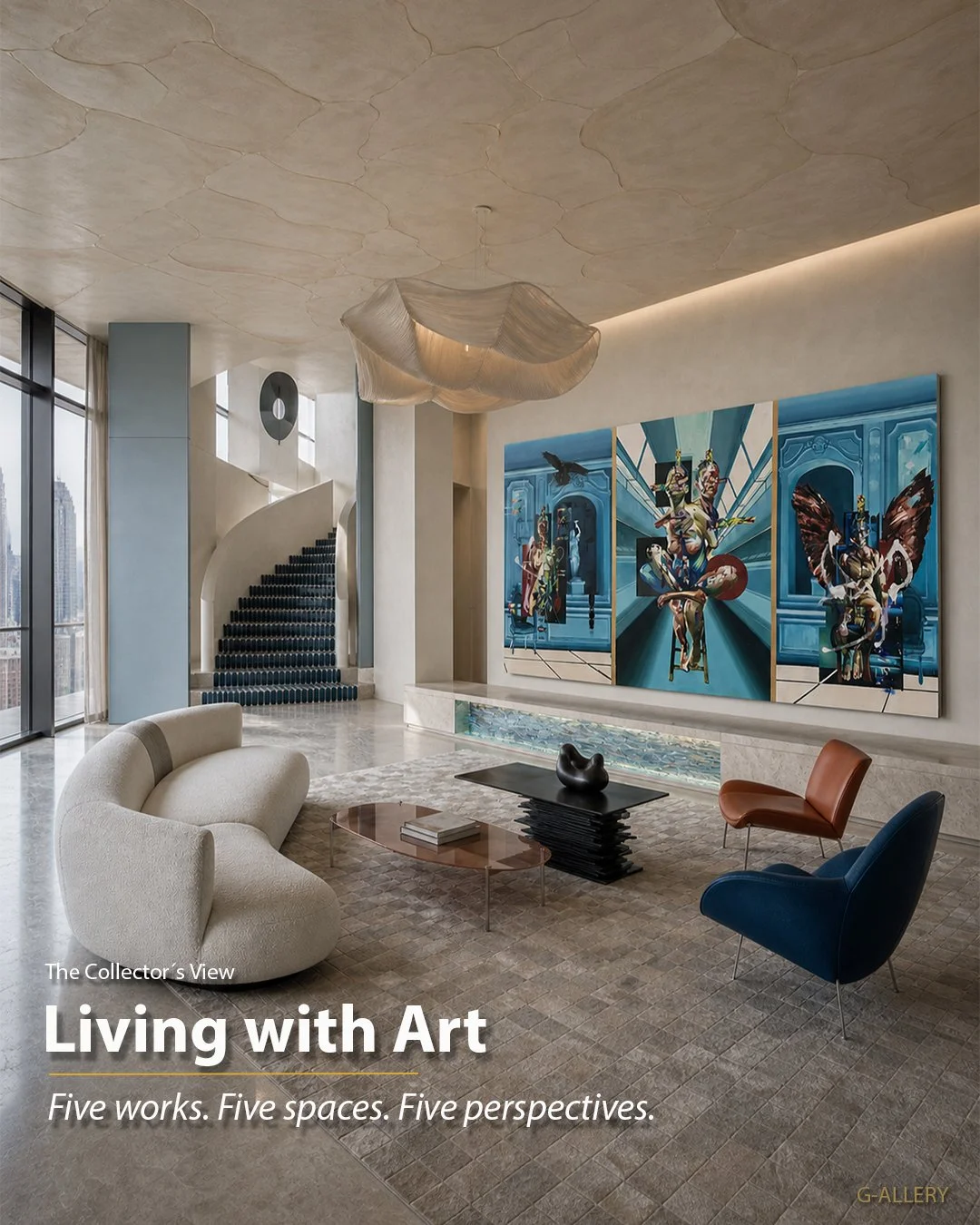
Five works. Five spaces. Five perspectives. How art shapes our homes—and reveals who we are.
A collection does not begin on the wall. It begins with a decision: this is a work I want to become part of my life. Collecting art is not simply a choice of artist, period or aesthetic language. It is also a decision about which images, questions and contradictions we are willing to make room for in our everyday lives. In this sense, collecting becomes a form of self-definition—and the home its most visible expression.
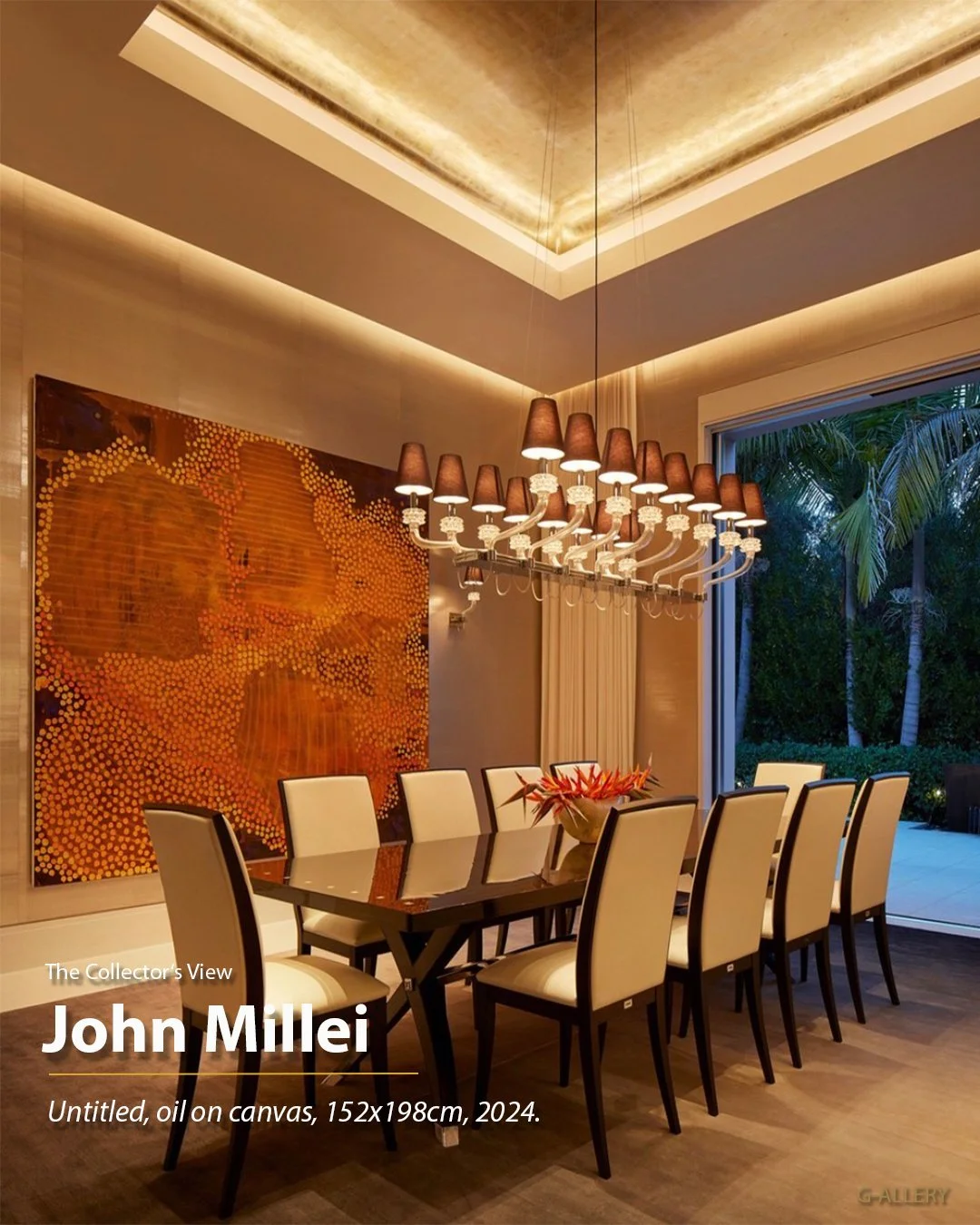
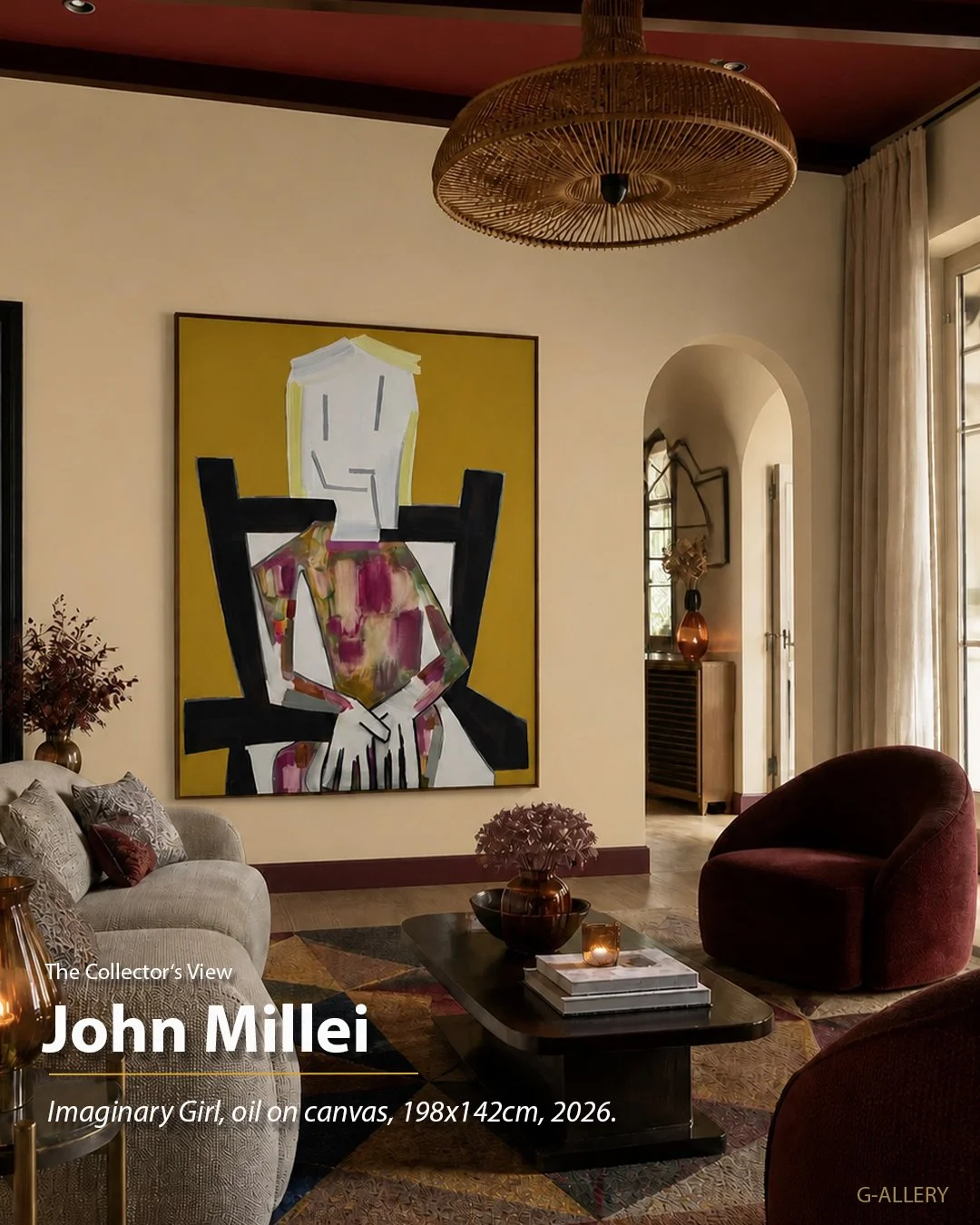
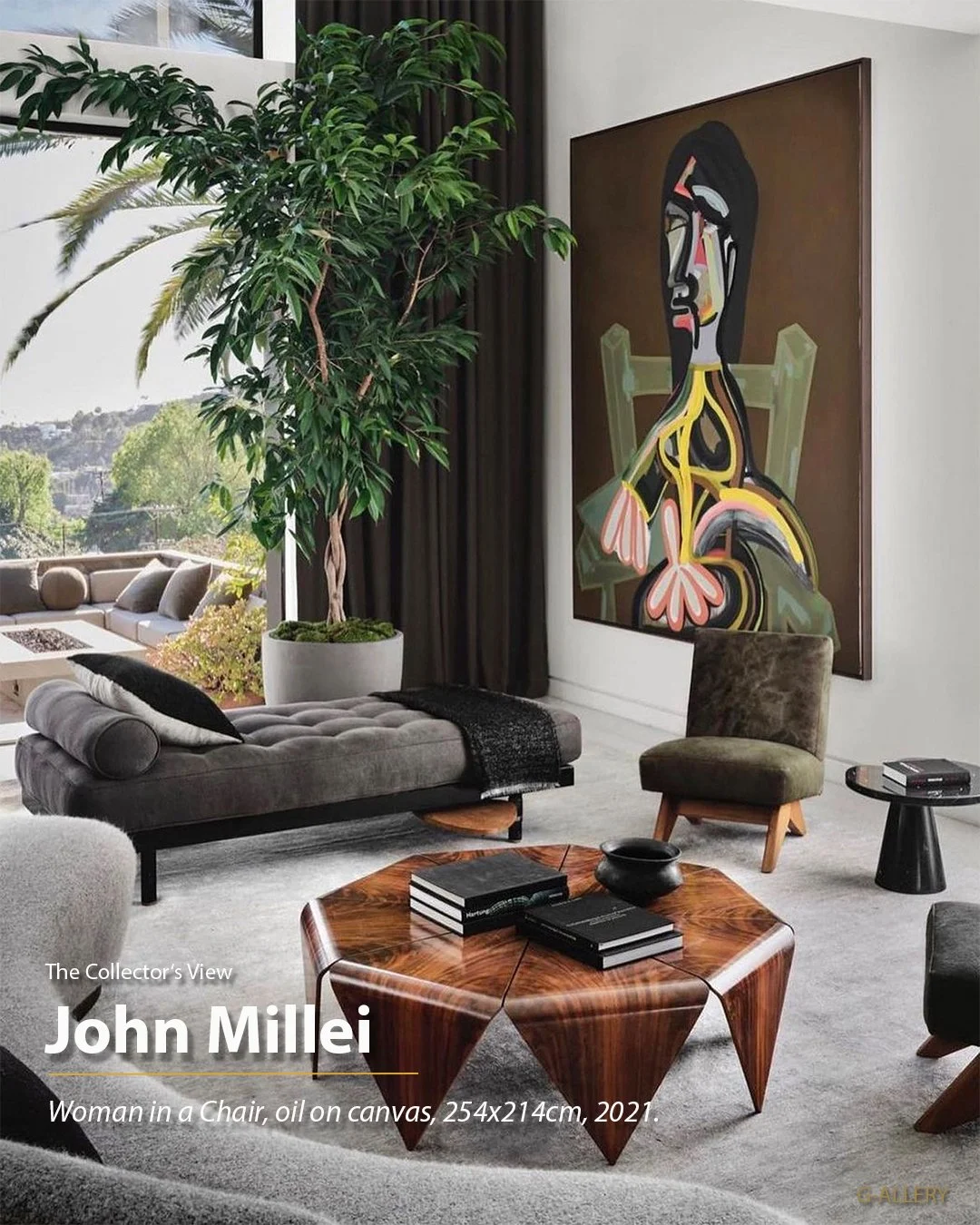
In cultural and consumer research, this relationship is described through the concept of the “extended self”: meaningful objects can become part of our identity. Art is particularly powerful in this respect. Unlike purely functional objects, artworks remain open to interpretation. They preserve memories of a discovery, a journey, a conversation with an artist or the moment an acquisition was made. At the same time, they can embody convictions, intellectual interests and a particular attitude towards the present. The private interiors shown here make this relationship immediately tangible. John Millei’s figures move between abstraction and representation, art-historical memory and painterly openness. Works such as Woman in a Chair and Imaginary Girl do not function as decorative additions to their surroundings. Their fragmented bodies, revised lines and charged fields of colour establish an autonomous space for reflection. They cannot be exhausted in a single glance—and it is precisely for this reason that their presence deepens through daily encounter.
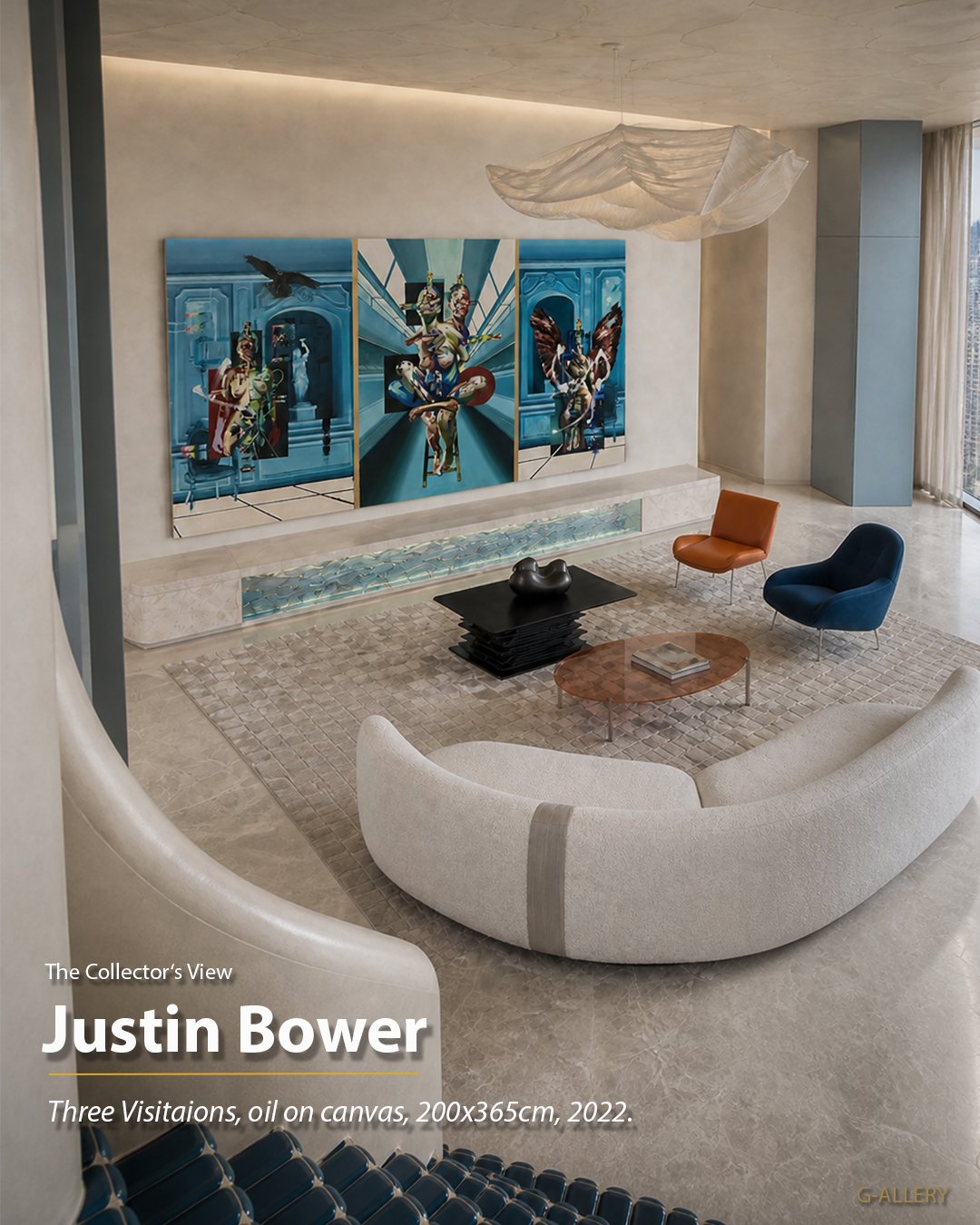
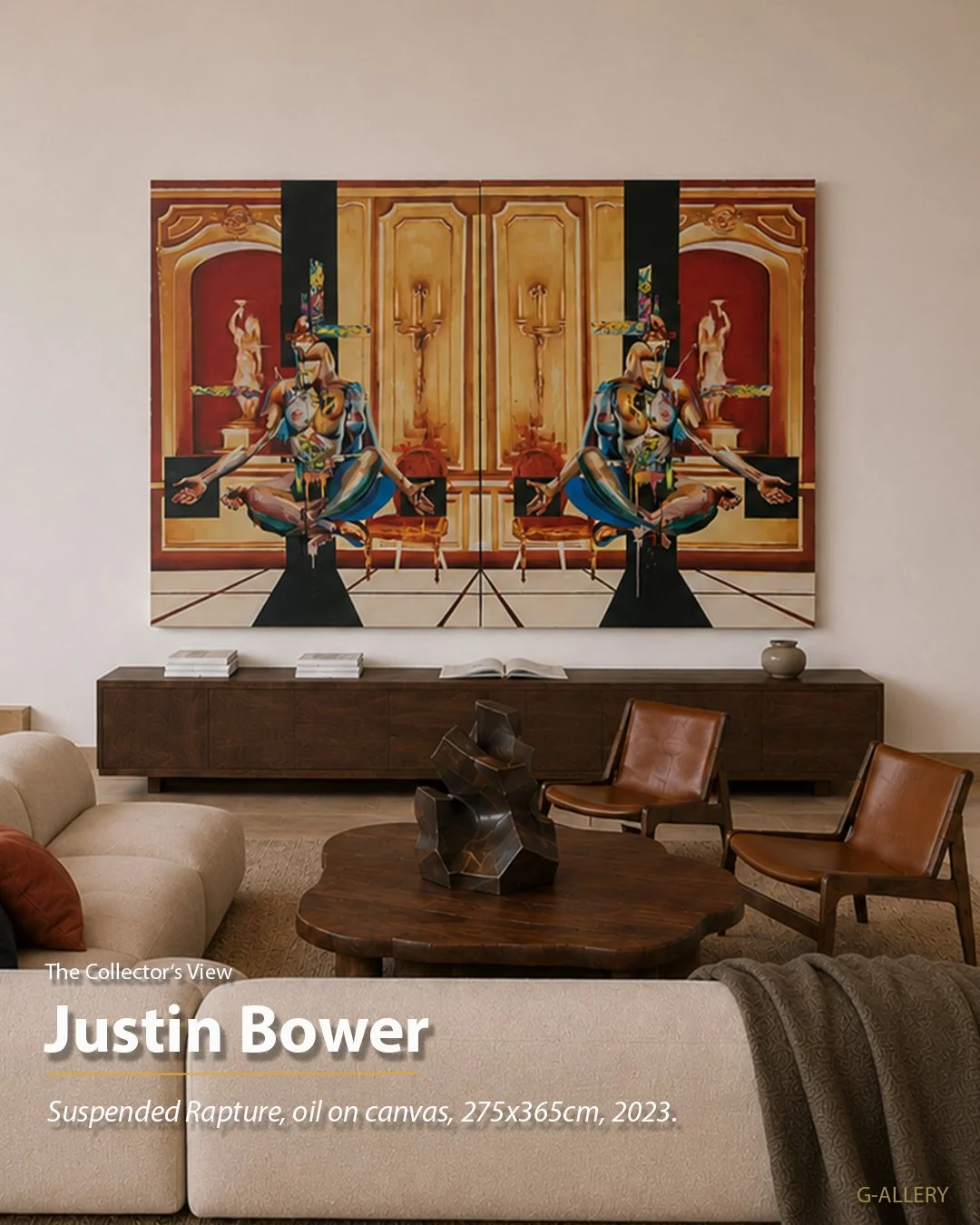
Justin Bower’s monumental, fractured figures similarly transform the architecture around them. Works such as Three Visitations and Suspended Rapture intervene decisively in the perception of a room. Their figures appear simultaneously physical and digital, familiar and unstable. They reflect a present in which identity no longer seems fixed or complete, but is continuously constructed, mediated and renegotiated. Within a private home, these paintings become visual counterparts: they accompany, challenge and alter the viewer’s gaze.
A compelling collection is therefore not created by simply coordinating artworks with furniture, colours or architecture. What matters is the productive tension between art, space and personality. A powerful work does not necessarily have to “fit”. It may introduce a rupture, establish a new visual axis or activate a previously quiet room, both emotionally and intellectually. The interior is no longer merely a setting for art, but a living constellation in which architecture, personal history and artistic positions enter into dialogue. Research into the psychology of collecting supports this perspective. A strong collector identity is not primarily associated with materialism. More significant factors include creative choice, a conscious departure from convention and the desire to build something meaningful that can eventually be passed on. A representative panel study published in 2025, involving more than 5,000 participants, also suggests that collecting is far more widespread than the conventional image of the “art collector” implies. Around one third of respondents collected something, yet only a small proportion strongly identified themselves as collectors. Collecting, then, does not begin with the size of a collection. It begins when individual decisions reveal a personal direction and gradually form a meaningful context.
A collection is therefore less a sum of objects than a language with its own grammar. Each acquisition changes the way existing works are understood. Connections emerge between artists, generations, subjects and formal decisions. At times, a new work deepens an established line of inquiry; at others, a deliberate contrast challenges the collection’s existing structure. This is the curatorial achievement of private collecting: transforming subjective decisions into a context that is recognisably one’s own.
Living with art adds a temporal dimension to this process. Unlike encountering a work at an art fair, in an exhibition or on a screen, living with it means seeing it repeatedly—under changing light, from different distances and during different phases of life. Meanings shift. Details that initially appeared incidental move into focus; works that have become familiar can suddenly appear strange again. An important artwork does not simply affirm the taste of its owner. It develops alongside them and keeps perception in motion. This leads to a deceptively simple yet demanding criterion for collectors: rather than asking only whether a work suits a particular space, one should ask whether one is prepared to live with its questions over time. Does it remain compelling beyond the first impression? Does it introduce a new perspective into the collection? Does it possess the artistic substance to withstand repeated looking? And does it touch upon something that cannot be fully translated into words, market arguments or decorative considerations?
The strongest collections are not perfect reflections of a trend. They are biographies told through images—shaped by curiosity, knowledge, intuition and the courage to make independent decisions. They record what has occupied a person’s mind, which artists they have followed and which positions they consider worth preserving. At their best, they extend beyond the present and become a cultural legacy. A home filled with art therefore reveals more than how someone lives. It tells us what they believe in, which questions they are willing to leave unresolved—and what they have chosen to encounter anew each day.
G-ALLERY supports both new and established collectors in developing distinctive personal collections and selecting works whose significance extends far beyond the first impression.